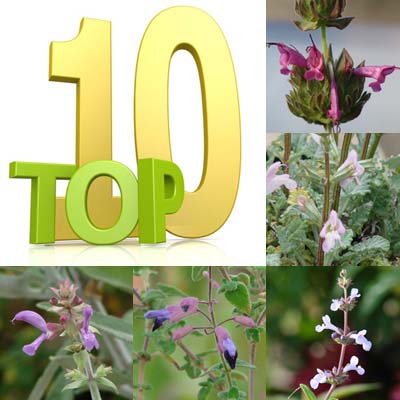
(Turkish Tea Sage) Sometimes an attractive plant is also medically powerful. That's true of the lavender flowered Salvia aucheri, which has strong white beelines. This Turkish native is consumed as an ingredient in teas used as folk remedies for many problems, including abdominal bloating and infections.
Turkish Tea Sage has aromatic foliage with mid-green, lance-shaped leaves. The fragrance comes from essential oils that make it one of a number of Mediterranean Salvias attracting scientific research concerning health and industrial benefits. It also attracts lots of attention from bees. Similar to most sages, it doesn't appeal to deer.
As a subshrub, Turkish Tea Sage has characteristics of both a perennial and a shrub. It combines soft herbaceous foliage, which dies back in winter, along with woody growth.
Although Salvia aucheri responds well to a bit of supplemental watering based on local conditions, it is a drought-resistant sage. It loves full sun and tolerates both heat and cold. This is a plant that can handle climatic extremes, but make sure that its soil is well drained.
English botanist George Bentham (1800-1884) named Salvia aucheri in 1836 for French botanist Pierre Martin Rémi Aucher-Éloy (1792-1838). Aucher-Éloy is the first person on record in the Kew Royal Botanic Gardens herbarium for collecting the plant, which can still be found in Parisian gardens.
Before consuming any herbal product for medicinal purposes, be sure to consult your physician.

Hello, Guest
Login












Question?