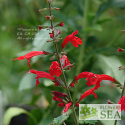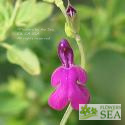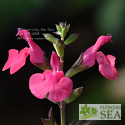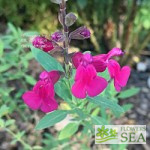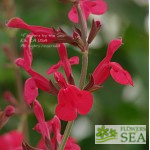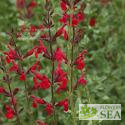
(Big Red Sage) Hummingbirds and butterflies adore the large, deep red blossoms of Salvia penstemonoides, a once rare herbaceous perennial. Its long blooming, super tall flower spikes rise from a basal rosette of lemon-lime fragrant leaves the color of green apples.
Big Red Sage is native to the vast Edwards Plateau of central Texas, The Lady Bird Johnson Wildflower Center notes that Big Red Sage is "endemic to seeps on limestone ledges and banks along streams" of the vast Edwards Plateau in central Texas, which is west of Austin and northwest of San Antonio. It's adaptable to well-drained clay, loam, and limestone soils, needs average watering, and grows well in full sun to partial shade.
Introduced to horticulture in 1845, the sage declined to a point of near extinction in the 20th century. This problem was due in part to development of the Edwards Plateau. But in the early 1980s, Salvia experts began networking to discover small stands of Big Red in the wild. They collected seed and introduced the sage to garden centers.
Erosion, herbicides, and a lowering water table remain threats to this sage. But you can help it survive in your garden.
Note: Two to a customer in 2021.
Special thanks to the Denver Botanical Garden for the use of these photos.