
Advanced Search
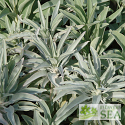
(Sacred White Sage) Bees, hummingbirds and spiritual blessings are all connected to Salvia apiana, an elegant shrubby sage that is an important herb to indigenous Californians. It deserves a place in salvia gardens that can meet its demands. Stiff and almost fleshy, its leaves are tight rosettes of brilliant, silvery green that is almost white.
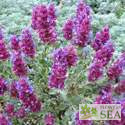
(Giant Purple Desert Sage) It’s best to plant this flamboyant native of the Southwest in spring or summer. However, once established, it tolerates winters from USDA Zones 5 to 9. Purple tubular flowers and burgundy bracts flare up its 10-inch flower spikes like flames on this softly rounded shrub.
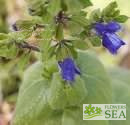
(Little Mexican Sage) This low-growing sage is a shrub in its warmest zones and a perennial in the cooler ones. It's just right for small spaces or tiny gardens. Short and compact, its flowers are similar to but smaller than those of S. mexicana 'Limelight'.
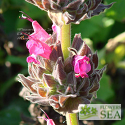
(Little Hummingbird Sage or Pitcher Sage) At one-fourth to one-half the size of our other Hummingbird Sages, this is the smallest variety of Salvia spathacea that we grow.
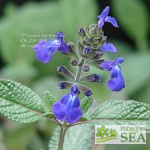
(Elk Blue Little Sage) if it were up to us, we would never have named this plant Little Sage. Although it is dainty, it is also one of the most fascinating species we grow. We particularly love its pebbly, oval leaves that are a shiny purple/green on top and a furry white below.
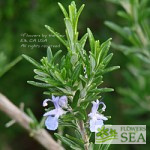
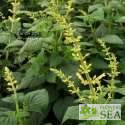
(Red Stem Forsythia Sage) The thick, square, red stems of this variety of Forsythia Sage make it conspicuously different from the species and from everything else in your garden. Its jointed stalks look a little like rhubarb gone mad!
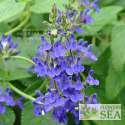
(Scordy Sage) Little is known about this shrubby Ecuadorian native. We're not even sure it is from Ecuador! However, this is another sage that sells itself instantly when seen in bloom. The large clusters of rich, deep violet flowers bloom summer to fall, attracting honeybees and hummingbirds.
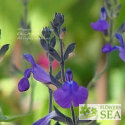
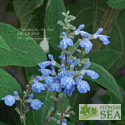
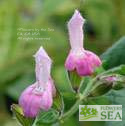
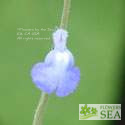
(Pale Sage) Powder blue flowers are cupped by lavender calyxes on this lovely yet little-used sage native to moist meadows in Argentina. It is a tall, narrow plant with delightful oval-shaped leaves with scalloped margins.
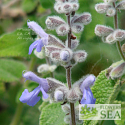
(Big Grape Sage) This lavender-flowered native of Northern Mexico resembles Salvia melissodora (Grape Scented Sage), but is bigger and also has larger leaves and flowers. It's a great companion plant for its little brother, which shares the same cultural needs and affinity for Zones 8 to 10. Both bloom from summer into fall.
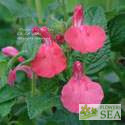
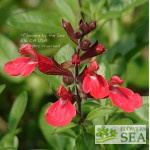
(Lipstick Autumn Sage) Similar to a little bit of lipstick on a pretty face, the rosy flowers of this hardy, heat-tolerant sage add a finishing touch to a perennial Salvia border. The creamy pinkish-red blossoms have a contrasting white throat and are cupped by rosy brown calexes on long spikes.
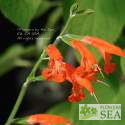
(Mystery Peruvian Sage) Airy spikes of fuzzy, bright orange-red flowers and grassy green calyxes mark this Peruvian sage as a mystery worth pursuing. Little is certain about its parentage.
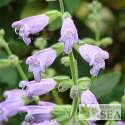
(Mystery Yunnan Sage) Sometimes we come across a beauty that has no name. This lovely species from China's Yunnan province is an excellent example. Aside from lacking scientific and common names, it arrived here as an imported seed with little information about how the plant was discovered.
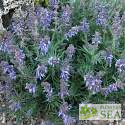
(Yugoslavian Cut Leaf Sage) This is a rare Baltic steppe plant that grows beautifully in sunny locations with little water and excellent drainage. It is endemic to a the Orlova Brdo region of the Former Yugoslav Republic of Macedonia.
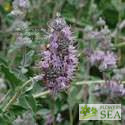
(Bee's Bliss Sage) If you are looking for a California native sage to use as a groundcover, Bee's Bliss is a fine choice. Low-growing, widespreading and colorful, it is ideal for choking weeds.
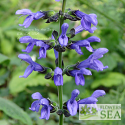
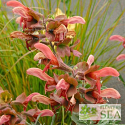
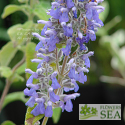
(Grape Scented Sage) With the grape scent of its pale lavender blossoms and its long history of medicinal use, it is no surprise that this sage is so widely distributed.
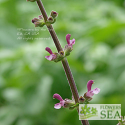
(Mid-East Sage) Native to the mountains shared by Israel and Lebanon, this tidy sage is drought resistant, heat tolerant and long blooming. Its basal foliage rises up and spreads only about 18 inches, but it has long flower spikes.
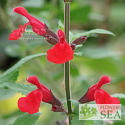
(John Whittlesey Sage) Hardy, vigorous and long blooming, John Whittlesey Sage is a hybrid of D'Arcy's Sage (Salvia darcyi) -- a native of Mexico -- and Mountain Sage (S. microphylla), which is native to the American Southwest and Mexico.
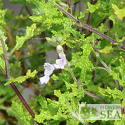
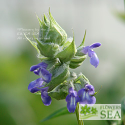
(Purple Stem Sage) Deep purple stems and cobalt blue flowers with pronounced white beelines and dusky gray calyxes cause this sage to command attention.
Common terms in this search: sacred white sage bees hummingbirds spiritual blessings all connected apiana elegant shrubby important herb indigenous californians deserves place insalvia gardens can meet its demands stiff almost fleshy leaves tight rosettes brilliant silvery green flower spikes soar above foliage hundreds small white-to-lavender flowers one most sources pollen nectar pollinators along southern california's coast mountains valleys also source native american smudge sticks