
Advanced Search
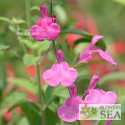
(Trinity Mountain Sage) Heat and drought tolerant, this Salvia microphylla is native to Northeastern Mexico where summers are dry and temperatures can rise to more than 100 degrees F. It can survive winter temperatures down to 0 degrees.
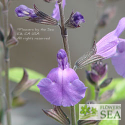
(Azure Hybrid Sage) Despite its name, the flowers of this tiny hybrid aren't really blue. They are a light purple. Due to its size, long bloom time, heat tolerance and drought resistance, Salvia x 'Mesa Azure' is a fine groundcover for areas where summers are hot and dry.
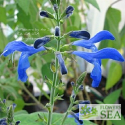
(Grape Leaf Sage) Tall spikes of intensely blue flowers bloom summer to fall and emerge in profusion from handsome, furry foliage. The leaves are grape green on top and purplish on the bottom. This water-loving sage grows rapidly into a spreading mound.
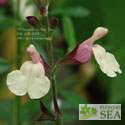
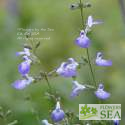
(Summer Skies West Texas Grass Sage) Butterflies and honeybees particularly favor this West Texas mountain native. In contrast to the true blue flowers of regular Salvia reptans, this cultivar has purple blossoms with cloud-like, lavender-to-white throats.
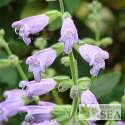
(Mystery Yunnan Sage) Sometimes we come across a beauty that has no name. This lovely species from China's Yunnan province is an excellent example. Aside from lacking scientific and common names, it arrived here as an imported seed with little information about how the plant was discovered.
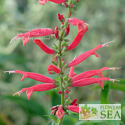
(Frieda Dixon Pineapple Sage) Most varieties of Salvia elegans have bright red flowers. But Frieda Dixon Pineapple Sage, which blooms abundantly beginning in late fall, has softer salmon-pink blossoms set against mid-green, lance-shaped leaves.
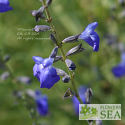
(Autumn Sapphire West Texas Grass Sage) Butterflies and honeybees particularly favor this West Texas mountain native. In contrast to the true blue flowers of regular Salvia reptans, this cultivar has deep blue blossoms and is remarkably compact.
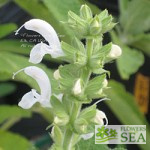
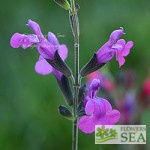
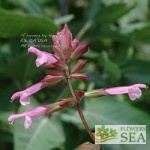
(Kisses and Wishes Sage) Blooming over multiple seasons, Salvia ‘Kisses and Wishes’ bursts with long, luminous, rosy pink blossoms nestled in pink-to-gold bracts. It’s so pretty that it seems unfair to refer to the newest member of the Wish Sages as a “mutation.”
Results for summers from the blog
| Book Reviews |
| 1. Book Reviews: Three Top Reads for Dry Gardening |
| Don’t think “drab” when you hear the phrase “dry garden.” With guidance from good books and a willingness to experiment, you can create colorful flowerbeds and landscapes that require little to no supplemental watering. Here is a quick overview of three books that are excellent resources about sustainable dry gardening. |
| 2. Book Review: Stop. . .and Smell the Mints |
| Randy Collins was surprised when he got hooked on horticulture following retirement. But after a move to South Carolina, he was even more surprised at how deer destroyed his gardens until he began growing lots of mint family ( Lamiaceae ) plants like Salvias. It inspired him to write Stop...and Smell the Mints . |
| 3. In the Native Garden: Colorful California Salvias Plus a Cousin |
| Native plants, including California's many indigenous sages, are like the boys or girls next door who were overlooked until outsiders discovered their good looks and other fine attributes. Flowers by the Sea grows hardy, drought-resistant California Salvias that are native to a broad swath of the West Coast ranging from Northern Baja to Southern Oregon. Many tolerate heat. They are well suited to waterwise landscapes, including dry gardens. |
| New at FBTS |
| 4. New at FBTS: Salvia x 'Ultra Violet' Defies Heat and Cold |
| In the Rocky Mountain West, conditions can swing from hellishly hot, dry summers to freezing cold winters. Many Southwestern Salvias are ideal for the sunbaked summers but have trouble surviving chilly Zone 5 winters. So we appreciate the cold hardiness as well as the drought resistance of one of our newest hybrid cultivars, Ultra Violet Hybrid Sage ( Salvia lycioides x greggii ‘Ultra Violet’). |
| Ask Mr. Sage |
| 5. Ask Mr. Sage: Best Time to Plant Drought Resistant CA Natives |
| Drought resistant California native sages thrive when planted in fall. It's easier for roots to become established when soil is warm, air temperatures are cooler and precipitation is increasing. Ask Mr. Sage is a regular feature of the Everything Salvias Blog and is based on calls and emails from customers. |
| 6. Ask Mr. Sage: How to Prevent Root Disease in Plants for Dry Gardens |
| Learn how to prevent root rot and keep dry-garden Salvias healthy by providing optimum growing conditions and avoiding overwatering. Ask Mr. Sage is a Q&A feature based on topics raised in calls and emails to Flowers by the Sea. This one, which concerns a Salvia species that is drought resistant and native to a dry climate, considers how to identify and prevent rot caused by a complex of soil pathogens that attack when roots. |
| 7. Ask Mr. Sage: How to Select Plants for Garden Triumph |
| Planning for Salvia garden success requires following the rule of selecting the right plant for the right place. Desert sages aren't appropriate for the damp Southeast. Moisture-loving ones aren't right for desert climates where they need lots of watering to survive. Flowers by the Sea Farm and Online Nursery offers tips for selecting plants based on local climate. Ask Mr. Sage is a regular feature of the FBTS Everything Salvias Blog. |
| 8. A Community of Anise Scented Sages We Adore |
| You might expect the foliage of a plant called Anise-Scented Sage (Salvia guaranitica) to smell robustly like licorice, which shares the same fragrance as anise. Some gardeners detect a hint of licorice after crushing a leaf, but many say the foliage merely smells sweet. These popular sages are native to Brazil where indigenous peoples used their leaves as a medicine. Flowers by the Sea grows many varieties in a wide range of sizes and flower colors |
| Celebrity Salvias |
| 9. Celebrity Salvias: Hot Heatwave Hybrids from Australia |
| Waterwise landscapes don't have to be cactus gardens if you grow leafy, colorful drought-resistant Salvias, such as Australian Heatwave™ Mountain Sages, which are crosses of Salvia microphylla and S. greggii . Hybridizers Howard Bentley and Steve Eggleton of Plant Growers Australia used these tough American and Mexican native plants to create their series. One goal was to aid water conservation during their nation's hot, dry summers. |
| Container Gardening |
| 10. Container Gardening Basics: Watering Potted Plants |
| Container plantings are welcome islands of color and fragrance whether in small or large yards. Their emergence signals the pleasures of summer, including icy glasses of lemonade. Potted plants have a mighty thirst, as well. Container garden plans for Salvias and companion plants need to factor in greater frequency of watering than the plants would receive in-ground. |
| New at FBTS |
| 11. Upcoming at FBTS: Hummingbirds Love Cute Cupheas |
| Bright orange, tube-shaped blossoms cover Cuphea x 'David Verity' like tiny windsocks blowing in a breeze and beckoning hummingbirds. Similar to Salvias, Cupheas are rich sources of nectar that fuel hummingbird migration. At Flowers by the Sea, we are always interested in expanding choices for creating wildlife habitat. So we are growing a wide variety of Cupheas for sale this coming spring, including David Verity. |
| 12. Fall Planting is Superior for Salvias |
| Fall is the best time to plant many Salvias. Read on to find out why . . . This picture, "Autumn", was painted by Giuseppe Arcimboldo in 1573. |
Common terms in this search: trinity mountain sage heat drought tolerant microphylla native northeastern mexico where summers dry temperatures can rise more than degrees survive winter down yucca-do nursery texas found superior amid sierra madre oriental mountains nuevo leon hot winters much cooler well damp inches tall wide when mature ideal groundcover across southwest features fine green foliage bright pink flowers turn bit violet weather