
Advanced Search
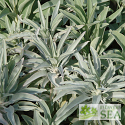
(Sacred White Sage) Bees, hummingbirds and spiritual blessings are all connected to Salvia apiana, an elegant shrubby sage that is an important herb to indigenous Californians. It deserves a place in salvia gardens that can meet its demands. Stiff and almost fleshy, its leaves are tight rosettes of brilliant, silvery green that is almost white.
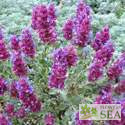
(Giant Purple Desert Sage) It’s best to plant this flamboyant native of the Southwest in spring or summer. However, once established, it tolerates winters from USDA Zones 5 to 9. Purple tubular flowers and burgundy bracts flare up its 10-inch flower spikes like flames on this softly rounded shrub.
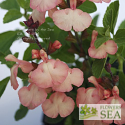
(Glow Peach Mountain Sage) Long blooming Salvia microphylla 'Heatwave Glow' produces prolific quantities of soft peach-to-apricot blossoms along with dense, mid-green foliage.
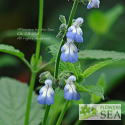
(River Sage) Native to partially shaded streamsides in Argentina and Bolivia, this is one of the few Salvia species that can tolerate wet soil. It makes a fine filler plant in a group of other partial shade growers, its wirey thin stems sending up floral displays here and there, much to the gardener's delight.
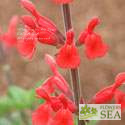
(Vermilion Bluffs® Mexican Sage) The brilliant red flowers of Vermilion Bluffs bloom abundantly from August to October. This variety of the Mexican native Salvia darcyi is cold hardy to Zone 5b at altitudes up to 5,500 feet.
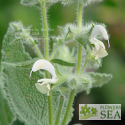
(Dominican Sage) Native to Israel, Jordan, Lebanon and Syria, this candelabra-shaped, perennial sage may have inspired the design of the menorah, (Exodus 37:17). It is a tough, drought-resistant plant with silver-haired foliage and bright white flowers that seem to blaze.
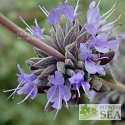
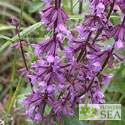
(Judean Sage) Native to the mountains of Judea in Israel, this dark violet flowered, perennial sage is unique among the Palestinian Salvias - as a woodland native it grows well in partial shade. It is a tough, drought-resistant plant with deeply cut & hairy foliage which forms impressive mounds of color in the spring and early summer.
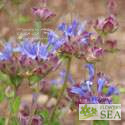
(Celestial Blue Sage) Fast growing and adaptable, this sage is a chance hybrid between Cleveland Sage (Salvia clevelandii) -- also called California Blue Sage -- and California Rose Sage (Salvia pachyphylla). It may also be related to California Purple Sage (Salvia leucophylla).
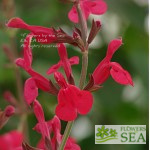
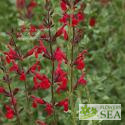
(Windwalker® Royal Red Salvia) Salvia darcyi x S. microphylla 'PWIN03S' is one of the top 2015 plants for USDA Cold Hardiness Zone 5 selected by Colorado's Plant Select®, a nonprofit organization that focuses on promoting plants for low-water gardens.
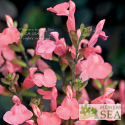
(Blast Pink Mountain Sage) Long blooming Salvia microphylla 'Heatwave Blast' produces prolific quantities of large, dusky salmon-pink blossoms and dense, mid-green foliage.
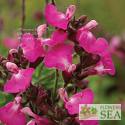
(Sparkle Pink Mountain Sage) Long blooming Salvia microphylla 'Heatwave Sparkle' produces prolific quantities of deep mauve-pink blossoms with white throats and dense, mid-green foliage.
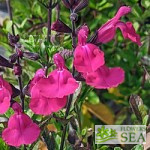
(Brilliance Pink Mountain Sage) Long blooming Salvia microphylla 'Heatwave Brilliance' produces prolific quantities of deep reddish-pink, or cerise, blossoms along with dense, mid-green foliage.
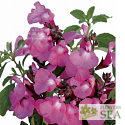
(Radiance Bright Pink Mountain Sage) Long blooming Salvia microphylla 'Heatwave Radiance' produces prolific quantities of hot pink blossoms along with dense, mid-green foliage.
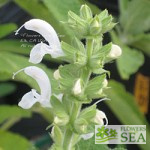
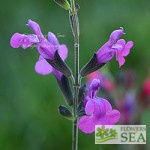
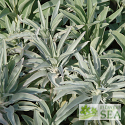
(Compact Sacred White Sage) Salvia apiana var. compacta is significantly shorter than the common species of Sacred White Sage and somewhat more cold tolerant. Its smaller leaves and compact form make it a tidier choice for home gardens with the right kind of growing conditions.

(Vermilion Bluffs® Mexican Sage) The brilliant red flowers of Vermilion Bluffs bloom abundantly from August to October. This variety of the Mexican native Salvia darcyi is cold hardy to Zone 5b at altitudes up to 5,500 feet.
Results for wet from the blog
| Ask Mr. Sage |
| 1. Ask Mr. Sage: How to Select Plants for Garden Triumph |
| Planning for Salvia garden success requires following the rule of selecting the right plant for the right place. Desert sages aren't appropriate for the damp Southeast. Moisture-loving ones aren't right for desert climates where they need lots of watering to survive. Flowers by the Sea Farm and Online Nursery offers tips for selecting plants based on local climate. Ask Mr. Sage is a regular feature of the FBTS Everything Salvias Blog. |
| Container Gardening |
| 2. Container Gardening Basics: Watering Potted Plants |
| Container plantings are welcome islands of color and fragrance whether in small or large yards. Their emergence signals the pleasures of summer, including icy glasses of lemonade. Potted plants have a mighty thirst, as well. Container garden plans for Salvias and companion plants need to factor in greater frequency of watering than the plants would receive in-ground. |
| Getting Started with Salvias |
| 3. Getting Started: Salvias for Zone 9 |
| California's small, Mohave Desert city of Barstow averages about 5 inches of rain annually. Across the continent, Pensacola, Florida, has more than double Barstow's population and more than 12 times its amount of rainfall. Yet both cities are part of the U.S. Department of Agriculture's Plant Hardiness Zone 9 where you can plant perennials and shrubs that survive winter lows ranging from 20 to 30 degrees F. Flowers by the Sea takes readers on a triple coast road trip of Zone 9 and suggests plantings for varied growing conditions along the way. |
| 4. In the Native Garden: Colorful California Salvias Plus a Cousin |
| Native plants, including California's many indigenous sages, are like the boys or girls next door who were overlooked until outsiders discovered their good looks and other fine attributes. Flowers by the Sea grows hardy, drought-resistant California Salvias that are native to a broad swath of the West Coast ranging from Northern Baja to Southern Oregon. Many tolerate heat. They are well suited to waterwise landscapes, including dry gardens. |
| Book Reviews |
| 5. Book Reviews: Three Top Reads for Dry Gardening |
| Don’t think “drab” when you hear the phrase “dry garden.” With guidance from good books and a willingness to experiment, you can create colorful flowerbeds and landscapes that require little to no supplemental watering. Here is a quick overview of three books that are excellent resources about sustainable dry gardening. |
| Ask Mr. Sage |
| 6. Ask Mr. Sage: Best Time to Plant Drought Resistant CA Natives |
| Drought resistant California native sages thrive when planted in fall. It's easier for roots to become established when soil is warm, air temperatures are cooler and precipitation is increasing. Ask Mr. Sage is a regular feature of the Everything Salvias Blog and is based on calls and emails from customers. |
| 7. Ask Mr. Sage: What Sages Grow in Clay Soils? |
| Ask Mr. Sage answers questions based on calls and emails that Flowers by the Sea receives, such as concerns about what Salvias will grow in clay soils. This article talks about specific plants for dry and wet clay conditions, how to improve soil drainage and planting on slopes in wet areas. |
| 8. Ask Mr Sage: What do I do with a dry root ball? |
| Plants may wither even if you regularly water them. When the ground surrounding a new planting's root ball is moist but the roots remain dry, that indicates moisture isn't transferring properly from the outer soil. Flowers by the Sea Nursery outlines a process for diagnosing dry root ball and combating it. |
| 9. Ask Mr. Sage: Why FBTS Uses Foam Packing Peanuts & How to Reuse Them |
| It isn't easy being completely green. Flowers by the Sea explains why polystyrene packing peanuts are essential for shipping and what you can do with them after unpacking your orders. Ecofriendly reuses include donating them to shipping companies and using them to lighten container plantings. Ask Mr. Sage is a Q&A feature based on topics raised in calls and emails to FBTS. |
| Hummingbirds in the Garden |
| 10. Hummingbirds in the Garden: Attracting Hummingbirds to Your Garden |
| Planting a hummingbird garden filled with nectar-rich, long-blooming Salvias aids preservation of hummingbird species that migrate each year throughout North America. It also gives you a front-row seat to a fascinating aerobatics show. Backyard islands of colorful sages are like gas stations for hummingbirds' long-distance journeys. Salvias can keep your garden whirring with the helicopter-like flight of hummingbirds from spring through autumn and -- in warm climates -- into winter. |
| 11. Bat-Faced Beauty: Gardeners & Hummingbirds Love Cuphea schumannii |
| Most bat faces only look beautiful to their mothers. However bat-faced Cuphea schumannii seems pretty as punch to hummingbirds in search of a sweet drink of nectar. If you take a close look at the ragged, open end of each flower, you'll see two, tiny, lavender petals standing straight up like bat or mouse ears. So, despite its common name, Orange Cigar Plant, this species is known as a bat-faced Cuphea. Aside from being excellent for attracting pollinators, Cupheas are becoming important agricultural crops that reduce pesticide use. |
| 12. Battles in the Salvia Garden: Controlling Spider Mites - Part II |
| Pollinators lose important food sources when Salvias and other nectar-rich flowers are destroyed by spider mites. This is Part 2 of a two-part series about understanding and overcoming these dangerous pests. Along with the non-chemical interventions described in Part 1 of this series, gardeners sometimes need the help of predatory insects and mites, insecticidal soaps and horticultural oils. Pesticides called miticides may also eventually be necessary, but should be the last resort. |
Common terms in this search: sacred white sage bees hummingbirds spiritual blessings all connected apiana elegant shrubby important herb indigenous californians deserves place insalvia gardens can meet its demands stiff almost fleshy leaves tight rosettes brilliant silvery green flower spikes soar above foliage hundreds small white-to-lavender flowers one most sources pollen nectar pollinators along southern california's coast mountains valleys also source native american smudge sticks