
Advanced Search
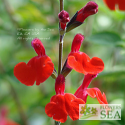
(Royal Bumble Mountain Sage) Almost black, the stems and calyxes of this UK hybrid form a pleasing contrast with its medium-size scarlet flowers and glossy green leaves. Bloom time is spring to fall. This Mountain Sage suckers freely and forms a dense clump.
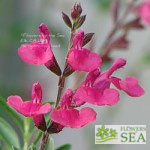
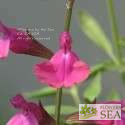
(Plum Wine Autumn Sage) Frilly, lavender-tinged, pink flowers with a pretty white dot at the throat make this another outstanding contribution from North Carolina nurseryman Richard Dufresne.
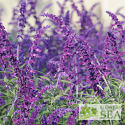
(Midnight Mexican Bush Sage) The typical Mexican Bush Sage has purple flowers surrounded by furry white bracts. This clone from the San Francisco Peninsula has deep purple flowers, calyxes and stems. It is a good groundcover due to a mounding habit, smaller size and generous amounts of flowers.
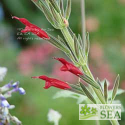
(Red Michoacán Sage) No other Salvia has flowers that are such a deep blood red. The 3-to-4 inch long tubular blossoms of this shade-loving shrub are displayed in clusters at the ends of the stems, which have light green, textured leaves that are almost round.
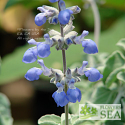
(Cedros Island Sage) From the Island of Cedars off the coast of Baja California Sur comes this delightful xeric sage with deep violet-blue flowers and silvery foliage. The square-shaped, 1-inch-long leaves are densely covered with downy, short, white hairs providing moisture retention.
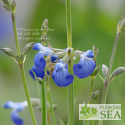
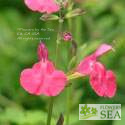
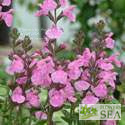
(Pink Preference Autumn Sage) Two-tone, hot pink flowers and contrasting bracts make this Autumn Sage stand out. This drought tolerant Autumn Sage from Central Texas is also compact, rugged, heat tolerant and capable of handling Zone 6 chill.
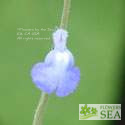
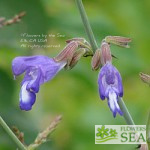
(Mount Olympus Sage) The deep violet and white flowers of Salvia ringens are eyecatching. Their wiry, branched spikes rise up to 5 feet tall from a dark green basal rosette.
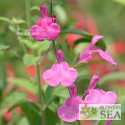
(Trinity Mountain Sage) Heat and drought tolerant, this Salvia microphylla is native to Northeastern Mexico where summers are dry and temperatures can rise to more than 100 degrees F. It can survive winter temperatures down to 0 degrees.
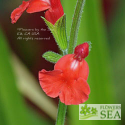
(Big Orange Mountain Sage) When temperatures are cooler in spring and fall, the persimmon-orange flowers of this large Mountain Sage darken. Gray-green foliage, bright green calyxes and reddish-green stems add to the plant's fascinating look, which mixes well with yellows and blues.
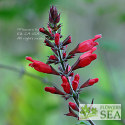
(Mister Jules Hybrid Sage) Long, dark, velvety stems contrast dramatically with the deep red flowers of this hybrid, spreading sage from the University of California, Santa Cruz, Arboretum. The parent plants are Mexican Winter Sage (S. holwayi) -- a superior, spreading groundcover or sprawling shrub -- and Cardinal Sage (S. fulgens), which is an upright shrub with large, deep red flowers.
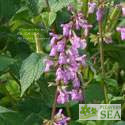
(Temascaltepec Sage) In full bloom, which is all year in mild climates, this mid-sized Salvia has far more flowers than foliage. Each 1/2-inch-long, bright pink bloom has two dark pink/purple spots and a pair of white stripes. The small, slightly furry leaves add to its soft, pleasing look.
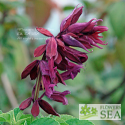
(Sao Borja Scarlet Sage) Three-inch-long, smokey purple blossoms that bloom from spring to fall are a major clue that this heat-tolerant perennial is not your grandmother's Scarlet Sage.
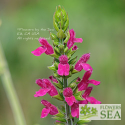
(Shaggy Chiapas Sage) This is a sweetheart! Glowing magenta flowers lure the eye as well as hummingbirds to this heat-tolerant sage. It begins blooming in late summer where weather is warm and in fall where it is cooler.
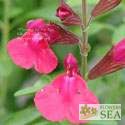
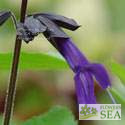
(Friendship Sage) Thank you Rolando Uria of the University of Buenos Aries for this very fine plant. Discovered in 2005 at a plant show in Argentina, this truly unique hybrid sage has generated a great deal of excitement in the Salvia world.
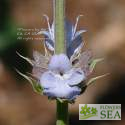
(Starlight Sage) Add sparkle to your dry garden with the pale pastel flowers of this hybrid of two Southern California native plants often seen growing together in the wild — Black Sage (Salvia mellifera) and White Sage (Salvia apiana). Salvia x 'Starlight' is a shrub that blooms early and long, attracting honeybees but not deer.
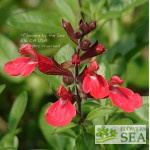
(Lipstick Autumn Sage) Similar to a little bit of lipstick on a pretty face, the rosy flowers of this hardy, heat-tolerant sage add a finishing touch to a perennial Salvia border. The creamy pinkish-red blossoms have a contrasting white throat and are cupped by rosy brown calexes on long spikes.
(Diane's Autumn Sage) Chip Schumacher of Hill Country Gardens in Texas selected this lovely Autumn Sage hybrid, which has handsome foliage and abundant two-tone dark purple flowers. This fine variety is often the first Salvia greggii to bloom in spring.
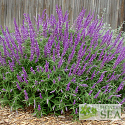
(Santa Barbara Mexican Bush Sage) This compact Mexican Bush Sage was found in the Santa Barbara garden of Kathiann Brown. It is, without a doubt, the finest short Mexican Bush Sage -- hardy, tough and long blooming. Add drought tolerance and dark, rich purple flowers to its list of merits.
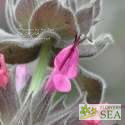
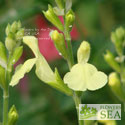
(Elk Lemon Light Jame Sage) We are proud to offer this luminescent, pure yellow Salvia x jamensis -- a color breakthrough from our own breeding program. The bright, light blossoms cool the landscape similar to white flowers, but with colorful impact. The glossy green leaves are quite small - a very attractive and distinctive characteristic.
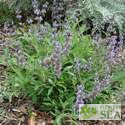
(Dry Earth Black Sage) Black Sage Salvia mellifera is one of the most common and fragrant native shrubs in the California Coast Ranges and is ideal for dry gardens. At 12 inches tall by 5 feet wide, this variety is an excellent groundcover.
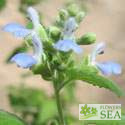
(Mejorana) In Spanish, Mejorana means ‘marjoram.” Similar to oregano-type Marjoram – another Mint family member -- this sage is used to flavor meat dishes. Our cultivar, which is native to Texas and Mexico, has lovely bluish-purple flowers that bloom summer to fall amid fragrant, fine, furry green foliage.
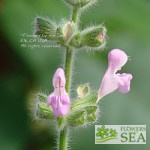
(Turkish Cliff Sage) Spring into early summer, Turkish Cliff Sage produces erect, branching flower spikes 24 to 36 inches long that rise from basal foliage. They’re covered with whorls of pale pink blossoms with delicate white markings.
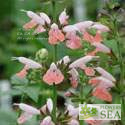
(Brenthurst Tropical Sage)Tropical Sage is popular as an annual throughout America and as a perennial in warm zones. It is particularly beloved in the Deep South where it withstands heat, wind, heavy rains and excessive humidity to bloom prolifically season after season. Brenthurst is a coral-flowered cultivar with dramatic, dark bracts and bright green, heart-shaped leaves.
The following terms were added to your search to help improve the result. Click here to exclude these extra terms from the search.
- drain, drains
Common terms in this search: royal bumble mountain sage almost black stems calyxes hybrid form pleasing contrast its scarlet flowers aromatic glossy green leaves bloom time spring fall suckers freely forms dense clump velvety long blooming fast-growing survives drought but appreciates regular watering does particularly well partial shade except needing good drainage isnt fussy about soil type looks pretty borders dry gardens colorful choice native