
Advanced Search
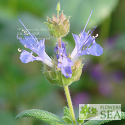
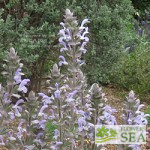
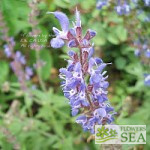
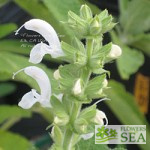
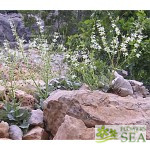
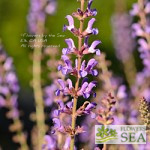
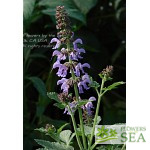
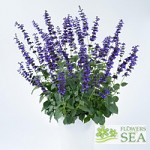
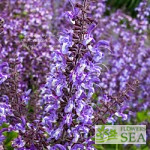
(Magic Wand Sage) Salvia x ‘Magic Wand’ is perky with vertical spikes of long blooming, rich purple flowers and dense, mid-green foliage. Overall, it reminds us of Salvia x ‘Big Blue’, but has smaller flowers and usually doesn’t grow as tall.
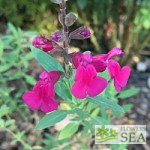
(Windwalker® Desert Rose Sage) Hot pink flowers top glossy, mid-green foliage top Windwalker® Desert Rose Salvia. Due to drought resistance, Salvia x 'Desert Rose' is a great choice for dry gardens. However, this petite beauty also grows well with moderate watering.
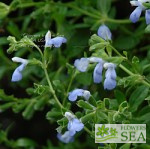
(Running Peruvian Sage) Petite is a good description for the pale blue flowers and light green, veined, elliptical leaves of Salvia sarmentosa. It’s an attractive groundcover in warm winter areas as well as a graceful, spilling container plant.
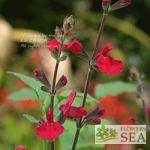
(Elk Crimson Spires Sage) Dark, dusky red stems and calyxes add to the drama of large scarlet flowers and lively green foliage in our FBTS hybrid, Salvia x ‘Elk Crimson Spires’.
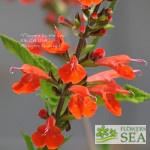
(Elk Vermilion Tropical Sage) Tall and full of large, orange flowers, Salvia coccinea 'Vermilion' is a clonal variety developed by FBTS.
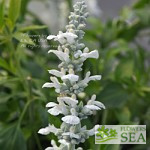
(White Flame Sage) Like bright white candle flames, the short vigorously upright flower spikes of petite Salvia x ‘White Flame’ light up flowerbeds.
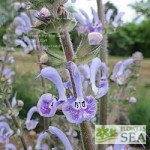
(Shangri-la Sage) Take a close look at Salvia moorcroftiana x indica ‘Shangri-la’ and you’ll notice that its lavender flowers have lighter lower lips with deep purple freckles.
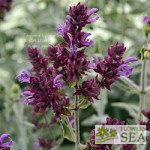
(Lancelot Wooly Canary Island Sage) Salvia canariensis ‘Lancelot’ has lavender flowers shaped like parrot beaks that are surrounded by deep rosy-lavender bracts.
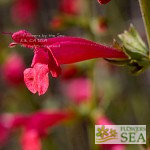
(Crimson Sage) Abundant and long blooming, the bright pink to red tubular flowers of Salvia henryi attract hummingbirds and form a pretty contrast with fuzzy, silvery foliage. This is a long blooming sage that is made for gritty soils, such as sandy loam.
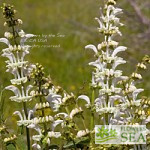
(Woolly White Sage) Salvia candidissima has tidy, upright stems covered with whorls of creamy white blossoms shaped like tiny parrot beaks. They rise from a mid-green rosette of leaves that become fuzzier and whiter as summer heat increases.
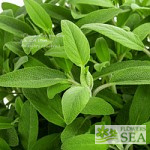
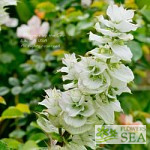
(Vatican White Clary Sage) Clary Sages are well known for their use in folk remedies, aromatherapy and cosmetics. Large white bracts frame the spectacular white blooms of this cultivar on 5-foot-tall spikes. It is a delight for honeybees and butterflies.
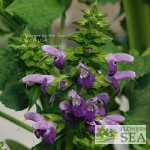
(Autumn Equinox Japanese Woodland Sage) Although similar to the Japanese native Shi Ho Woodland Sage, Salvia glabrescens 'Autumn Equinox' has much larger flowers that are bicolored purple and bloom earlier. Autumn Equinox is also more floriferous, blooms longer, and grows more rapidly with greater vigor.

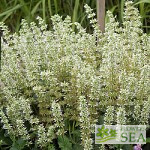
(White Lilac Sage) Dense whorls of white, instead of lavender, blossoms cover tall flower spikes of this long-blooming perennial that tolerates both heat and cold. They rise up from fragrant, mint-green foliage.

(Vermilion Bluffs® Mexican Sage) The brilliant red flowers of Vermilion Bluffs bloom abundantly from August to October. This variety of the Mexican native Salvia darcyi is cold hardy to Zone 5b at altitudes up to 5,500 feet.
The following terms were added to your search to help improve the result. Click here to exclude these extra terms from the search.
- ye
Common terms in this search: sand sage upward curling finely scalloped narrow lime-green leaves eremostachya cute capital whorls pale violet-blue flowers supported fuzzy burgundy calyxes equally appealing fragrant drought-resistant native southern california baja grows along western edge colorado desert which part sonoran short long blooming shrub thrives full sun dry air heat areas moderate winter temperatures due nectar its tubular honeybees hummingbirds love however deer