
Advanced Search
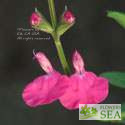
(Wild Watermelon Mountain Sage) Large, watermelon-pink flowers and the fruity fragrance of this long-blooming sage's mid-green, veined leaves make this Mountain Sage a treat to grow.
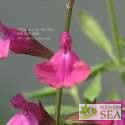
(Plum Wine Autumn Sage) Frilly, lavender-tinged, pink flowers with a pretty white dot at the throat make this another outstanding contribution from North Carolina nurseryman Richard Dufresne.
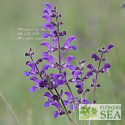
(Siberian Sage) Deep violet flowers surrounded by burgundy bracts form a handsome contrast with the pebbly, mint green foliage of this drought-resistant sage. It comes from the Central Asian steppe, which is similar in climate and geography to America’s high plains.
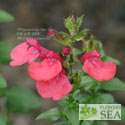
(People's Park Mountain Sage) Sometimes nature can be rebellious. This is one the Mountain Sages known as the Turbulent Sixties Series developed from an outlaw cultivar of the Southwestern native Salvia microphylla. Monterey Bay Nursery (MBN) named their accidental hybrid ‘Berzerkeley.’
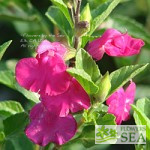
(Telegraph Avenue Dwarf Mountain Sage) Here’s another member of the Turbulent Sixties Series of Southwestern Mountain Sages (Salvia microphylla), which developed from one of nature’s rebels – an accidental hybrid that Monterey Bay Nursery (MBN) named ‘Berzerkeley’ after finding it taking a stand in the nursery’s gravel paving.
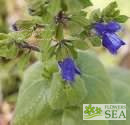
(Little Mexican Sage) This low-growing sage is a shrub in its warmest zones and a perennial in the cooler ones. It's just right for small spaces or tiny gardens. Short and compact, its flowers are similar to but smaller than those of S. mexicana 'Limelight'.
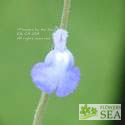
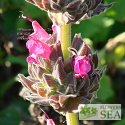
(Little Hummingbird Sage or Pitcher Sage) At one-fourth to one-half the size of our other Hummingbird Sages, this is the smallest variety of Salvia spathacea that we grow.
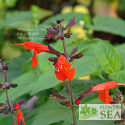
(Forest Fire Tropical Sage) Butterflies love the abundant, fire engine red flowers of this mostly annual sage. It's a popular cultivar of one of the first Salvias used for ornamental purposes -- Tropical Sage. The flowers are dramatically framed by reddish black bracts.
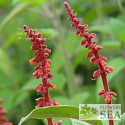
(Red Velvet Sage) Reaching up to 18 inches tall, the floral spikes of this exotic looking Salvia are crowded with small, velvety, orange-red blossoms from mid-summer to late autumn. Its large, dark green, pebbly leaves are beautiful in their own right, making this one of our favorite sages.
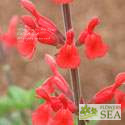
(Vermilion Bluffs® Mexican Sage) The brilliant red flowers of Vermilion Bluffs bloom abundantly from August to October. This variety of the Mexican native Salvia darcyi is cold hardy to Zone 5b at altitudes up to 5,500 feet.
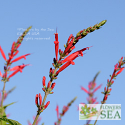
(Pineapple Sage) An indispensable fall-blooming addition to the garden, this tender perennial is, perhaps, the best of all hummingbird plants. When in bloom, it is covered in 3-inch-long red flowers.
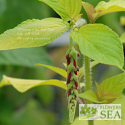
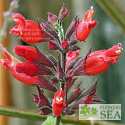
(Winter Mexican Sage) Call it the Snow Queen! From fall through spring, this graceful, colorful sage blooms through 20 degree F weather despite snow and ice. It has lovely, small, dark green leaves and profuse clusters of tubular, cinnabar-red flowers that puff out in the center.
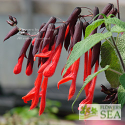
(Giant Bolivian Sage) Hailing from Peru and Bolivia, this tender specimen is found at altitudes of 9,000 feet in the wild. This multi-stemmed, woody-based, climbing Salvia needs support. Hummingbirds love its 5-inch-long, crimson flowers, which are the longest grown by any Salvia and flower from late summer through autumn.
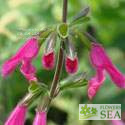
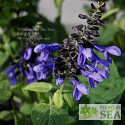
(Costa Rica Blue Sage) Although this handsome plant is often listed as an Anise Leaf Sage (Salvia guaranitica), we think it is a hybrid based on differences in its growth pattern and flowering season.
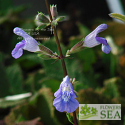
(Turkish Tea Sage) Sometimes an attractive plant is also medically powerful. That's true of the lavender flowered Salvia aucheri, which has strong white beelines. This Turkish native is consumed as an ingredient in teas used as folk remedies for many problems, including abdominal bloating and infections.
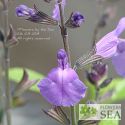
(Azure Hybrid Sage) Despite its name, the flowers of this tiny hybrid aren't really blue. They are a light purple. Due to its size, long bloom time, heat tolerance and drought resistance, Salvia x 'Mesa Azure' is a fine groundcover for areas where summers are hot and dry.
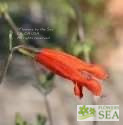
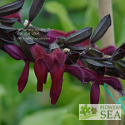
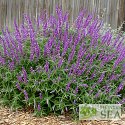
(Santa Barbara Mexican Bush Sage) This compact Mexican Bush Sage was found in the Santa Barbara garden of Kathiann Brown. It is, without a doubt, the finest short Mexican Bush Sage -- hardy, tough and long blooming. Add drought tolerance and dark, rich purple flowers to its list of merits.
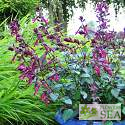
(Love and Wishes Sage) Deep purple calyxes support the magenta-purple, tubular blossoms of Salvia x 'Love and Wishes'. They contrast handsomely with dark stems and mid-green foliage.
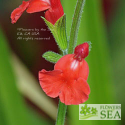
(Big Orange Mountain Sage) When temperatures are cooler in spring and fall, the persimmon-orange flowers of this large Mountain Sage darken. Gray-green foliage, bright green calyxes and reddish-green stems add to the plant's fascinating look, which mixes well with yellows and blues.
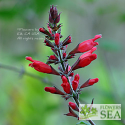
(Mister Jules Hybrid Sage) Long, dark, velvety stems contrast dramatically with the deep red flowers of this hybrid, spreading sage from the University of California, Santa Cruz, Arboretum. The parent plants are Mexican Winter Sage (S. holwayi) -- a superior, spreading groundcover or sprawling shrub -- and Cardinal Sage (S. fulgens), which is an upright shrub with large, deep red flowers.
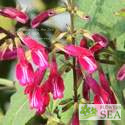
(Violet Calyx Sage) Here's another abundantly blooming sage from the cloud forest slopes of Chiapas, Mexico. Violet beelines mark the lower lip of the crimson blossoms, which are so numerous that it can be difficult to see the foliage at times.
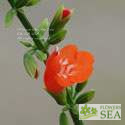
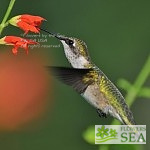
(Giant Brazilian Sage) Yes, this one is gigantic. The first season we grew this heat-tolerant sage, it reached 8 feet tall by July! Masses of small, red-orange, trumpet-shaped flowers attract hummingbirds and honeybees to long, upward curving flower spikes towering over heart-shaped foliage.
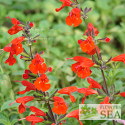
(Summer Jewel Red Tropical Sage) Butterflies, hummingbirds and honeybees enjoy this Fleuroselect Gold Medal winner, which is an outstanding choice for bright red color from June to autumn. This type of Tropical Sage is generally the first to flower for us.
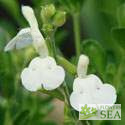
(VIBE® Ignition White Sage) Never before have we seen such a pure white among the species to which Jame Sages are related. We love this purity as well as the bright green calyxes supporting the large flowers of Elk White Ice and giving it an overall crisp look.
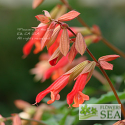
(Ember's Wish Sage) Bright coral-colored, tubular blossoms contrast handsomely with the deep maroon stems, rusty rose calyxes and mid-green foliage of Ember's Wish Sage.
The following terms were added to your search to help improve the result. Click here to exclude these extra terms from the search.
- climate, climates
Common terms in this search: wild wildlife however they appreciate average watering based local conditions ideal plant creating small habitat drought because feeds hummingbirds honeybees butterflies give full sun partial shade well-drained soil tolerant heat watermelon make mountain sage large watermelon-pink flowers fruity fragrance long-blooming sage's mid-green veined leaves treat sages grow pretty subshrub has combination soft herbaceous foliage woody growth native southwest mexico use