
Advanced Search
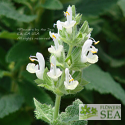
(Mauretania Tingitana Sage) Native to Northern Africa and Saudi Arabia, this sage gets by on little water. and has a long history of cultivation going back 400 years. It wove throughout various countries in the Middle East and North Africa before arriving in Europe in the 1700s and was first described scientifically in 1777.
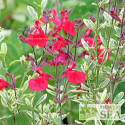
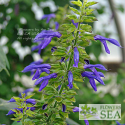
(Byron's Mexican Sage) One of our favorite Mexican Sages, this large variety is reputed to be a hybrid between Salvia mexicana and S. hispanica -- a species of Chia Sage.
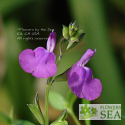
(Royal Purple Autumn Sage) Salvia muelleri is related both to Autumn Sage (S. greggii) and Mountain Sage (S. microphylla), which are closely related species.
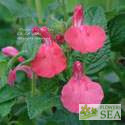
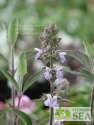
(Kellerman's Sage) Rare in the United States, this wooly leafed, upright shrub comes from Southern Mexico and Guatemala. Mid-size, powder-blue flowers bloom on its long, airy stems from summer through winter in mild climates. It's lovely in mixed, drought-resistant plantings.
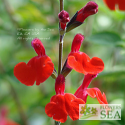
(Royal Bumble Mountain Sage) Almost black, the stems and calyxes of this UK hybrid form a pleasing contrast with its medium-size scarlet flowers and glossy green leaves. Bloom time is spring to fall. This Mountain Sage suckers freely and forms a dense clump.
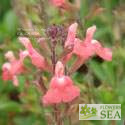
(Salmon Autumn Sage) Creamy salmon-colored flowers with white throats make this elegant Autumn Sage perfect for a pastel garden or as a cooling color in a mixed sage border. Bloom time is spring into fall for this petite Salvia greggii native to the American Southwest and Mexico.
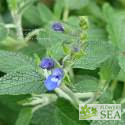
(Furry Colombian Sage) The leaves of this rare shrub are a glossy mid-green on top and fuzzy with hairs underneath, which is why it's commonly called Furry Colombian Sage.
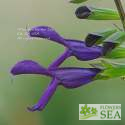
(Betsy's Choice Sage) Life and botany have their beautiful mysteries. Betsy's Choice Sage is one of them. We aren't certain of the parentage or history of this tall, attractive, fast-growing sage. However, we are certain that we love its long, royal purple flowers. Hummingbirds do as well.
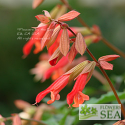
(Ember's Wish Sage) Bright coral-colored, tubular blossoms contrast handsomely with the deep maroon stems, rusty rose calyxes and mid-green foliage of Ember's Wish Sage.
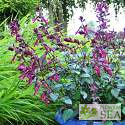
(Love and Wishes Sage) Deep purple calyxes support the magenta-purple, tubular blossoms of Salvia x 'Love and Wishes'. They contrast handsomely with dark stems and mid-green foliage.
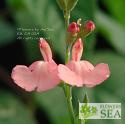
(Dyson's Orangy Pink Hybrid Jame Sage) Many Salvia x jamensis hybrids remind gardeners of sunrise, such as Dyson's Orangy Pink. Light green calyxes faintly striped with red cup its luminous pale salmon pink blossoms with creamy throats.
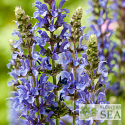
(Blau Hügel Meadow Sage) When in bloom, petite Salvia nemorosa 'Blue Hill' more than doubles in height. Its tall, spike-like racemes of violet-blue flowers are so dense and compact that this woodland sage is sometimes called "Blue Mound."
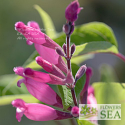
(Boutin Roseleaf Sage) Boutin means "button" in French. Perhaps the creamy, mulberry pink flowers of Salvia involucrata 'Boutin' looked cute as buttons to whoever named the cultivar.
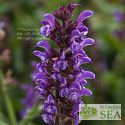
(Lyrical Silvertone Meadow Sage) European Meadow Sages are known for their intense color. However, Salvia nemorosa 'Lyrical Silvertone' is exceptional for its violet-blue and silver two-tone flowers supported by dark calyxes.
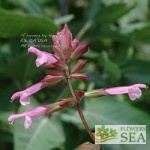
(Kisses and Wishes Sage) Blooming over multiple seasons, Salvia ‘Kisses and Wishes’ bursts with long, luminous, rosy pink blossoms nestled in pink-to-gold bracts. It’s so pretty that it seems unfair to refer to the newest member of the Wish Sages as a “mutation.”
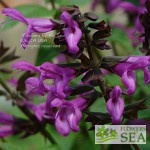
(COOL Fandango Anise Scented Sage) A combination of dark, rosy bracts and magenta blossoms make Salvia COOL Fandango dance. It’s vivid, floriferous, and a hummingbird favorite.
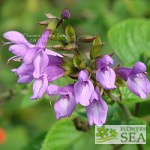
(COOL Lavender Blush Anise Scented Sage) Dusky green and red-edged bracts surround the pale-throated lavender blossoms of Salvia COOL Lavender Blush. It's a magnet for hummingbirds.
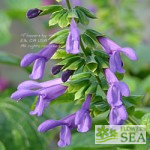
(COOL Lavender Mist Anise Scented Sage) Bright green bracts and rich lavender blossoms sing in Salvia COOL Lavender Mist. Hummingbirds keep this bountiful bloomer buzzing.
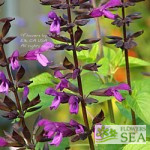
(Smokey Jazz Anise-Scented Sage) The dusky black calyxes of Salvia BODACIOUS® ‘Smokey Jazz’ support large flowers shaped like parrot beaks the unique color of boysenberries — a hue between red and purple.
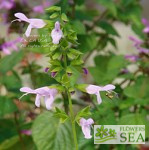
(COOL Pink Lace Anise Scented Sage) Cheerful Kelly-green bracts surround magenta buds that bloom into the soft pink yet magenta-tinged flowers of Salvia COOL Pink Lace. Its bright green leaves have a licorice-like fragrance.
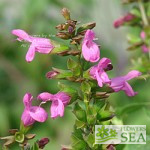
(COOL Wild Strawberry Anise Scented Sage) Prepare yourself for a heaping serving of large flowers the delicious color of strawberry ice cream when you plant Salvia COOL Wild Strawberry.
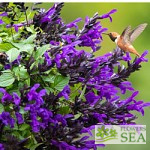
(Hummingbird Falls Anise-Scented Sage) Salvia BODACIOUS® ‘Hummingbird Falls’ is the world’s first hanging basket sage and a plant that hummingbirds battle over. It’s a natural alternative to plastic and glass nectar feeders that require frequent cleaning and refilling.
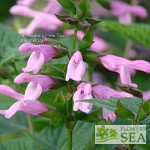
(COOL Shocking Pink Anise-Scented Sage) Dusky green bracts support the pastel magenta blossoms of Salvia COOL Shocking Pink. It’s a hummingbird favorite with bright green, fragrant foliage that may remind you of licorice.
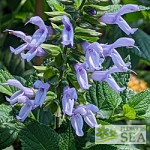
(COOL Periwinkle Anise-Scented Sage) Dusky green bracts cup the lavender-blue blossoms of Salvia COOL Periwinkle that attract hummingbirds. The fragrance of its bright green leaves may remind you of licorice.
The following terms were added to your search to help improve the result. Click here to exclude these extra terms from the search.
- guaranitica, type
Common terms in this search: mauretania tingitana sage native northern africa saudi arabia has long history cultivation going back years weaving throughout various countries middle east north before arriving europe first described scientifically discovery its arabian connection origin heat- drought-tolerant perennial hotly debated mystery egypt syria aleppo tunis tangier grows wide range conditions particularly useful border cut-flower plant dry gardens branches freely features flower spikes