
Advanced Search
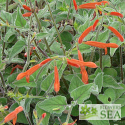
(Oaxaca Orange Wooly Sage) Tall, eye-catching spikes of dusky red-orange flowers that bloom from summer into fall make this one of our most impressive Salvias. Plus it's cold hardy into Zone 7.
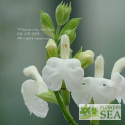
(Texas Wedding White Autumn Sage) This is our best white-flowered Autumn Sage. It is compact, hardy and blooms abundantly. We love it as a contrast to the generally bright colors of its group. Texas Wedding seems to always be blooming, with massive displays in spring and fall.
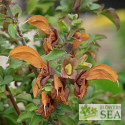
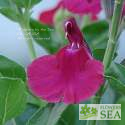
(Elk Pomegranate Autumn Sage) We're proud to say that this is an FBTS cultivar. It is one of the finest dark flowered, compact Autumn Sage varieties we have seen. Its extraordinarily large, raspberry blossoms bloom from spring into fall.
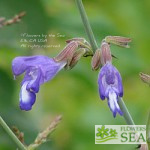
(Mount Olympus Sage) The deep violet and white flowers of Salvia ringens are eyecatching. Their wiry, branched spikes rise up to 5 feet tall from a dark green basal rosette.
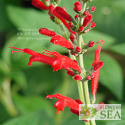
(Cinnabar Sage) Think of this plant as Pineapple Sage on steroids. It grows 5 feet tall and can be twice as wide and bursts with large, intensely red, furry flowers all winter. Our overwintering hummingbirds adore it. This cinnabar-red sage is hard to forget once you see it in full bloom.
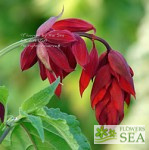
(Burgundy Scarlet Sage) Blood red to burgundy, the drooping blossoms of this sturdy, long flowering Salvia are the first that anyone comments on in a mixed planting. Use it singly as a dramatic garden accent or container plant; mass it for a stunning effect.
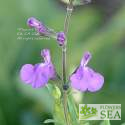
(Saint Isidro's Sage) This hardy, lavender-blue-flowered Salvia comes from Southern Texas and has the same breeding as the famous Ultra Violet Autumn Sage. Although it needs warmer winter temperatures and has smaller foliage, it also does well in stressful conditions, including drought.
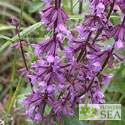
(Judean Sage) Native to the mountains of Judea in Israel, this dark violet flowered, perennial sage is unique among the Palestinian Salvias - as a woodland native it grows well in partial shade. It is a tough, drought-resistant plant with deeply cut & hairy foliage which forms impressive mounds of color in the spring and early summer.
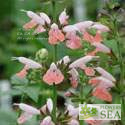
(Brenthurst Tropical Sage)Tropical Sage is popular as an annual throughout America and as a perennial in warm zones. It is particularly beloved in the Deep South where it withstands heat, wind, heavy rains and excessive humidity to bloom prolifically season after season. Brenthurst is a coral-flowered cultivar with dramatic, dark bracts and bright green, heart-shaped leaves.
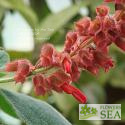
(Giant Colombian Red Mountain Sage) In 1898, physician and medical plant researcher Henry Hurd Rusby (1855-1940) found this towering sage with large, deep red flowers in the Sierra Nevada de Santa Marta mountains of Colombia.
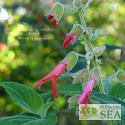
(Giant Colombian Pink Mountain Sage) In 1898, physician and medical plant researcher Henry Hurd Rusby (1855-1940) found the red-flowered variety of this towering species in the Sierra Nevada de Santa Marta mountains of Colombia. This one has large, reddish-pink flowers.
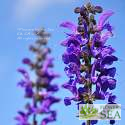
(Wild Meadow Sage) Meadow sages are native to Europe and include many hybrids. This lush, purple-flowered plant is a wild species that most likely is a hybrid of two ancient sages -- Salvia nemorosa and Salvia pratensis.
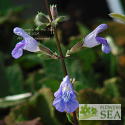
(Turkish Tea Sage) Sometimes an attractive plant is also medically powerful. That's true of the lavender flowered Salvia aucheri, which has strong white beelines. This Turkish native is consumed as an ingredient in teas used as folk remedies for many problems, including abdominal bloating and infections.
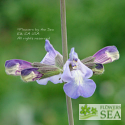
(Puna Sage) The deep violet-blue flowered Salvia calolophos has white beelines and oblong, mid-green leaves. It is a high-altitude native of northern Argentina.
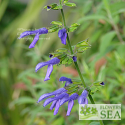
(Margie Griffith Sage) Salvia x 'Margie Griffith' is a big, purple-flowered beauty with glossy green, ribbed foliage. It feeds hummingbirds year round down South and on our coastal, Northern California farm where winter temperatures are moderate.
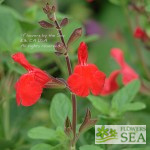
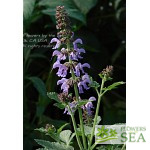
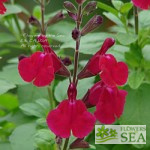
(Elk Raspberry Moose Sage) The deep raspberry flowers of this Salvia x Jamensis look good enough to eat, like spoonfuls of a silky, mouthwatering mousse dessert. Yet the 'moose' in its name isn't a misspelling. It refers to flowers that are larger than normal for a Jame Sage.
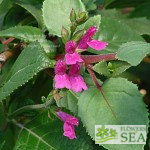
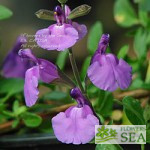
(Elk Grape Ape Jame Sage) Bountiful flowers that are larger than normal for Jame Sage cover Salvia x ‘Elk Grape Ape’ in a cloud of purple that is sort of amethyst to pinot gris in color.
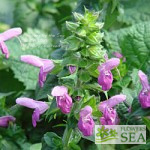
(Autumn Enchanter Japanese Woodland Sage) Salvia glabrescens ‘Autumn Enchanter’ has bicolored orchid pink flowers that are larger and bloom earlier than those of S. glabrescens ‘Shi Ho’. Autumn Enchanter is also more floriferous, blooms longer, and grows more rapidly with greater vigor.
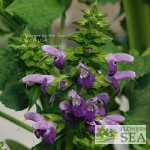
(Autumn Equinox Japanese Woodland Sage) Although similar to the Japanese native Shi Ho Woodland Sage, Salvia glabrescens 'Autumn Equinox' has much larger flowers that are bicolored purple and bloom earlier. Autumn Equinox is also more floriferous, blooms longer, and grows more rapidly with greater vigor.
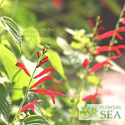
(Honey Melon Pineapple Sage) This is a short Pineapple Sage that is long blooming. It is the earliest and longest flowering of all the many varieties of Salvia elegans. We recommend it for indoor herb gardening as well as for outdoor borders and groundcovers.
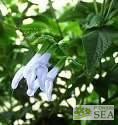
(Argentina Skies Anise-Scented Sage) PLEASE NOTE: A superior variety, 'Elk Argentina Skies' is now available.
The licorice-like fragrance of its foliage and the big whorls of large, sky blue flowers make this a stand-out sage. Tall and wide, it forms a tidy, long blooming background, screen or border.
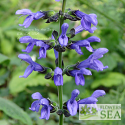
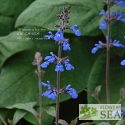
(Sinaloan Blue Sage) It's difficult to say which trait is more attractive about this sage -- the airy spikes of deep, true blue flowers or the fascinating spear-shaped foliage that varies from deep green to purple, forming a tidy mat.
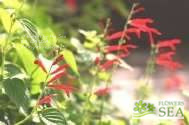
(Tangerine Pineapple Sage) This citrus-scented cultivar is our smallest variety of Pineapple Sage. Worth growing just for the exotic scent of its leaves, this culinary sage is also one of the longest blooming plants in its species.
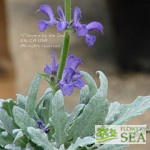
(Caucasus Sage) This hardy ground cover sage grows 4 to 12 inches tall and 12 inches wide. The velvety white fur of its foliage aids moisture retention. Its soft, royal purple flowers make it stand out. We think this Salvia deserves to spread far and wide.
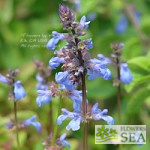
(Ground Ivy Sage) Native to Central Mexico's highlands, this creeping perennial grows at a altitudes of more than 10,000 feet and can handle some chill. Its common name comes from its scalloped yellow-green leaves, which resemble Ground Ivy or Glechoma.
The following terms were added to your search to help improve the result. Click here to exclude these extra terms from the search.
- flowered, larger
Common terms in this search: oaxaca orange wooly sage tall eye-catching spikes dusky red-orange flowers bloom from summer into fall make one our most impressive salvias plus its cold hardy zone even fully blooming border native southern mexicos cloud forests plant draws eye harmonize deep blues such gentian patens patio blue bright yellows including nubicola oranges hairy foliage gains description being helps survive drought heat