
Advanced Search
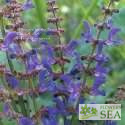
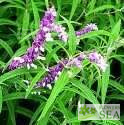
(Romanian Sage) Here's a great selection for mixed Salvia borders in zones with colder winters. This herbaceous perennial features deep violet flowers in large whorls atop tall, branched spikes.
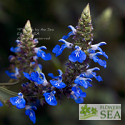
(Bog Sage) Highly adaptable, Salvia uliginosa is ideal for the beginning sage gardener. It isn't fussy about soil type, sun exposure, drainage or frequency of watering.
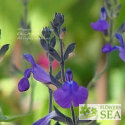
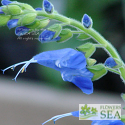
(Creeping Big Leaf Sage) Cobalt blue flowers float in airy clusters above the giant, velvety, green leaves of this South American native. Short and spreading by woody rhizomes, this is an ideal groundcover. As a bold statement in a container, it has no equal.
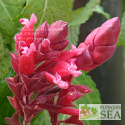
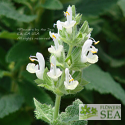
(Mauretania Tingitana Sage) Native to Northern Africa and Saudi Arabia, this sage gets by on little water. and has a long history of cultivation going back 400 years. It wove throughout various countries in the Middle East and North Africa before arriving in Europe in the 1700s and was first described scientifically in 1777.
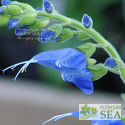
(Tall Big Leaf Sage) Cobalt blue flowers seem to float in airy clusters on 12-inch-tall branching spikes above the bright green, velvety foliage of this South American native. Up to 5-feet tall, tidy and upright in habit, this sage makes a fine background or border planting when massed.
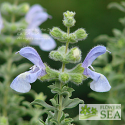
(Blue African Sage or Blousalie) A handsome, densely branched shrub with small, gray leaves, this Salvia puts on a show when in full bloom. The pale blue flowers bloom on foot-long spikes that cover the plant. Each flower has a large, trumpet-shaped, green-and-red bract at its base.
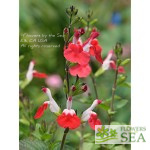
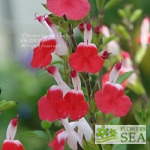
(Hot Lips Sage) What a winner for fascinating flowers! Salvia microphylla ‘Hot Lips’ is a native of Mexico that produces a combination of solid red, solid white, and bicolor red and white blossoms all on the same plant and sometimes at the same time.
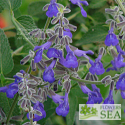
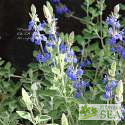
(Marine Blue Sage) The name and origin of this fine cultivar has long been in dispute. It may be a clone or hybrid of the Mexican plant Salvia chamaedryoides var.isochroma. It is one of the prettiest, strongest sages we grow.
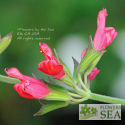
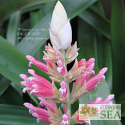
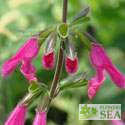
(Pink & White Wagner's Sage) Instead of pink, leaf-life bracts, this variety of Wagner's Sage has white bracts surrounding the hot pink flowers. It blooms from November to March on our coastal Northern California farm where it feeds Anna's hummingbirds all winter long.
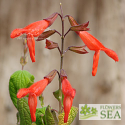
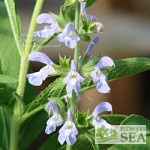
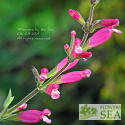
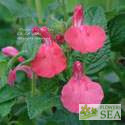
(Hadspen Roseleaf Sage) If you plant this sage in a mild-climate area where hummingbirds overwinter, you'll likely find hummers zinging back and forth among its magenta pink blossoms from fall through spring.
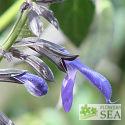
(Door of the Fox Mexican Sage) Purplish foliage contrasts attractively with the violet-to-purple flowers of this big sage, which grows 6 feet tall and 4 feet wide. Bloom time is autumn. This darkly dramatic Mexican Sage makes a particularly attractive entryway accent.
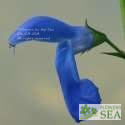
(Giant Gentian Sage) "Wow!" is what most people say when they see this large Gentian Sage from Central Mexico. Growing to 4 feet tall, it has long, graceful spikes of 3-inch deep, royal blue flowers that are highly visible and easily accessible to hummingbirds.
(Kellerman's Sage) Rare in the United States, this wooly leafed, upright shrub comes from Southern Mexico and Guatemala. Mid-size, powder-blue flowers bloom on its long, airy stems from summer through winter in mild climates. It's lovely in mixed, drought-resistant plantings.
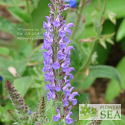
(The Queen's Sage) Regal spikes of lavender-to-purple flowers give weight to this sage's common name. It provides a stately show of bloom during summer in USDA Zones 6 to 10. Cold hardy and heat tolerant, this impressive perennial comes from the mountains of Turkey.
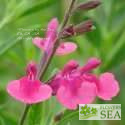
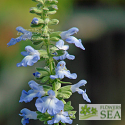
(Big Pitcher Sage) As its scientific name indicates, this sage has very large flowers. They are almost two-tone, changing from deep violet to a light blue or white at their base where they are cupped by dusky purple calyxes.
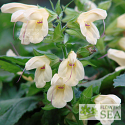
(Kyushu Woodland Sage) We are in love with this short forest sage from Kyushu, Japan. Its clusters of large creamy flowers pale as fresh-churned butter begin blooming in September. Even when not blooming, its foliage is showy in a shady garden.
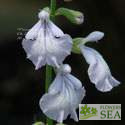
(Heart Leaf Sage) From the rich plains of Northern Argentina comes this delicate looking sage with heart-shaped leaves and pale blue flowers so perfect they seem to be molded in wax. Although a slow grower that requires good garden culture, this Salvia is exquisite.
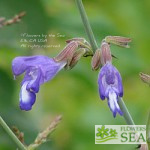
(Mount Olympus Sage) The deep violet and white flowers of Salvia ringens are eyecatching. Their wiry, branched spikes rise up to 5 feet tall from a dark green basal rosette.
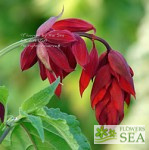
(Burgundy Scarlet Sage) Blood red to burgundy, the drooping blossoms of this sturdy, long flowering Salvia are the first that anyone comments on in a mixed planting. Use it singly as a dramatic garden accent or container plant; mass it for a stunning effect.
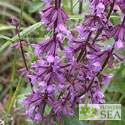
(Judean Sage) Native to the mountains of Judea in Israel, this dark violet flowered, perennial sage is unique among the Palestinian Salvias - as a woodland native it grows well in partial shade. It is a tough, drought-resistant plant with deeply cut & hairy foliage which forms impressive mounds of color in the spring and early summer.
Results for more from the blog
| Hummingbirds in the Garden |
| 1. 6 Indispensable Hummingbird Flowers for Long, Easy Bloom |
| Hummingbirds are like tiny combat jets dive bombing each other when staking claim to the nectar-rich flowers they need for survival. Fights over nectar habitat can reduce hummingbird gardens to single occupancy. FBTS Farm and Online Nursery details and tells stories about its top six hummingbird flowers. Plant lots of them to accommodate a village of hungry hummers. |
| 2. Annual Salvias that Hummingbirds Adore |
| If a hummingbird could talk, he or she would tell you it's hard work packing for a long journey. Consuming mightily from dawn to dusk, day after day, hummingbirds double their weight before migration. They can't afford to run out of fuel before their next meal. To help hummingbirds, particularly on their northward journey, home gardeners can celebrate the arrival of spring by planting gardens filled with early blooming Salvias and companion plants that are excellent annuals in areas where winters are too chilly for survival as perennials. |
| 3. Battles in the Salvia Garden: Controlling Spider Mites - Part I |
| Salvias often suffer when spider mites become legion in gardens. This is Part 1 of a two-part series about understanding and overcoming these dangerous pests. As summer temperatures rise, so do the numbers of the family Tetranychidae -- spider mites -- especially if conditions are dry. Controlling spider mites in your Salvia garden may be as simple as keeping plants hydrated and regularly spraying the little nippers off foliage. Or it may take a number of interventions, including biological controls, such as predatory mites, as well as the use of insecticidal soaps, oils and pesticides |
| 4. Fall Cleanup: Plant Placement and Pesky Problems |
| You don’t usually have to fuss over Salvias to give them what they need. Yet the end of fall and other growing seasons are good times to seek solutions to problems that affect plant vigor. It is a time for a call to attention as well as a cleanup call to action. |
| Getting Started with Salvias |
| 5. Getting Started: How Much Water Salvias Need |
| Salvias may need little or lots of water depending on species and local growing conditions. Many are drought resistant, getting by on less than an inch a week. Learn about the many kinds of Salvias, also called sages, at Flowers by the Sea. We're an online, mail-order nursery specializing in sages. |
| 6. Getting Started: Salvias for Zone 9 |
| California's small, Mohave Desert city of Barstow averages about 5 inches of rain annually. Across the continent, Pensacola, Florida, has more than double Barstow's population and more than 12 times its amount of rainfall. Yet both cities are part of the U.S. Department of Agriculture's Plant Hardiness Zone 9 where you can plant perennials and shrubs that survive winter lows ranging from 20 to 30 degrees F. Flowers by the Sea takes readers on a triple coast road trip of Zone 9 and suggests plantings for varied growing conditions along the way. |
| 7. How to Defend Homes Against Wildfires & Firescape with Salvias |
| Home improvement, including landscaping, involves lots of decisions. This is especially true when modifying your property to protect against wildfires. Flammability is usually the last thought on a gardener's mind when planning what to purchase. But if you live in wildfire country and are a Salvia lover, you may have noticed sages on lists of fire-resistant plants. Read more about wildfire preparedness at FBTS. |
| 8. In the Native Garden: Colorful California Salvias Plus a Cousin |
| Native plants, including California's many indigenous sages, are like the boys or girls next door who were overlooked until outsiders discovered their good looks and other fine attributes. Flowers by the Sea grows hardy, drought-resistant California Salvias that are native to a broad swath of the West Coast ranging from Northern Baja to Southern Oregon. Many tolerate heat. They are well suited to waterwise landscapes, including dry gardens. |
| Sage Experts |
| 9. Sage Experts: Nancy Newfield, Hummingbird Gardener, Part II |
| Salvias are among the best hummingbird flowers and red is tops. That's what hummingbird researcher, Nancy L. Newfield began discovering more than 40 years ago. She found that flower nectar was more attractive than nectar feeders. This is the second article in a 3-part series on Newfield and hummingbird gardening. It includes an excerpt from her book Hummingbird Gardens and an FBTS list of red hummingbird favorites. Bud Hensley photographed the hummingbird pictured here enjoying Salvia subrotunda. |
| Book Reviews |
| 10. Book Reviews: Three Top Reads for Dry Gardening |
| Don’t think “drab” when you hear the phrase “dry garden.” With guidance from good books and a willingness to experiment, you can create colorful flowerbeds and landscapes that require little to no supplemental watering. Here is a quick overview of three books that are excellent resources about sustainable dry gardening. |
| Xeric Choices |
| 11. Xeric Choices: Salvias in the Waterwise Garden |
| Lush but not lushes - that's one way you might sum up the majority of Salvias. Despite their long bloom times and bushy foliage, Salvias don't generally belly up to the water hose. Overall, they are perfect for xeriscape gardening -- the art of creating great beauty in the garden while conserving water. |
| Hummingbirds in the Garden |
| 12. Guide to Fuchsia Cultivation & History |
| Like tiny dancers dressed in fancy skirts, Fuchsia flowers dangle from upright shrubs in long blooming hedges and from trailing branches in hanging baskets. Fuchsias are hummingbird favorites that come in many rosy colors. Read about them in the FBTS Guide to Fuchsia Cultivation & History . |
Common terms in this search: romanian sage here's great selection mixed borders zones colder winters herbaceous perennial features deep violet flowers large whorls atop tall branched spikes its name indicates romania homeland cold- heat-tolerant also native northern central russia stems lax they trail across ground rooting forming small clumps flowering begins early summer continues until first frost lovely long-blooming deserves planted more gardens place where