
Advanced Search
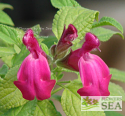
(Alice's Sage) We have John Fisher of Australia to thank for this fascinating intraspecific cross, which he named after his daughter. It really looks to be intermediate between the parents, and the fragrance of the leaves is divine.
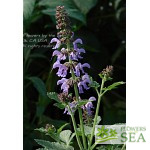
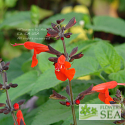
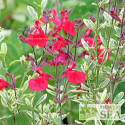
(Forest Fire Tropical Sage) Butterflies love the abundant, fire engine red flowers of this mostly annual sage. It's a popular cultivar of one of the first Salvias used for ornamental purposes -- Tropical Sage. The flowers are dramatically framed by reddish black bracts.
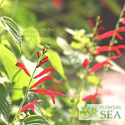
(Honey Melon Pineapple Sage) This is a short Pineapple Sage that is long blooming. It is the earliest and longest flowering of all the many varieties of Salvia elegans. We recommend it for indoor herb gardening as well as for outdoor borders and groundcovers.
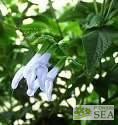
(Argentina Skies Anise-Scented Sage) PLEASE NOTE: A superior variety, 'Elk Argentina Skies' is now available.
The licorice-like fragrance of its foliage and the big whorls of large, sky blue flowers make this a stand-out sage. Tall and wide, it forms a tidy, long blooming background, screen or border.
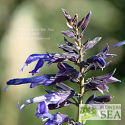
(Van Remsen's Anise-Scented Sage) Big and beautiful, this Anise-Scented Sage grows up to 7 feet tall in rich soil and has lavender-to-purple flowers. In our garden, it blossoms from late spring to fall, attracting both honeybees and hummingbirds.
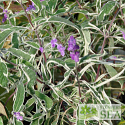
(Variegated Mexican Bush Sage) Although slow growing and somewhat finicky, this sage is a must-have for lovers of unique foliage. It has small purple flowers and highly variegated leaves with stems that are slightly twisted. The overall look is compact and dense.
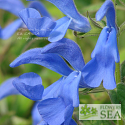
(Blue Angel Gentian Sage) Since the 1838 discovery of this herbaceous species from Central Mexico, Salvia patens has been a mainstay of the perennial garden. Blue Angel is one of the smallest of the full-sized varieties.
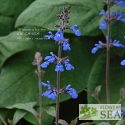
(Sinaloan Blue Sage) It's difficult to say which trait is more attractive about this sage -- the airy spikes of deep, true blue flowers or the fascinating spear-shaped foliage that varies from deep green to purple, forming a tidy mat.
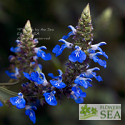
(Bog Sage) Highly adaptable, Salvia uliginosa is ideal for the beginning sage gardener. It isn't fussy about soil type, sun exposure, drainage or frequency of watering.
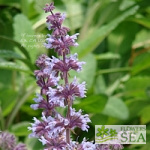
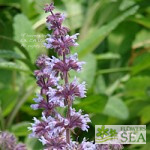
(Lilac Sage) We try not to brag too much, but this is our own variety of Salvia verticillata from home-grown seed, and we think it is spectacular. Butterflies and honeybees also are in love with this long-blooming perennial beauty.
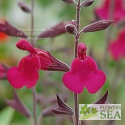
(Raspberry Delight Sage) Dark raspberry-red flowers, burgundy stems and calyxes and deep green foliage make this one of our most attention-grabbing varieties.
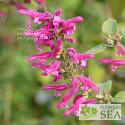
(Scandent Mexican Sage) Here's another winter-blooming hummingbird magnet for gardens in mild climates. This one is scandent, which means it is a climber and needs support. Its abundant, purple-to-magenta flowers are velvety and 6 inches long.
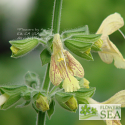
(Jupiter's Distaff) Easy to grow and adaptable to a wide range of conditions, this native of Europe and Asia is our best tall, yellow-flowering perennial. Although its common name compares the flower spikes to wool spindles, they look more like glowing sceptres.

(Cayman Island Sage) Compact and intensely fragrant, this shrubby sage is excellent for containers or the edge of a pathway. Small blue and white flowers mass about its densely branched foliage. It loves rich, moist soil and warm weather.
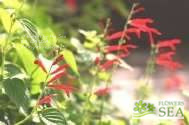
(Tangerine Pineapple Sage) This citrus-scented cultivar is our smallest variety of Pineapple Sage. Worth growing just for the exotic scent of its leaves, this culinary sage is also one of the longest blooming plants in its species.
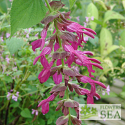
(Gravid Sage) This tender perennial from Michoacan, Mexico, has large, rich magenta flowers that hang from the arching branches in clusters up to 12 inches long. Growing up to 5 feet tall, this sage offers an unforgettable display when in bloom.
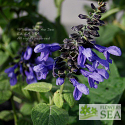
(Costa Rica Blue Sage) Although this handsome plant is often listed as an Anise Leaf Sage (Salvia guaranitica), we think it is a hybrid based on differences in its growth pattern and flowering season.
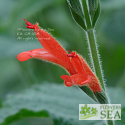
(Tubular Chilean Sage) Foggy days and moderate temperatures are the norm for this low-altitude, coastal mountain sage from northern Chile and Peru. It is grown as much for its handsome foliage as for the deep cranberry of its tiny, tubular flowers.
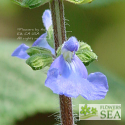
(Bitter Mexican Sage) Hummingbirds love this heat-tolerant Salvia, which is one of our best choices for shady, moist areas. The large-lipped, baby-blue flowers with white striations bloom from late summer through fall.
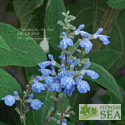
(Pale Sage) Powder blue flowers are cupped by lavender calyxes on this lovely yet little-used sage native to moist meadows in Argentina. It is a tall, narrow plant with delightful oval-shaped leaves with scalloped margins.
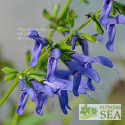
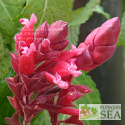
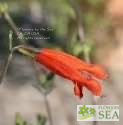

(Variegated Mexican Sage) Although its deep violet flowers are compelling, it is the foliage of this sage that is its greatest attraction. Kelsi is full of surprises, including asymmetrical leaves that make this variety easy to identify.
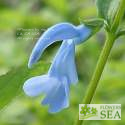
(Cambridge Blue Gentian Sage) Cambridge Blue is one of the most famous varieties of Salvia patens, which was discovered in Central Mexico in 1838. Its powder blue flowers are delightful and cooling in the landscape.
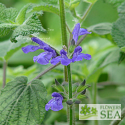
(Blue Bush Sage) Furry, large and heavily textured, the mid-green leaves of Salvia urica contrast attractively with its violet-blue flowers that bloom spring into summer.
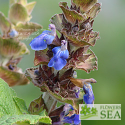
(Michoacan Blue Sage) This unusual and distinctive Mexican sage grows from tuberous roots. It is compact and decidedly vertical with strong, square, winged stems that rocket upward and are topped with clusters of rich blue flowers in large rosy bracts come autumn.
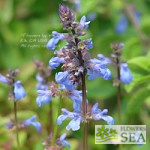
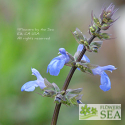
(Ground Ivy Sage) Native to Central Mexico's highlands, this creeping perennial grows at a altitudes of more than 10,000 feet and can handle some chill. Its common name comes from its scalloped yellow-green leaves, which resemble Ground Ivy or Glechoma.
The following terms were added to your search to help improve the result. Click here to exclude these extra terms from the search.
- partial, shade
Common terms in this search: alices sage have john fisher australia thank fascinating intraspecific cross which named after his daughter really looks intermediate between parents fragrance leaves divine greggii warm season blooming hardy perennial dorisiana tender winter shrub plant has some cold tolerance but should protected outside zone find does best rich soil partial not deep shade overwatering advised neither dryness looking something unigue strong