
Advanced Search
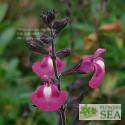
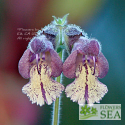
(Elk Plum Parfait Jame Sage) It's a toss-up as to which are more dramatic -- the deep purple calyxes so dark they almost look black or the plum-colored flowers with pronounced white beelines. Elk Plum Parfait is a rare treat.
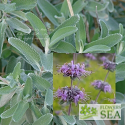
(Spreading California Purple Sage or Spreading California Gray Sage) Songbirds love this California native as do honeybees and hummingbirds. This Salvia leucophylla clone was collected in 1982 by Dr. Dale Smith of University of California Santa Barbara (UCSB #82152) at Point Sal near Santa Barbara.
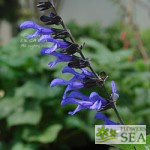
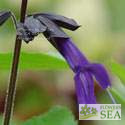
(Rhythm and Blues Anise-Scented Sage) The large, deep bluish-purple flowers of Salvia BODACIOUS ‘Rhythm and Blues’ are shaped like parrot beaks and supported by black calyxes. It's foliage smells sweet with a hint of licorice. It's superior to the old standby Salvia guaranitica 'Black and Blue'.
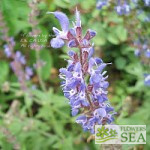
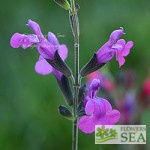
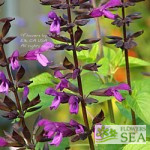
(Smokey Jazz Anise-Scented Sage) The dusky black calyxes of Salvia BODACIOUS® ‘Smokey Jazz’ support large flowers shaped like parrot beaks the unique color of boysenberries — a hue between red and purple.
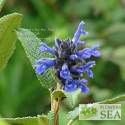
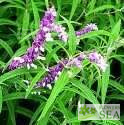
(Friendship Sage) Thank you Rolando Uria of the University of Buenos Aries for this very fine plant. Discovered in 2005 at a plant show in Argentina, this truly unique hybrid sage has generated a great deal of excitement in the Salvia world.
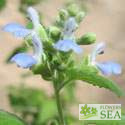
(Mejorana) In Spanish, Mejorana means ‘marjoram.” Similar to oregano-type Marjoram – another Mint family member -- this sage is used to flavor meat dishes. Our cultivar, which is native to Texas and Mexico, has lovely bluish-purple flowers that bloom summer to fall amid fragrant, fine, furry green foliage.
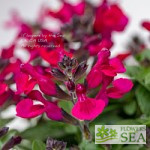
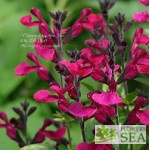
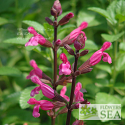
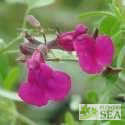
(Mulberry Jam Roseleaf Sage) Magenta flower buds burst into fuzzy, hot pink blossoms in this hybrid sage from the gardens of Betsy Clebsch, author of The New Book of Salvias.
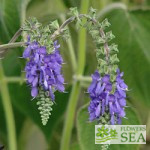
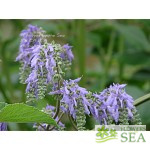
(Nodding Sage) "Dancing in the air" is how garden writer Joseph Tychonievich describes the tall, graceful flower spikes of Nodding Sage, which can tower up to 5 feet tall over the plant's 18-inch-tall foliage during the summer flowering season.
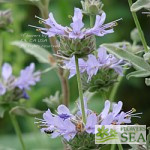
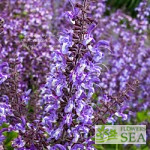
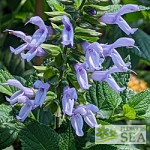
(COOL Periwinkle Anise-Scented Sage) Dusky green bracts cup the lavender-blue blossoms of Salvia COOL Periwinkle that attract hummingbirds. The fragrance of its bright green leaves may remind you of licorice.
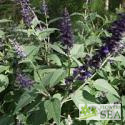
(Anthony Parker Bush Sage) Floriferous spikes of dark blue to purple flowers bloom midsummer to fall on this tidy, mid-height subshrub that grows as wide as it is tall.
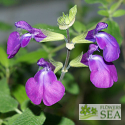
(Christine Yeo Sage) A chance hybrid of two Mexican sages --Salvia microphylla and S. chamaedryoides -- Christine Yeo Sage is long blooming and features deep purple flowers with white eyes.
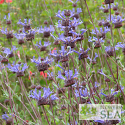
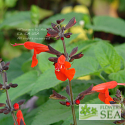
(Forest Fire Tropical Sage) Butterflies love the abundant, fire engine red flowers of this mostly annual sage. It's a popular cultivar of one of the first Salvias used for ornamental purposes -- Tropical Sage. The flowers are dramatically framed by reddish black bracts.
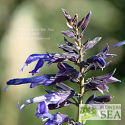
(Van Remsen's Anise-Scented Sage) Big and beautiful, this Anise-Scented Sage grows up to 7 feet tall in rich soil and has lavender-to-purple flowers. In our garden, it blossoms from late spring to fall, attracting both honeybees and hummingbirds.
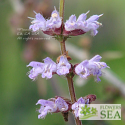
(Japanese Woodland Sage or Shu Wei Cao) This short, lavender-flowered, ornamental sage has purple-to-green foliage. In Asia, this woodland plant has long been an important medicinal herb, used in the treatment of conditions such as diabetes.
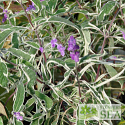
(Variegated Mexican Bush Sage) Although slow growing and somewhat finicky, this sage is a must-have for lovers of unique foliage. It has small purple flowers and highly variegated leaves with stems that are slightly twisted. The overall look is compact and dense.
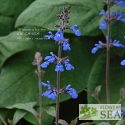
(Sinaloan Blue Sage) It's difficult to say which trait is more attractive about this sage -- the airy spikes of deep, true blue flowers or the fascinating spear-shaped foliage that varies from deep green to purple, forming a tidy mat.
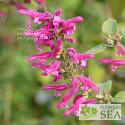
(Scandent Mexican Sage) Here's another winter-blooming hummingbird magnet for gardens in mild climates. This one is scandent, which means it is a climber and needs support. Its abundant, purple-to-magenta flowers are velvety and 6 inches long.
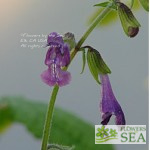
(Yunnan Sage or yun nan shu wei cao) Yunnan Sage's tall spikes of violet-to-purple flowers bloom from summer into fall. Native to Southwestern China's provinces of Yunnan, Guizhou and Sichuan, it grows on shady, grassy hillsides and along forest margins at elevations up to 9,500 feet.
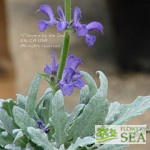
(Caucasus Sage) This hardy ground cover sage grows 4 to 12 inches tall and 12 inches wide. The velvety white fur of its foliage aids moisture retention. Its soft, royal purple flowers make it stand out. We think this Salvia deserves to spread far and wide.
The following terms were added to your search to help improve the result. Click here to exclude these extra terms from the search.
- black, purple
Common terms in this search: elk plum parfait jame sage it's toss-up which more dramatic deep purple calyxes dark they almost look black plum-colored flowers pronounced white beelines rare treat petite perennial compact fragrant tough one our jamensis hybrids rainbow sages native mexico american southwest occur areas where closely related species autumn greggii mountain microphylla meet such near village mexico's sierra madre mountains test gardens