
Advanced Search
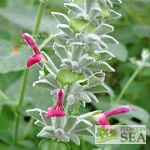
(White Headed Sage) One of the most visually stunning members of the genus, this large growing, tender, winter blooming species from the mountains of Ecuador will turn every head with its furry white calyxes and brilliant magenta red flowers.
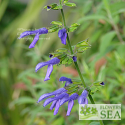
(Margie Griffith Sage) Salvia x 'Margie Griffith' is a big, purple-flowered beauty with glossy green, ribbed foliage. It feeds hummingbirds year round down South and on our coastal, Northern California farm where winter temperatures are moderate.
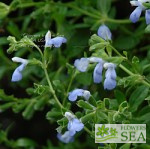
(Running Peruvian Sage) Petite is a good description for the pale blue flowers and light green, veined, elliptical leaves of Salvia sarmentosa. It’s an attractive groundcover in warm winter areas as well as a graceful, spilling container plant.
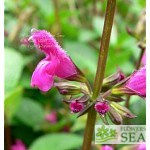
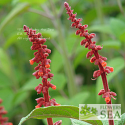
(Red Velvet Sage) Reaching up to 18 inches tall, the floral spikes of this exotic looking Salvia are crowded with small, velvety, orange-red blossoms from mid-summer to late autumn. Its large, dark green, pebbly leaves are beautiful in their own right, making this one of our favorite sages.
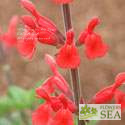
(Vermilion Bluffs® Mexican Sage) The brilliant red flowers of Vermilion Bluffs bloom abundantly from August to October. This variety of the Mexican native Salvia darcyi is cold hardy to Zone 5b at altitudes up to 5,500 feet.
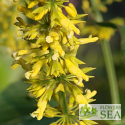
(Forysthia Sage) This statuesque perennial grows up to 10 feet tall, but spreads only 3 feet wide. It is a late bloomer from Mexico's Sierra Madre Oriental mountains where it grows at altitudes of 4,000 to 5,000 feet and tolerates temperatures down to 20 degrees F.
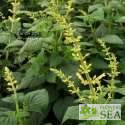
(Red Stem Forsythia Sage) The thick, square, red stems of this variety of Forsythia Sage make it conspicuously different from the species and from everything else in your garden. Its jointed stalks look a little like rhubarb gone mad!
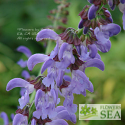
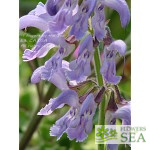
(Red Sage, Chinese Sage, Dan-shen) The bright red, finger-like roots of Salvia miltiorrhiza have a long history in traditional Chinese herbal medicine.
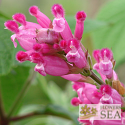
(El Butano Downy Sage) El Butano is a horticulturally rich area of Cumbres de Monterrey National Park in the mountains of Nuevo Leon, Mexico. El Butano Downy Sage was discovered in this area where it grows at elevations of 4,500 to 8,000 feet.
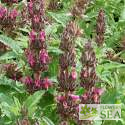
(Hummingbird Sage or Pitcher Sage) No sage we grow is more attractive to hummingbirds than this one. Spectacular in all ways, it is one of our favorite Salvias with its fragrant, evergreen foliage and jewel-like flowers and bracts.
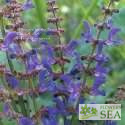
(Romanian Sage) Here's a great selection for mixed Salvia borders in zones with colder winters. This herbaceous perennial features deep violet flowers in large whorls atop tall, branched spikes.
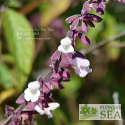
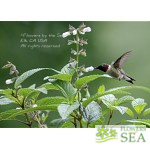
(Waverly Sage) A pale pink to lavender blush adds delicate color to the white flowers of Waverly Sage, which are supported by plum-colored calyxes. Its mid-green leaves are lance shaped and veined.
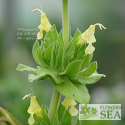
(Yellow Hummingbird Sage or Yellow Pitcher Sage) The Santa Barbara Botanic Garden introduced this rare yellow variety of fragrant Hummingbird Sage. Similar to other varieties of this species, Avis Keedy is alluring to butterflies, honeybees and hummingbirds.
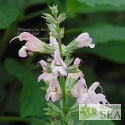
(Dandelion Leaf Sage) Brush or bruise the basal foliage of this Moroccan Salvia and it exudes a citrusy fragrance. Petite and heat tolerant, this is a sturdy, adaptable groundcover.
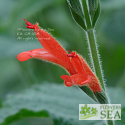
(Tubular Chilean Sage) Foggy days and moderate temperatures are the norm for this low-altitude, coastal mountain sage from northern Chile and Peru. It is grown as much for its handsome foliage as for the deep cranberry of its tiny, tubular flowers.
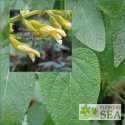
(Silver Leaf Forysthia Sage) It's the foliage of this clone that makes it so different from its parent plant. The leaves are a lovely silver and smaller than the green leaves of the species. However, they both have buttery yellow, Forsythia-like blossoms.
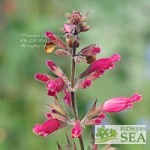
(Gray Roseleaf Sage) The University of California at Berkeley developed this hybrid from Karwinskii's Sage (Salvia karwinskii) and a variety of Roseleaf Sage (Salvia involucrata v. puberula) collected in Mexico by North Carolina nurseryman Richard Dufresne.
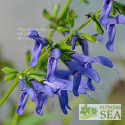
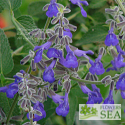
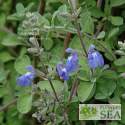
(Snowflake Sage) Wiry, trailing stems of small white leaves make this plant look like fresh snowfall. Numerous, small, sky blue flowers with prominent bee lines further add to the cooling look. This dry-garden plant is native to the mountains of the Chihuahuan desert of North Central Mexico.
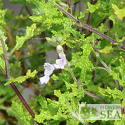
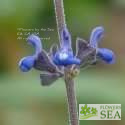
(Chilean Mountain Sage) Formerly known as S. gillesii, this delicate-looking sage with dramatically deep blue flowers is robust in the garden. Its branches are draped with wooly grey foliage featuring rounded, toothed leaves that are pleasantly scented.
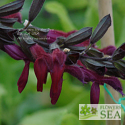
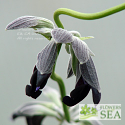
(Purple Bract Peruvian Sage or Concolor Sage) Similar to its wild relative, Peruvian Sage, which is also known as Concolor Sage, this cultivar has foliage that is smooth, apple green on top and fuzzy with silver hairs on the bottom. Major differences appear in the dramatic bracts.
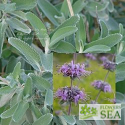
(California Purple Sage or California Gray Sage) This California native is commonly known as Purple Sage for its flowers or Gray Sage for its silvery, velvety foliage. Due also to its hardiness, drought tolerance and ability to attract small wildlife, it is a joy in the dry garden.
The following terms were added to your search to help improve the result. Click here to exclude these extra terms from the search.
- winter
Common terms in this search: rosebud hybrid sage cloud forest natives from southern mexico often have lush blossoms that's true magenta pink flowers puberula univerticillata which bloom fall into winter plant two parents fuzzy red flowered hairy commonly called tarantula isn't surprising foliage well similar many other species tolerates cooler winters usda zone well-drained soil full sun partial shade provide average watering based local conditions