
Advanced Search
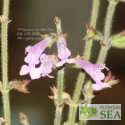
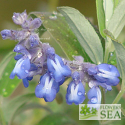
(Blue Ecuadorian Sage) A densely branched shrub with silvery leaves and dusky blue flowers, this rare species was once thought to be Salvia cruickshanksii. In the nursery trade, it sometimes is called Salvia 'Equador'.
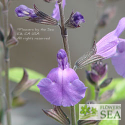
(Azure Hybrid Sage) Despite its name, the flowers of this tiny hybrid aren't really blue. They are a light purple. Due to its size, long bloom time, heat tolerance and drought resistance, Salvia x 'Mesa Azure' is a fine groundcover for areas where summers are hot and dry.
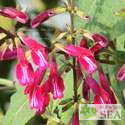
(Violet Calyx Sage) Here's another abundantly blooming sage from the cloud forest slopes of Chiapas, Mexico. Violet beelines mark the lower lip of the crimson blossoms, which are so numerous that it can be difficult to see the foliage at times.
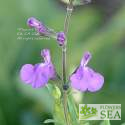
(Saint Isidro's Sage) This hardy, lavender-blue-flowered Salvia comes from Southern Texas and has the same breeding as the famous Ultra Violet Autumn Sage. Although it needs warmer winter temperatures and has smaller foliage, it also does well in stressful conditions, including drought.
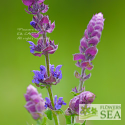
(Stem Clasping Violet Sage) Like a candelabra lit up with whorls of violet blossoms, the erect, branching flower spikes of Salvia amplexicaulis make this native of Southeastern Europe shine. On the Grecian island of Thassos, it brightens areas near the beach.
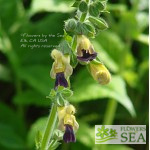
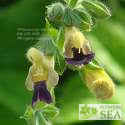
(Purple & Yellow Yunnan Sage or ji ye shu wei cao) Confusion about this plant's scientific name cause it to appear in some sources as Salvia flava var. megalantha. Whatever you call it, this Chinese species from Yunnan Province has enchanting yellow and purple flowers that attract viewers as well as honeybees.
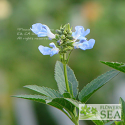
(Dwarf Bog Sage) Intense sky blue flowers with white beelines are set against mid-green foliage in this dwarf Bog Sage that is about half as tall and wide as its parent species when in bloom.
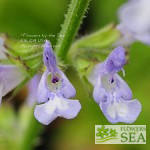
(Cut Leaf African Blue Sage) In botanical names, aurita means “ear shaped.” It’s the ear-like lobes of this sage’s leaves that give the species part of its name Salvia aurita ssp. galpinii. The cut leaf foliage is heavily lobed, mint green and lightly hairy.
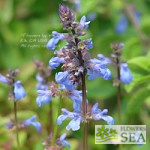
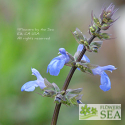
(Ground Ivy Sage) Native to Central Mexico's highlands, this creeping perennial grows at a altitudes of more than 10,000 feet and can handle some chill. Its common name comes from its scalloped yellow-green leaves, which resemble Ground Ivy or Glechoma.
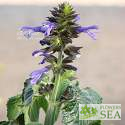
(Lolly's Mexican Sage) Our variety of Salvia mexicana 'Lolly' is the tall kind growing up to about shoulder height. A shorter form is often called "Lollie Jackson" or "Lolly Jackson." Who or what the mysterious Lolly is remains unclear.
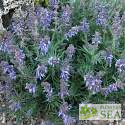
(Yugoslavian Cut Leaf Sage) This is a rare Baltic steppe plant that grows beautifully in sunny locations with little water and excellent drainage. It is endemic to a the Orlova Brdo region of the Former Yugoslav Republic of Macedonia.
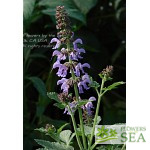
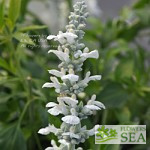
(White Flame Sage) Like bright white candle flames, the short vigorously upright flower spikes of petite Salvia x ‘White Flame’ light up flowerbeds.
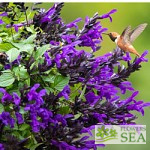
(Hummingbird Falls Anise-Scented Sage) Salvia BODACIOUS® ‘Hummingbird Falls’ is the world’s first hanging basket sage and a plant that hummingbirds battle over. It’s a natural alternative to plastic and glass nectar feeders that require frequent cleaning and refilling.
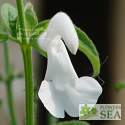
(White Trophy Gentian Sage) White Trophy loves partial shade and is the finest white Salvia patens available, with very large flowers that age to pale blue.
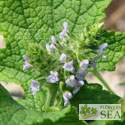
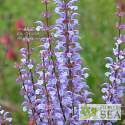
(Red Veined Sage) In 1827, John Wilkes referred to Salvia haematodes as "Bloody Sage" in his Encyclopaedia Londinensis, Volume 22. This might seem mysterious when first viewing the sage's upright yet somewhat relaxed spikes of whorled, violet-colored flowers.
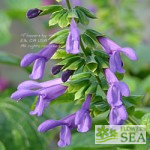
(COOL Lavender Mist Anise Scented Sage) Bright green bracts and rich lavender blossoms sing in Salvia COOL Lavender Mist. Hummingbirds keep this bountiful bloomer buzzing.
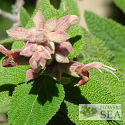
(Wooly Multicolor Sage) In Greek, "lasiantha" means "wooly flower." The flowers of Salvia lasiantha are surrounded by wooly bracts, but are even more notable for transforming from apricot-orange in the morning to reddish-purple later in the day.
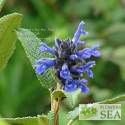
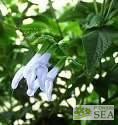
(Argentina Skies Anise-Scented Sage) PLEASE NOTE: A superior variety, 'Elk Argentina Skies' is now available.
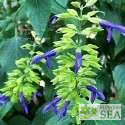
The licorice-like fragrance of its foliage and the big whorls of large, sky blue flowers make this a stand-out sage. Tall and wide, it forms a tidy, long blooming background, screen or border.
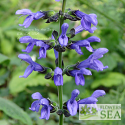
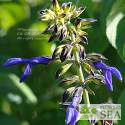
(La Placita Mexican Sage) Large and deep violet, the flowers of this tidy shrub bloom from late summer through fall. La Placita (the public square or small plaza) was collected in the mountains of Hidalgo, Mexico.
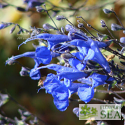
(Arrowleaf Sage) Brilliant royal blue flowers and unusual foliage attract the eye to Arrowleaf Sage. This large herbaceous perennial is found at elevations up to 10,500 feet in the Cordillera de los Andes of Chile, Ecuador and Peru.
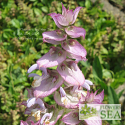
(Clary or Clear Eye Sage or Eyebright) Pink-purple bracts and violet-purple flowers form a pastel cloud over the large, rumpled leaves of Clary Sage in summer. It is a towering beauty growing up to 5 feet tall. Sacred to some due to age-old use in herbal remedies, it is heavenly to look at.
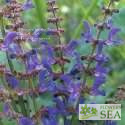
(Romanian Sage) Here's a great selection for mixed Salvia borders in zones with colder winters. This herbaceous perennial features deep violet flowers in large whorls atop tall, branched spikes.
(North African Sage) This stunning herbaceous perennial has sky blue flowers on showy, branched spikes that grow up to 6 feet tall.

(Cayman Island Sage) Compact and intensely fragrant, this shrubby sage is excellent for containers or the edge of a pathway. Small blue and white flowers mass about its densely branched foliage. It loves rich, moist soil and warm weather.
The following terms were added to your search to help improve the result. Click here to exclude these extra terms from the search.
- blue, violet
Common terms in this search: coastal blue sage native from sandy shores brushy slopes south africa's east cape sub-shrub noted growing easily gardens elsewhere its lovely purplish-pink flowers have subtle sparkle bright sun bloom spring fall sub-shrubs perennials woody stems well soft herbaceous growth one has heavily lobed lyre-shaped leaves they deep green which unusual salvias africa where velvety hairs often make foliage appear silvery