
Advanced Search
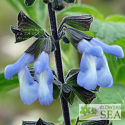
(Confused Argentine Sage) Similar in many ways to the indispensable garden favorites of the Anise Scented Sage (Salvia guaranitica spp.) group, this plant is a perfect companion for its better known cousin.
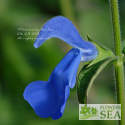
(Oxford Blue Gentian Sage) Only Salvia patens 'Blue Angel' comes close to the hard-to-believe, rich gentian blue of this sage from Mexico. Oxford Blue also grows taller and spreads wider than Blue Angel.
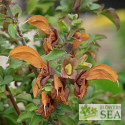
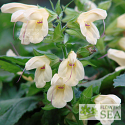
(Kyushu Woodland Sage) We are in love with this short forest sage from Kyushu, Japan. Its clusters of large creamy flowers pale as fresh-churned butter begin blooming in September. Even when not blooming, its foliage is showy in a shady garden.
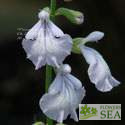
(Heart Leaf Sage) From the rich plains of Northern Argentina comes this delicate looking sage with heart-shaped leaves and pale blue flowers so perfect they seem to be molded in wax. Although a slow grower that requires good garden culture, this Salvia is exquisite.
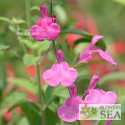
(Trinity Mountain Sage) Heat and drought tolerant, this Salvia microphylla is native to Northeastern Mexico where summers are dry and temperatures can rise to more than 100 degrees F. It can survive winter temperatures down to 0 degrees.
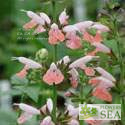
(Brenthurst Tropical Sage)Tropical Sage is popular as an annual throughout America and as a perennial in warm zones. It is particularly beloved in the Deep South where it withstands heat, wind, heavy rains and excessive humidity to bloom prolifically season after season. Brenthurst is a coral-flowered cultivar with dramatic, dark bracts and bright green, heart-shaped leaves.
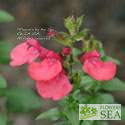
(People's Park Mountain Sage) Sometimes nature can be rebellious. This is one the Mountain Sages known as the Turbulent Sixties Series developed from an outlaw cultivar of the Southwestern native Salvia microphylla. Monterey Bay Nursery (MBN) named their accidental hybrid ‘Berzerkeley.’
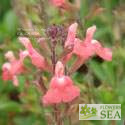
(Salmon Autumn Sage) Creamy salmon-colored flowers with white throats make this elegant Autumn Sage perfect for a pastel garden or as a cooling color in a mixed sage border. Bloom time is spring into fall for this petite Salvia greggii native to the American Southwest and Mexico.
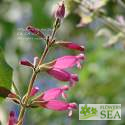
(Nuevo Leon Downy Sage) From the high mountains of Nuevo Leon, Mexico. This unusual variety has very large flowers in loose clusters. Early to bloom and more cold tolerant than other Downy Sage varieties, it is ideal for gardens on the edge of it's climatic adaptability.
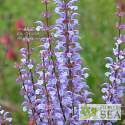
(Red Veined Sage) In 1827, John Wilkes referred to Salvia haematodes as "Bloody Sage" in his Encyclopaedia Londinensis, Volume 22. This might seem mysterious when first viewing the sage's upright yet somewhat relaxed spikes of whorled, violet-colored flowers.
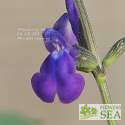
(Nuevo Leon Hybrid Sage) Imagine tiny, smooth, green leaves and deeper lavender-blue flowers than those of Salvia lycioides x greggii 'San Isidro'. With its midnight purple flowers, Nuevo Leon is a dramatic Salvia greggii hybrid.
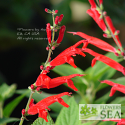
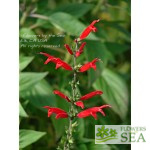
(Elk Sonoran Red Pineapple Sage) A new Pineapple Sage variety that has the traditional fruity fragrance but blooms much earlier in the season than the traditionally grown clone. Short and compact, it resembles the varieties 'Honey Melon' and 'Tangerine' size wise, but has the unmistakable aroma of ripe pineapples.
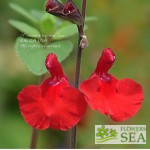
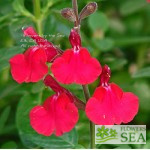
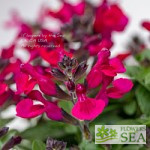
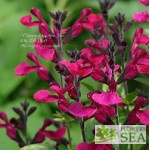
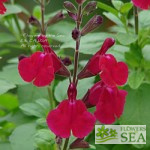
(Elk Raspberry Moose Sage) The deep raspberry flowers of this Salvia x Jamensis look good enough to eat, like spoonfuls of a silky, mouthwatering mousse dessert. Yet the 'moose' in its name isn't a misspelling. It refers to flowers that are larger than normal for a Jame Sage.
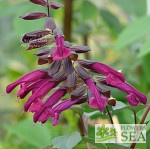
(Fashion Burgundy Sage) Pendulous deep burgundy blossoms and dark bracts attract the eye to Salvia Fashion Burgundy™. Although similar looking to an Australian Wish Sages, it is more compact than the Wishes or the Skyscraper series.
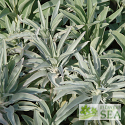
(Compact Sacred White Sage) Salvia apiana var. compacta is significantly shorter than the common species of Sacred White Sage and somewhat more cold tolerant. Its smaller leaves and compact form make it a tidier choice for home gardens with the right kind of growing conditions.
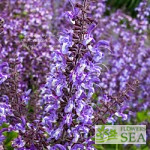
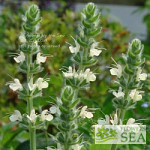
(Austrian Sage) Tall spikes of large, pale yellow flowers rise up from Salvia austriaca’s basal rosette of impressively large leaves. Deeply lobed, like the edges of a lacy collar, the leaves are broader and longer than those of any Salvia we have ever grown.
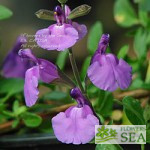
(Elk Grape Ape Jame Sage) Bountiful flowers that are larger than normal for Jame Sage cover Salvia x ‘Elk Grape Ape’ in a cloud of purple that is sort of amethyst to pinot gris in color.
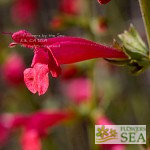
(Crimson Sage) Abundant and long blooming, the bright pink to red tubular flowers of Salvia henryi attract hummingbirds and form a pretty contrast with fuzzy, silvery foliage. This is a long blooming sage that is made for gritty soils, such as sandy loam.
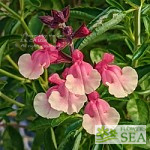
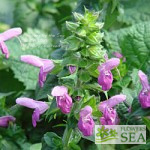
(Autumn Enchanter Japanese Woodland Sage) Salvia glabrescens ‘Autumn Enchanter’ has bicolored orchid pink flowers that are larger and bloom earlier than those of S. glabrescens ‘Shi Ho’. Autumn Enchanter is also more floriferous, blooms longer, and grows more rapidly with greater vigor.
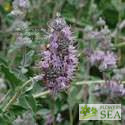
(Bee's Bliss Sage) If you are looking for a California native sage to use as a groundcover, Bee's Bliss is a fine choice. Low-growing, widespreading and colorful, it is ideal for choking weeds.
The following terms were added to your search to help improve the result. Click here to exclude these extra terms from the search.
- less, perfect, than
Common terms in this search: confused argentine sage similar many ways indispensable garden favorites anise scented guaranitica spp group plant perfect companion its better known cousin both sages rhinosina bloom from summer through fall argentinian native has light violet white flowers contrast attractively deep purples fountain-like growth large leaves inches long give lovely south american tropical look temperate zones grows well full sun partial shade