
Advanced Search
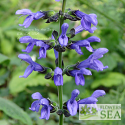
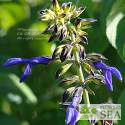
(La Placita Mexican Sage) Large and deep violet, the flowers of this tidy shrub bloom from late summer through fall. La Placita (the public square or small plaza) was collected in the mountains of Hidalgo, Mexico.
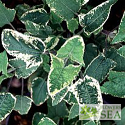
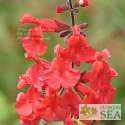
(Scarlet Spires Sage) This is a brilliant cross between the sturdy D'Arcy's Sage (Salvia darcyi) and the beautifully colored 'Raspberry Delight' Littleleaf Sage (Salvia microphylla 'Raspberry Delight').
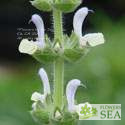
(Sardinian Sage) This is another must-have Salvia for mild, Mediterranean climate gardens. It has elegant foliage and lovely, bright rose-to-lavender flowers. Sardinian Sage spreads non-invasively as an herbaceous perennial and almost never stops blooming for us on the coast of Northern California.
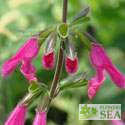
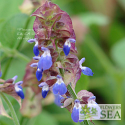
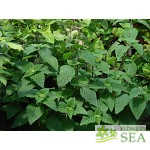
(Rosy Bract Sage) Sub-shrub salvias have both woody and soft, herbaceous growth. Rosy Bract Sage is a tidy, small leafed sub-shrub smothered with large clusters of 1/2-inch, violet-blue flowers and rosy red bracts. Its bracts deepen in color as the season proceeds.
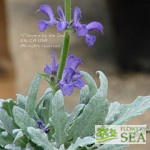
(Caucasus Sage) This hardy ground cover sage grows 4 to 12 inches tall and 12 inches wide. The velvety white fur of its foliage aids moisture retention. Its soft, royal purple flowers make it stand out. We think this Salvia deserves to spread far and wide.
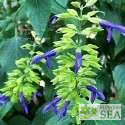
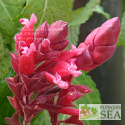
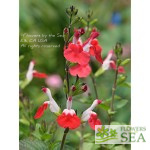
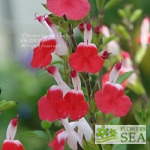
(Hot Lips Sage) What a winner for fascinating flowers! Salvia microphylla ‘Hot Lips’ is a native of Mexico that produces a combination of solid red, solid white, and bicolor red and white blossoms all on the same plant and sometimes at the same time.
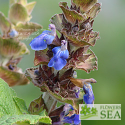
(Michoacan Blue Sage) This unusual and distinctive Mexican sage grows from tuberous roots. It is compact and decidedly vertical with strong, square, winged stems that rocket upward and are topped with clusters of rich blue flowers in large rosy bracts come autumn.
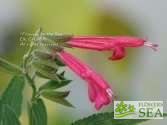
(Hybrid Bolivian Sage) This naturally occurring hybrid is a Bolivian native related to S. orbignaei and S. haenkei. Prettier than its parents, it has large, profuse, long-blooming flowers that are dark pink.
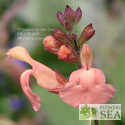
(Yellow Pink Hybrid Jame Sage) Dusty pink with pale yellow throats, the bicolor pastels of this Salvia x jamensis are especially charming up close. 'Yellow Pink' is a compact sage with tiny, smooth foliage.
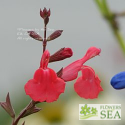
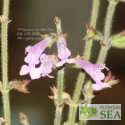
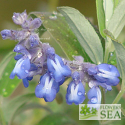
(Blue Ecuadorian Sage) A densely branched shrub with silvery leaves and dusky blue flowers, this rare species was once thought to be Salvia cruickshanksii. In the nursery trade, it sometimes is called Salvia 'Equador'.
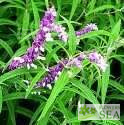
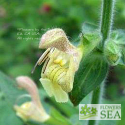
(Himalayan Cloud Sage) Nepal's Muktinath Valley -- a sacred site for Hindus and Buddhists -- is the place to go to see this majestically tall shade perennial in the wild. It grows at altitudes up to 14,000 feet and often emerges while the ground is still snowy.
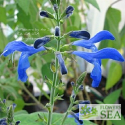
(Grape Leaf Sage) Tall spikes of intensely blue flowers bloom summer to fall and emerge in profusion from handsome, furry foliage. The leaves are grape green on top and purplish on the bottom. This water-loving sage grows rapidly into a spreading mound.
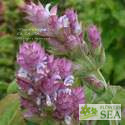
(Italian Clary Sage) Clary Sages are well known for their use in folk remedies, aromatherapy and cosmetics. Glowing purple bracts frame the spectacular white blooms of this cultivar on 5-foot-tall spikes. It is a delight for honeybees, hummingbirds and butterflies.
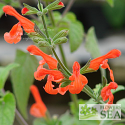
(Elk Super Scarlet Rooster Sage) From the mountains of Mexico we have this stunning Sage, which seems never to be out of bloom. A superior hummingbird plant, the warm orange flowers that cover this shrubby perennial make it a standout in the garden.
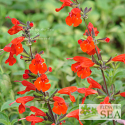
(Summer Jewel Red Tropical Sage) Butterflies, hummingbirds and honeybees enjoy this Fleuroselect Gold Medal winner, which is an outstanding choice for bright red color from June to autumn. This type of Tropical Sage is generally the first to flower for us.
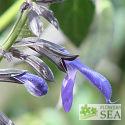
(Door of the Fox Mexican Sage) Purplish foliage contrasts attractively with the violet-to-purple flowers of this big sage, which grows 6 feet tall and 4 feet wide. Bloom time is autumn. This darkly dramatic Mexican Sage makes a particularly attractive entryway accent.
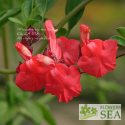
(Big Orange Autumn Sage) Standout color is the big draw for this large growing Autumn Sage. Collected in the mountains of Northern Mexico, it grows well in a wide range of climates, including the hot dry Southwest and the cool moist Pacific Northwest. A difficult color to capture in a photo, it is well described as a warm orange with a scarlet overlay.
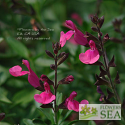
(Black Cherry Autumn Sage) Ripe Bing cherries come to mind when viewing the rich purple flowers of this full-sun sage that is adaptable to partial shade. Butterflies, honeybees and hummingbirds are drawn to its blossoms from spring into fall.
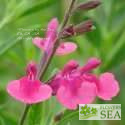
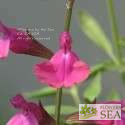
(Plum Wine Autumn Sage) Frilly, lavender-tinged, pink flowers with a pretty white dot at the throat make this another outstanding contribution from North Carolina nurseryman Richard Dufresne.
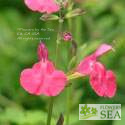
(Pink Preference Autumn Sage) Two-tone, hot pink flowers and contrasting bracts make this Autumn Sage stand out. This drought tolerant Autumn Sage from Central Texas is also compact, rugged, heat tolerant and capable of handling Zone 6 chill.
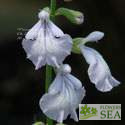
(Heart Leaf Sage) From the rich plains of Northern Argentina comes this delicate looking sage with heart-shaped leaves and pale blue flowers so perfect they seem to be molded in wax. Although a slow grower that requires good garden culture, this Salvia is exquisite.
The following terms were added to your search to help improve the result. Click here to exclude these extra terms from the search.
- one
Common terms in this search: variegated anise-scented sage rumpled lance-shaped spectacular leaves yellowish-lime splotches emerald rub them smell anise licorice-like scent bountiful cobalt blue flowers cover plant from summer into fall one larger varieties omaha gold needs some support especially windy areas planting base climbing rose can lead lovely peek-a-boo surprises also does well borders woodland gardens moist parts yard full sun okay but enjoys