
Advanced Search
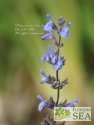
(North African Sage) This stunning herbaceous perennial has sky blue flowers on showy, branched spikes that grow up to 6 feet tall.
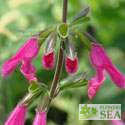

(Cayman Island Sage) Compact and intensely fragrant, this shrubby sage is excellent for containers or the edge of a pathway. Small blue and white flowers mass about its densely branched foliage. It loves rich, moist soil and warm weather.
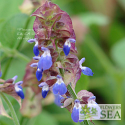
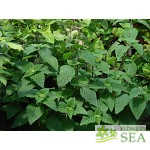
(Rosy Bract Sage) Sub-shrub salvias have both woody and soft, herbaceous growth. Rosy Bract Sage is a tidy, small leafed sub-shrub smothered with large clusters of 1/2-inch, violet-blue flowers and rosy red bracts. Its bracts deepen in color as the season proceeds.
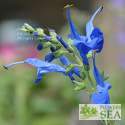
(Big Swing Sage) With its large, cobalt blue flowers displayed on strong, wiry, branched stems, this eye-catching sage wins the FBTS "best of class" designation for being our top Salvia macrophylla.
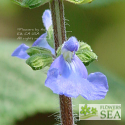
(Bitter Mexican Sage) Hummingbirds love this heat-tolerant Salvia, which is one of our best choices for shady, moist areas. The large-lipped, baby-blue flowers with white striations bloom from late summer through fall.
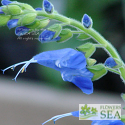
(Creeping Big Leaf Sage) Cobalt blue flowers float in airy clusters above the giant, velvety, green leaves of this South American native. Short and spreading by woody rhizomes, this is an ideal groundcover. As a bold statement in a container, it has no equal.
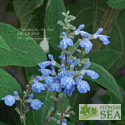
(Pale Sage) Powder blue flowers are cupped by lavender calyxes on this lovely yet little-used sage native to moist meadows in Argentina. It is a tall, narrow plant with delightful oval-shaped leaves with scalloped margins.
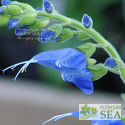
(Tall Big Leaf Sage) Cobalt blue flowers seem to float in airy clusters on 12-inch-tall branching spikes above the bright green, velvety foliage of this South American native. Up to 5-feet tall, tidy and upright in habit, this sage makes a fine background or border planting when massed.
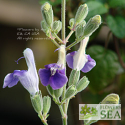
(Candelabra Spanish Sage) Tall, well-branched spikes display large two-tone blue flowers above a compact shrubby mass of attractive, furry white leaves. When in bloom, this drought-resistant native of Spain will awe every visitor to your garden.
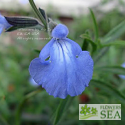
(Prairie Sage) Native to a large part of the central United States, this perennial Salvia is a beloved wildflower, delighting us with large cerulean blue flowers. Hummingbirds and butterflies love it as well.
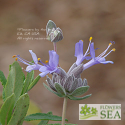
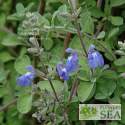
(Snowflake Sage) Wiry, trailing stems of small white leaves make this plant look like fresh snowfall. Numerous, small, sky blue flowers with prominent bee lines further add to the cooling look. This dry-garden plant is native to the mountains of the Chihuahuan desert of North Central Mexico.
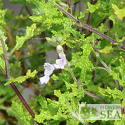
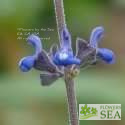
(Chilean Mountain Sage) Formerly known as S. gillesii, this delicate-looking sage with dramatically deep blue flowers is robust in the garden. Its branches are draped with wooly grey foliage featuring rounded, toothed leaves that are pleasantly scented.
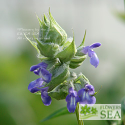
(Purple Stem Sage) Deep purple stems and cobalt blue flowers with pronounced white beelines and dusky gray calyxes cause this sage to command attention.
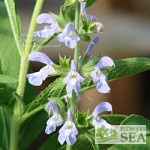
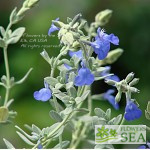
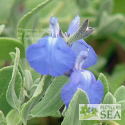
(Silver Germander Sage) With its compact habit, brilliant silver-white leaves and large, sky blue flowers, this is an outstanding heat-tolerant choice for dry, sunny gardens. We consider this to be one of the finest short ground covers for these conditions.
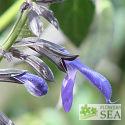
(Door of the Fox Mexican Sage) Purplish foliage contrasts attractively with the violet-to-purple flowers of this big sage, which grows 6 feet tall and 4 feet wide. Bloom time is autumn. This darkly dramatic Mexican Sage makes a particularly attractive entryway accent.
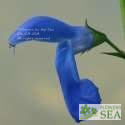
(Giant Gentian Sage) "Wow!" is what most people say when they see this large Gentian Sage from Central Mexico. Growing to 4 feet tall, it has long, graceful spikes of 3-inch deep, royal blue flowers that are highly visible and easily accessible to hummingbirds.
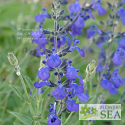
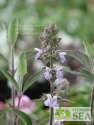
(Kellerman's Sage) Rare in the United States, this wooly leafed, upright shrub comes from Southern Mexico and Guatemala. Mid-size, powder-blue flowers bloom on its long, airy stems from summer through winter in mild climates. It's lovely in mixed, drought-resistant plantings.
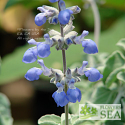
(Cedros Island Sage) From the Island of Cedars off the coast of Baja California Sur comes this delightful xeric sage with deep violet-blue flowers and silvery foliage. The square-shaped, 1-inch-long leaves are densely covered with downy, short, white hairs providing moisture retention.
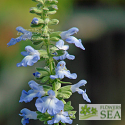
(Big Pitcher Sage) As its scientific name indicates, this sage has very large flowers. They are almost two-tone, changing from deep violet to a light blue or white at their base where they are cupped by dusky purple calyxes.
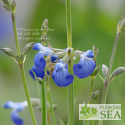
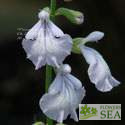
(Heart Leaf Sage) From the rich plains of Northern Argentina comes this delicate looking sage with heart-shaped leaves and pale blue flowers so perfect they seem to be molded in wax. Although a slow grower that requires good garden culture, this Salvia is exquisite.
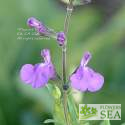
(Saint Isidro's Sage) This hardy, lavender-blue-flowered Salvia comes from Southern Texas and has the same breeding as the famous Ultra Violet Autumn Sage. Although it needs warmer winter temperatures and has smaller foliage, it also does well in stressful conditions, including drought.
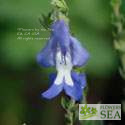
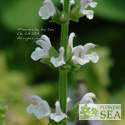
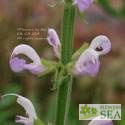
(Iranian Sage) Mixed in with short perennials that bloom over a wide range of seasons, Salvia staminea makes an attractive contribution to short borders during its summer bloom time. Our strain has dark bracts surrounding pastel white-to-blue-to-lavender flowers. The dark green, branching foliage has oblong to oval-shaped leaves.
The following terms were added to your search to help improve the result. Click here to exclude these extra terms from the search.
- blue, purplish
Common terms in this search: north african sage stunning herbaceous perennial has sky blue flowers showy branched spikes grow feet tall native africa southwest spain semi-deciduous appears compact until blooming from summer through fall its surprising spectacular addition any border plant early best bloom after flowering time can cut back low mound highly recommend fbts favorite buchanan's longer found wild mexico widely grown courtyards entryways