
Advanced Search
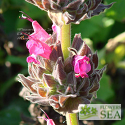
(Little Hummingbird Sage or Pitcher Sage) At one-fourth to one-half the size of our other Hummingbird Sages, this is the smallest variety of Salvia spathacea that we grow.
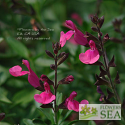
(Black Cherry Autumn Sage) Ripe Bing cherries come to mind when viewing the rich purple flowers of this full-sun sage that is adaptable to partial shade. Butterflies, honeybees and hummingbirds are drawn to its blossoms from spring into fall.
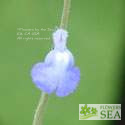
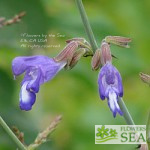
(Mount Olympus Sage) The deep violet and white flowers of Salvia ringens are eyecatching. Their wiry, branched spikes rise up to 5 feet tall from a dark green basal rosette.
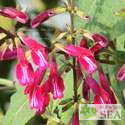
(Violet Calyx Sage) Here's another abundantly blooming sage from the cloud forest slopes of Chiapas, Mexico. Violet beelines mark the lower lip of the crimson blossoms, which are so numerous that it can be difficult to see the foliage at times.
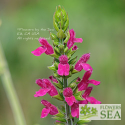
(Shaggy Chiapas Sage) This is a sweetheart! Glowing magenta flowers lure the eye as well as hummingbirds to this heat-tolerant sage. It begins blooming in late summer where weather is warm and in fall where it is cooler.
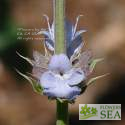
(Starlight Sage) Add sparkle to your dry garden with the pale pastel flowers of this hybrid of two Southern California native plants often seen growing together in the wild — Black Sage (Salvia mellifera) and White Sage (Salvia apiana). Salvia x 'Starlight' is a shrub that blooms early and long, attracting honeybees but not deer.
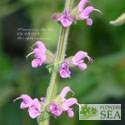
(Royal Crimson Distinction Woodland Sage) Grown for hundreds of years in cottage gardens throughout the world, Salvia nemorosa was described by Carl Linneaus in 1762. This variety's large flower spikes bloom a dark violet-crimson, then age to a softer pink.
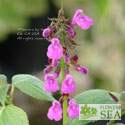
(Bolivian Mountain Sage) Neon lilac-pink flowers light up the handsome, furry foliage of this distinctive sage from high in the Andes cloud forests. Its large, textured leaves have dark, velvety purple undersides. Unhappy in dry heat, this is a very showy plant for humid climates.
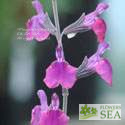
(Diane's Autumn Sage) Chip Schumacher of Hill Country Gardens in Texas selected this lovely Autumn Sage hybrid, which has handsome foliage and abundant two-tone dark purple flowers. This fine variety is often the first Salvia greggii to bloom in spring.
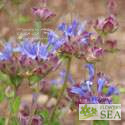
(Celestial Blue Sage) Fast growing and adaptable, this sage is a chance hybrid between Cleveland Sage (Salvia clevelandii) -- also called California Blue Sage -- and California Rose Sage (Salvia pachyphylla). It may also be related to California Purple Sage (Salvia leucophylla).

(Russell's Mexican Sage) Expect rapid, tall growth from this Salvia Mexicana . In the ground, Russell’s Mexican Sage can reach up to 10 feet tall and 5 feet wide, providing an effective screen of dark green, heart-shaped foliage. By late autumn it’s bursting with flowers.
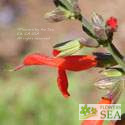
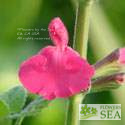
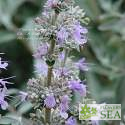
(Gayle Nielson Hybrid Sage) Whorl-like clusters of violet-blue flowers on slender stems as well as its height and width indicate that Gayle Nielson Hybrid Sage is related to some form of Salvia clevelandii.
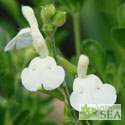
(VIBE® Ignition White Sage) Never before have we seen such a pure white among the species to which Jame Sages are related. We love this purity as well as the bright green calyxes supporting the large flowers of Elk White Ice and giving it an overall crisp look.

(Elk Butter Light Jame Sage) "Clear" is how we describe the translucent quality of Elk Butter Light's creamy yellow blossoms, which are supported by bright green calyxes. Unlike the green-tinged flowers of Elk Lemon Light Jame Sage, these blossoms are paler and one pure color.
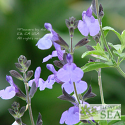
(Elk Blue Moon II Jame Sage) The phrase "blue moon" signifies a rare event. Elk Blue Moon Jame Sage is an unusual combination for a Salvia x jamensis hybrid -- dusky violet flowers with pale-blue throats, dark blue calyxes and mid-green foliage.
Note: This is a new (2014) cultivar that we chose to replace the original 'Elk Blue Moon'. It is a superior grower, and otherwise very similar.


(Elk Cotton Candy Jame Sage) Rosy hairs on the upper lip and pale white throats highlight the translucent, blush pink blossoms of Elk Cotton Candy Jame Sage. Dark, deeply contrasting calyxes support the medium-size flowers.
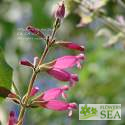
(Nuevo Leon Downy Sage) From the high mountains of Nuevo Leon, Mexico. This unusual variety has very large flowers in loose clusters. Early to bloom and more cold tolerant than other Downy Sage varieties, it is ideal for gardens on the edge of it's climatic adaptability.
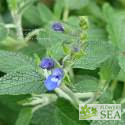
(Furry Colombian Sage) The leaves of this rare shrub are a glossy mid-green on top and fuzzy with hairs underneath, which is why it's commonly called Furry Colombian Sage.
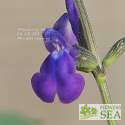
(Nuevo Leon Hybrid Sage) Imagine tiny, smooth, green leaves and deeper lavender-blue flowers than those of Salvia lycioides x greggii 'San Isidro'. With its midnight purple flowers, Nuevo Leon is a dramatic Salvia greggii hybrid.
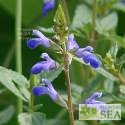
(Arizona Deep Blue Sage) In contrast to the lavender-blue flowers of Arizona Blue Sage (Salvia arizonica), the blossoms of Arizona Deep Blue are nearly purple. They are the kind of deep lavender that you might see in a southwestern sunset.
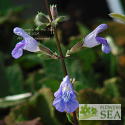
(Turkish Tea Sage) Sometimes an attractive plant is also medically powerful. That's true of the lavender flowered Salvia aucheri, which has strong white beelines. This Turkish native is consumed as an ingredient in teas used as folk remedies for many problems, including abdominal bloating and infections.
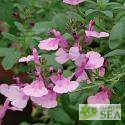
(Elk Bella Rosa Jame Sage) The large, creamy pink and burgundy flowers of this sage are stately in contrast with its deep green, veined, ovate foliage that is pleasantly fragrant. Elk Bella Rosa is as elegant as its name implies. It's also long blooming.
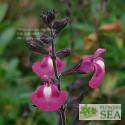
(Elk Plum Parfait Jame Sage) It's a toss-up as to which are more dramatic -- the deep purple calyxes so dark they almost look black or the plum-colored flowers with pronounced white beelines. Elk Plum Parfait is a rare treat.
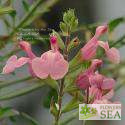
(Elk Twilight's Rosy Glow Jame Sage) Rosy red hairs accentuate the upper lip of each dusky, salmon-pink blossom of this cheery Jame Sage. The flowers are tiny but abundant and are supported by bright green calyxes.
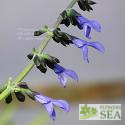
(Huntington Garden Mexican Sage) In areas with mild end-of-year weather, this sage is a tower of nectar for hummingbirds. Large blue-to-purple flowers shaped like open parrot beaks reach out from dark calyxes. Their spikes stretch out horizontally and gently curve upward from the plant's mid-green foliage.
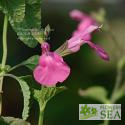
(Rosie O'Grady Mountain Sage) Honeybees and hummingbirds love the large, bright pink flowers of Salvia microphylla 'Rosie O'Grady', a drought-resistant sage. Dense and fragrant, it's large, glossy green leaves are veined and have finely serrated edges. This is a lush choice for dry gardens.
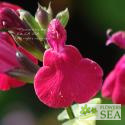
(Killer Cranberry Mountain Sage) Masses of magenta flowers on tall spikes lure honeybees and hummingbirds to the rich nectar of Salvia microphylla 'Killer Cranberry'. Its prolific flowers are a killer attraction for people too.
The following terms were added to your search to help improve the result. Click here to exclude these extra terms from the search.
- winter
Common terms in this search: little hummingbird sage pitcher one-fourth one-half size our other sages smallest variety spathacea grow topped deep pink flowers lighter rosy bracts one also favorite its short flower spikes numerous from winter into spring they blossom abundantly large clusters about inches above plants sticky sweetly fragrant basal foliage spreads slowly underground runners most adaptable varieties offer less-than-perfect conditions because tolerates heat