
Advanced Search
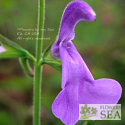
(Dorset Lavender Gentian Sage) Large, deep lavender flowers shaped like parrot beaks make Salvia patens 'Chilcombe' distinctive in the Gentian Sage group, which is dominated by true blues.
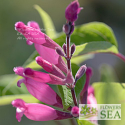
(Boutin Roseleaf Sage) Boutin means "button" in French. Perhaps the creamy, mulberry pink flowers of Salvia involucrata 'Boutin' looked cute as buttons to whoever named the cultivar.
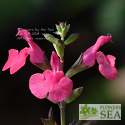
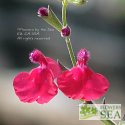
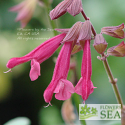
(Wendy's Wish Sage) A new hybrid Salvia from Australia, Wendy's Wish is absolutely spectacular! Quick to bloom, compact and tidy in habit, we believe this to be one of the finest of all Salvia varieties.
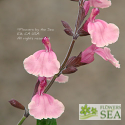
(Elk Peach Flambe Sage) Pale pink-to-peach edges surround the petals of Salvia x 'Elk Peach Flambe' like hints of petticoats. The deep maroon calyxes holding the flowers add drama to this small sage.
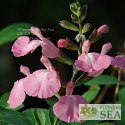
(Elk Pink Cloud Sage) Abounding with clusters of large, soft pink flowers on spreading branches, Salvia x 'Elk Pink Cloud' has a fluffy, cumulonimbus look when spilling over the edges of a hanging basket
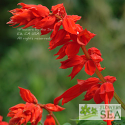
(Faye Chapel Scarlet Sage) A vivid red, the drooping blossoms of this sturdy, long flowering Salvia are large and numerous. Use it singly as a dramatic garden accent or container plant; mass it for a stunning effect. This is an heirloom plant from the Atlantic Coast, where it has been grown as a hummingbird plant for decades.
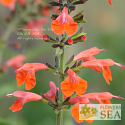
(Vermilion Tropical Sage) Tall and full of large, orange flowers, Salvia coccinea 'Vermilion' is a strain from the Louisiana gardens of hummingbird guru Nancy Newfield.
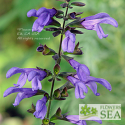
(Purple Haze Sage) The very best purple Anise Scented Sage, period - the result of years of careful breeding aimed at developing a reliable, free flowering and easy to grow variety suitable for growing countrywide.
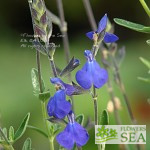
(Elk Blue Note Sage) In Europe and Australia there is a popular and widely used seed grown Salvia variety called 'Blue Note'. Our offering, 'Elk Blue Note', is the result of several generations of careful breeding and selection.
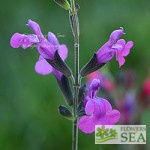
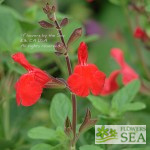
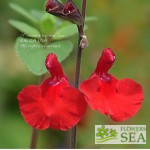
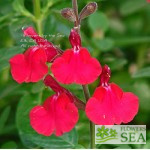
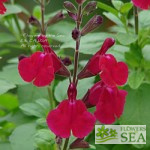
(Elk Raspberry Moose Sage) The deep raspberry flowers of this Salvia x Jamensis look good enough to eat, like spoonfuls of a silky, mouthwatering mousse dessert. Yet the 'moose' in its name isn't a misspelling. It refers to flowers that are larger than normal for a Jame Sage.
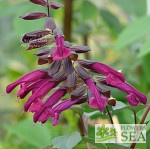
(Fashion Burgundy Sage) Pendulous deep burgundy blossoms and dark bracts attract the eye to Salvia Fashion Burgundy™. Although similar looking to an Australian Wish Sages, it is more compact than the Wishes or the Skyscraper series.
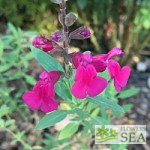
(Windwalker® Desert Rose Sage) Hot pink flowers top glossy, mid-green foliage top Windwalker® Desert Rose Salvia. Due to drought resistance, Salvia x 'Desert Rose' is a great choice for dry gardens. However, this petite beauty also grows well with moderate watering.
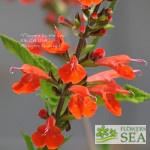
(Elk Vermilion Tropical Sage) Tall and full of large, orange flowers, Salvia coccinea 'Vermilion' is a clonal variety developed by FBTS.
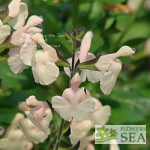
(Elk Morning Sun Jame Sage) Kelly green and black calyxes support the long blooming, creamy white and pale pink flowers of Salvia x ‘Elk Morning Sun’. A waterwise sage, it likes average watering but resists drought.
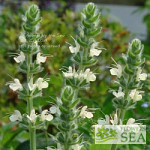
(Austrian Sage) Tall spikes of large, pale yellow flowers rise up from Salvia austriaca’s basal rosette of impressively large leaves. Deeply lobed, like the edges of a lacy collar, the leaves are broader and longer than those of any Salvia we have ever grown.
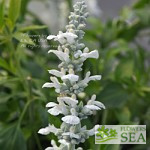
(White Flame Sage) Like bright white candle flames, the short vigorously upright flower spikes of petite Salvia x ‘White Flame’ light up flowerbeds.
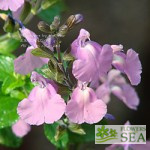
(Elk Smokey Grape Jame Sage) We think the dusky lavender flowers of Salvia x ‘Elk Smokey Grape’ look like the dusty, pale reddish-blue of Malbec grapes. This is a floriferous beauty.
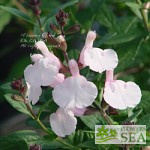
(Elk Pink Cloud Jame Sage II) Abounding with clusters of large, soft pink flowers on spreading branches, Salvia x ‘Elk Pink Cloud II’ looks like a fluffy, cumulonimbus cloud.
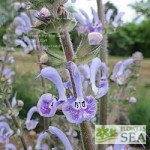
(Shangri-la Sage) Take a close look at Salvia moorcroftiana x indica ‘Shangri-la’ and you’ll notice that its lavender flowers have lighter lower lips with deep purple freckles.
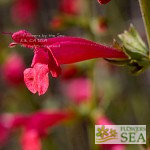
(Crimson Sage) Abundant and long blooming, the bright pink to red tubular flowers of Salvia henryi attract hummingbirds and form a pretty contrast with fuzzy, silvery foliage. This is a long blooming sage that is made for gritty soils, such as sandy loam.
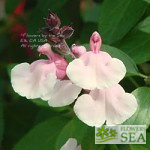
(Elk Crème Anglaise Jame Sage) Framed by minty green foliage, the blossoms of Salvia x ‘Elk Crème Anglaise’ transition from dreamy pale pink throats to white skirts. They look delectable.
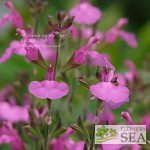
(Elk Xanadu Jame Sage) Like the magical, fictional land of Xanadu, there’s something heavenly about this sage. The flowers of Salvia x ‘Elk Xanadu’ look ethereal due to the bluish cast of their magenta-pink blossoms supported by deep magenta and green calyxes. It's a powerful attraction for pollinators, including hummingbirds.
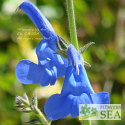
(Guanajuato Giant Gentian Sage) At 3 inches long, the flowers of this Gentian Sage are the largest of any we grow. Guanajuato Giant is also unique for its tall, upright growth and heavily textured foliage. This is our own tested seed strain of this rare plant.
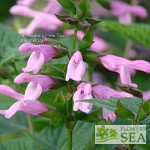
(COOL Shocking Pink Anise-Scented Sage) Dusky green bracts support the pastel magenta blossoms of Salvia COOL Shocking Pink. It’s a hummingbird favorite with bright green, fragrant foliage that may remind you of licorice.
The following terms were added to your search to help improve the result. Click here to exclude these extra terms from the search.
- coloration, colorful, colors
Results for color from the blog
| Getting Started with Salvias |
| 1. Getting Started: Salvias for the Southwest |
| Ask anyone to describe the American Southwest, and they're likely to sum it up in three letters : "D-R-Y." Yet precipitation can vary a lot here state by state and even within different parts of the individual states. One thing that is consistent about the story of water throughout the Southwest, is that rain and snow can rapidly swing from famine to feast to misfortune. |
| 2. Getting Started: Salvias for Zone 9 |
| California's small, Mohave Desert city of Barstow averages about 5 inches of rain annually. Across the continent, Pensacola, Florida, has more than double Barstow's population and more than 12 times its amount of rainfall. Yet both cities are part of the U.S. Department of Agriculture's Plant Hardiness Zone 9 where you can plant perennials and shrubs that survive winter lows ranging from 20 to 30 degrees F. Flowers by the Sea takes readers on a triple coast road trip of Zone 9 and suggests plantings for varied growing conditions along the way. |
| Cultivating Color |
| 3. Pantone Pageant: Designer African Violet Salvias and Companions |
| Purples are cool yet quietly passionate. This includes African Violet 16-3520, a spring 2013 designer color created by the Pantone Corporation. Shades in the blue and purple color range are tranquil and soothing yet commanding, because they calm the garden. Here are a number of choices from our catalog that fashionably match Pantone's African Violet. |
| Celebrity Salvias |
| 4. The Roseleaf Sage Group: Who's Who & What's What |
| Differentiating between the plants in a closely related group can feel similar to being an outsider attending a large family reunion. Identifying who's who and how they are connected is a challenge. That's the way it is with Mexico's Roseleaf Sage ( Salvia involucrata ) Group, which is well loved by hummingbirds. FBTS Online Plant Nursery grows a number of species from this winter-blooming group. |
| Quick Digs |
| 5. Quick Digs: Using the FBTS Wish List Gift Registry |
| This third article in our Quick Digs series about preparing Salvia gardens for spring concerns the Flowers by the Sea Wish List for maintaining lists of plants you want and for use as a gift registry. Our Wish List removes the guesswork from gift giving while allowing givers to surprise recipients. |
| Hummingbirds in the Garden |
| 6. Seeing Red and Loving It: Hummingbirds and Salvia microphylla |
| As with so many aspects of life, the hummingbird-Salvia relationship is circular. It is difficult to have one without the other. Unfortunately, many species of hummingbirds are threatened or endangered. By planting Mountain Sage ( Salvia microphylla ) you invite hummingbirds into your garden, expand their habitat and ensure pollination for abundant blossoming. |
| 7. 6 Indispensable Hummingbird Flowers for Long, Easy Bloom |
| Hummingbirds are like tiny combat jets dive bombing each other when staking claim to the nectar-rich flowers they need for survival. Fights over nectar habitat can reduce hummingbird gardens to single occupancy. FBTS Farm and Online Nursery details and tells stories about its top six hummingbird flowers. Plant lots of them to accommodate a village of hungry hummers. |
| 8. 6 Salvias for Shade |
| Most gardeners associate plants in the genus Salvia with full sun, rocky soil, drought and semi-arid native lands. Although a number of sages fit this picture, far more appreciate loamy, fertile garden soil. Some require lots of water. Also, a large number of sages thrive in partial shade, and some tolerate full shade. Here are six of the many shade lovers that Flowers by the Sea grows. |
| 9. A Community of Anise Scented Sages We Adore |
| You might expect the foliage of a plant called Anise-Scented Sage (Salvia guaranitica) to smell robustly like licorice, which shares the same fragrance as anise. Some gardeners detect a hint of licorice after crushing a leaf, but many say the foliage merely smells sweet. These popular sages are native to Brazil where indigenous peoples used their leaves as a medicine. Flowers by the Sea grows many varieties in a wide range of sizes and flower colors |
| Ask Mr. Sage |
| 10. Ask Mr Sage: What Kind of Plant Is a Clone? |
| It's helpful to understand botanical terminology such as clone, variety, and cultivar. Mr. Sage explains what the three words mean and how the processes of cloning and plant development work. Ask Mr. Sage is a regular feature of the FBTS Everything Salvias Blog and is based on questions from customers. |
| 11. Ask Mr. Sage: How to Select Plants for Garden Triumph |
| Planning for Salvia garden success requires following the rule of selecting the right plant for the right place. Desert sages aren't appropriate for the damp Southeast. Moisture-loving ones aren't right for desert climates where they need lots of watering to survive. Flowers by the Sea Farm and Online Nursery offers tips for selecting plants based on local climate. Ask Mr. Sage is a regular feature of the FBTS Everything Salvias Blog. |
| 12. Ask Mr. Sage: When Is It Too Late for Autumn Planting? |
| Learn how to determine the best start and stop times for fall planting. Ask Mr. Sage is a Q&A feature based on topics raised in calls and emails to Flowers by the Sea. This post concerns fall planting and provides tools for making decisions based on local frost dates and temperatures. |
Common terms in this search: dorset lavender gentian sage large deep flowers shaped like parrot beaks make patens chilcombe distinctive group which dominated true blues petite border perennial also grows well containers its almost identical lady known common scientific names honor famous estate gardens dorsetshire county southwestern england latin spreading similar dahlias sages have tuberous roots can overwintered replanting other varieties plant thrives partial shade