
Advanced Search
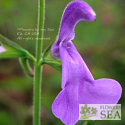
(Dorset Lavender Gentian Sage) Large, deep lavender flowers shaped like parrot beaks make Salvia patens 'Chilcombe' distinctive in the Gentian Sage group, which is dominated by true blues.
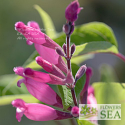
(Boutin Roseleaf Sage) Boutin means "button" in French. Perhaps the creamy, mulberry pink flowers of Salvia involucrata 'Boutin' looked cute as buttons to whoever named the cultivar.
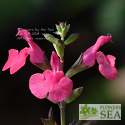
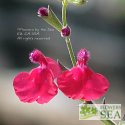
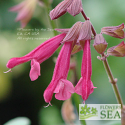
(Wendy's Wish Sage) A new hybrid Salvia from Australia, Wendy's Wish is absolutely spectacular! Quick to bloom, compact and tidy in habit, we believe this to be one of the finest of all Salvia varieties.
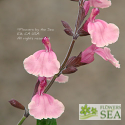
(Elk Peach Flambe Sage) Pale pink-to-peach edges surround the petals of Salvia x 'Elk Peach Flambe' like hints of petticoats. The deep maroon calyxes holding the flowers add drama to this small sage.
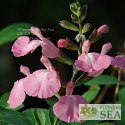
(Elk Pink Cloud Sage) Abounding with clusters of large, soft pink flowers on spreading branches, Salvia x 'Elk Pink Cloud' has a fluffy, cumulonimbus look when spilling over the edges of a hanging basket
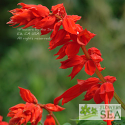
(Faye Chapel Scarlet Sage) A vivid red, the drooping blossoms of this sturdy, long flowering Salvia are large and numerous. Use it singly as a dramatic garden accent or container plant; mass it for a stunning effect. This is an heirloom plant from the Atlantic Coast, where it has been grown as a hummingbird plant for decades.
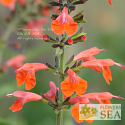
(Vermilion Tropical Sage) Tall and full of large, orange flowers, Salvia coccinea 'Vermilion' is a strain from the Louisiana gardens of hummingbird guru Nancy Newfield.
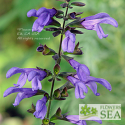
(Purple Haze Sage) The very best purple Anise Scented Sage, period - the result of years of careful breeding aimed at developing a reliable, free flowering and easy to grow variety suitable for growing countrywide.
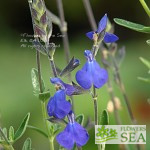
(Elk Blue Note Sage) In Europe and Australia there is a popular and widely used seed grown Salvia variety called 'Blue Note'. Our offering, 'Elk Blue Note', is the result of several generations of careful breeding and selection.
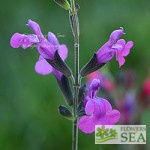
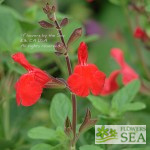
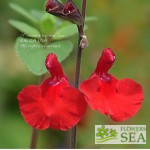
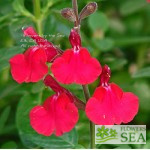
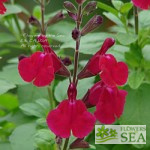
(Elk Raspberry Moose Sage) The deep raspberry flowers of this Salvia x Jamensis look good enough to eat, like spoonfuls of a silky, mouthwatering mousse dessert. Yet the 'moose' in its name isn't a misspelling. It refers to flowers that are larger than normal for a Jame Sage.
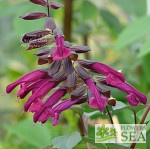
(Fashion Burgundy Sage) Pendulous deep burgundy blossoms and dark bracts attract the eye to Salvia Fashion Burgundy™. Although similar looking to an Australian Wish Sages, it is more compact than the Wishes or the Skyscraper series.
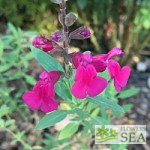
(Windwalker® Desert Rose Sage) Hot pink flowers top glossy, mid-green foliage top Windwalker® Desert Rose Salvia. Due to drought resistance, Salvia x 'Desert Rose' is a great choice for dry gardens. However, this petite beauty also grows well with moderate watering.
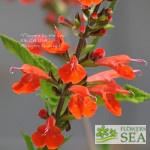
(Elk Vermilion Tropical Sage) Tall and full of large, orange flowers, Salvia coccinea 'Vermilion' is a clonal variety developed by FBTS.
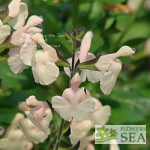
(Elk Morning Sun Jame Sage) Kelly green and black calyxes support the long blooming, creamy white and pale pink flowers of Salvia x ‘Elk Morning Sun’. A waterwise sage, it likes average watering but resists drought.
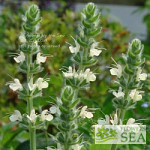
(Austrian Sage) Tall spikes of large, pale yellow flowers rise up from Salvia austriaca’s basal rosette of impressively large leaves. Deeply lobed, like the edges of a lacy collar, the leaves are broader and longer than those of any Salvia we have ever grown.
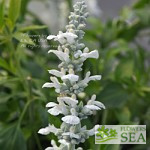
(White Flame Sage) Like bright white candle flames, the short vigorously upright flower spikes of petite Salvia x ‘White Flame’ light up flowerbeds.
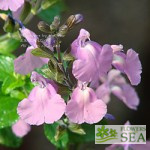
(Elk Smokey Grape Jame Sage) We think the dusky lavender flowers of Salvia x ‘Elk Smokey Grape’ look like the dusty, pale reddish-blue of Malbec grapes. This is a floriferous beauty.
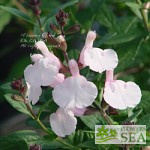
(Elk Pink Cloud Jame Sage II) Abounding with clusters of large, soft pink flowers on spreading branches, Salvia x ‘Elk Pink Cloud II’ looks like a fluffy, cumulonimbus cloud.
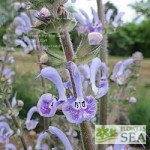
(Shangri-la Sage) Take a close look at Salvia moorcroftiana x indica ‘Shangri-la’ and you’ll notice that its lavender flowers have lighter lower lips with deep purple freckles.
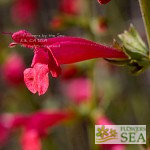
(Crimson Sage) Abundant and long blooming, the bright pink to red tubular flowers of Salvia henryi attract hummingbirds and form a pretty contrast with fuzzy, silvery foliage. This is a long blooming sage that is made for gritty soils, such as sandy loam.
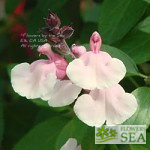
(Elk Crème Anglaise Jame Sage) Framed by minty green foliage, the blossoms of Salvia x ‘Elk Crème Anglaise’ transition from dreamy pale pink throats to white skirts. They look delectable.
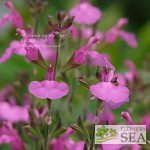
(Elk Xanadu Jame Sage) Like the magical, fictional land of Xanadu, there’s something heavenly about this sage. The flowers of Salvia x ‘Elk Xanadu’ look ethereal due to the bluish cast of their magenta-pink blossoms supported by deep magenta and green calyxes. It's a powerful attraction for pollinators, including hummingbirds.
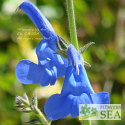
(Guanajuato Giant Gentian Sage) At 3 inches long, the flowers of this Gentian Sage are the largest of any we grow. Guanajuato Giant is also unique for its tall, upright growth and heavily textured foliage. This is our own tested seed strain of this rare plant.
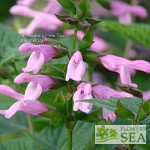
(COOL Shocking Pink Anise-Scented Sage) Dusky green bracts support the pastel magenta blossoms of Salvia COOL Shocking Pink. It’s a hummingbird favorite with bright green, fragrant foliage that may remind you of licorice.
The following terms were added to your search to help improve the result. Click here to exclude these extra terms from the search.
- color, coloration, colors
Results for colorful from the blog
| Cultivating Color |
| 1. Cultivating Color: Tracking the Elusive History of Autumn & Mountain Sage Warm Pastel Hybrids -- Part II |
| Luminous Salvia x jamensis pastel flowers began warming up nursery catalogs in the late 1990s. Their journey from steep Mexican mountains to American and European gardens began in the mid-19th century with the discovery of Autumn Sage (Salvia greggii). This is the second post in a two-part article about these Jame Sage hybrids of Autumn and Mountain Sage (S. microphylla). It includes descriptions of ten favorite Jame Sages. |
| 2. Using Salvias in Flower Arrangements |
| You don’t have to be a florist to create eye-catching designs with dramatic Salvias. By planting the right Salvias and complementary flowers in your garden as well as gaining a little knowledge about color combinations, well-balanced compositions, simple tools and cut-flower preservation, you are on your way. |
| Xeric Choices |
| 3. Xeric Choices: Salvias in the Waterwise Garden |
| Lush but not lushes - that's one way you might sum up the majority of Salvias. Despite their long bloom times and bushy foliage, Salvias don't generally belly up to the water hose. Overall, they are perfect for xeriscape gardening -- the art of creating great beauty in the garden while conserving water. |
| Getting Started with Salvias |
| 4. Getting Started: Annual, Perennial and Shrub Sages |
| For beautiful floral display and refreshing greenery, every yard needs a combination of annual bedding plants, perennials and shrubs. Salvias provide a feast of landscaping possibilities. Flowers by the Sea explains all the different types of Salvias, including subshrubs, biennials and tree-like Salvias |
| Sage Experts |
| 5. Sage Experts: Nancy Newfield, Hummingbird Gardener, Part II |
| Salvias are among the best hummingbird flowers and red is tops. That's what hummingbird researcher, Nancy L. Newfield began discovering more than 40 years ago. She found that flower nectar was more attractive than nectar feeders. This is the second article in a 3-part series on Newfield and hummingbird gardening. It includes an excerpt from her book Hummingbird Gardens and an FBTS list of red hummingbird favorites. Bud Hensley photographed the hummingbird pictured here enjoying Salvia subrotunda. |
Common terms in this search: dorset lavender gentian sage large deep flowers shaped like parrot beaks make patens chilcombe distinctive group which dominated true blues petite border perennial also grows well containers its almost identical lady known common scientific names honor famous estate gardens dorsetshire county southwestern england latin spreading similar dahlias sages have tuberous roots can overwintered replanting other varieties plant thrives partial shade