
Advanced Search
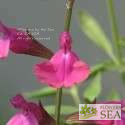
(Plum Wine Autumn Sage) Frilly, lavender-tinged, pink flowers with a pretty white dot at the throat make this another outstanding contribution from North Carolina nurseryman Richard Dufresne.
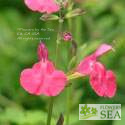
(Pink Preference Autumn Sage) Two-tone, hot pink flowers and contrasting bracts make this Autumn Sage stand out. This drought tolerant Autumn Sage from Central Texas is also compact, rugged, heat tolerant and capable of handling Zone 6 chill.
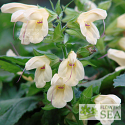
(Kyushu Woodland Sage) We are in love with this short forest sage from Kyushu, Japan. Its clusters of large creamy flowers pale as fresh-churned butter begin blooming in September. Even when not blooming, its foliage is showy in a shady garden.
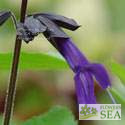
(Friendship Sage) Thank you Rolando Uria of the University of Buenos Aries for this very fine plant. Discovered in 2005 at a plant show in Argentina, this truly unique hybrid sage has generated a great deal of excitement in the Salvia world.
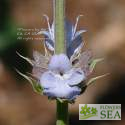
(Starlight Sage) Add sparkle to your dry garden with the pale pastel flowers of this hybrid of two Southern California native plants often seen growing together in the wild — Black Sage (Salvia mellifera) and White Sage (Salvia apiana). Salvia x 'Starlight' is a shrub that blooms early and long, attracting honeybees but not deer.


(Giant Brazilian Sage) Yes, this one is gigantic. The first season we grew this heat-tolerant sage, it reached 8 feet tall by July! Masses of small, red-orange, trumpet-shaped flowers attract hummingbirds and honeybees to long, upward curving flower spikes towering over heart-shaped foliage.
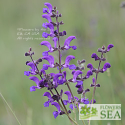
(Siberian Sage) Deep violet flowers surrounded by burgundy bracts form a handsome contrast with the pebbly, mint green foliage of this drought-resistant sage. It comes from the Central Asian steppe, which is similar in climate and geography to America’s high plains.
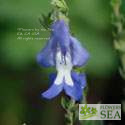
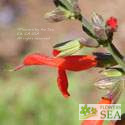

(Anatolian Cushion Sage) Rising up only 6 to 8 inches, this is a pixie-sized sage that loves gritty soils. It is perfect for dry gardens with gritty soils in USDA Zones 5 to 9. In fact, it seems to love the colder zones best. We think it is particularly fond of frozen ground in winter, because that helps keep its roots from getting too damp.
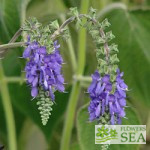
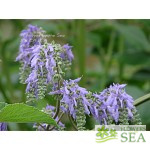
(Nodding Sage) "Dancing in the air" is how garden writer Joseph Tychonievich describes the tall, graceful flower spikes of Nodding Sage, which can tower up to 5 feet tall over the plant's 18-inch-tall foliage during the summer flowering season.
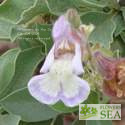
(Pilgram's Rest Pink Sage) Spring into summer, this heat-tolerant sage from South Africa produces lilac and white blossoms with profuse, fragrant, gray foliage. It's the burgundy calyxes, which turn a rusty pink after the flowers blossom, that give this sage part of its common name.

(Elk Butter Light Jame Sage) "Clear" is how we describe the translucent quality of Elk Butter Light's creamy yellow blossoms, which are supported by bright green calyxes. Unlike the green-tinged flowers of Elk Lemon Light Jame Sage, these blossoms are paler and one pure color.


(Elk Cotton Candy Jame Sage) Rosy hairs on the upper lip and pale white throats highlight the translucent, blush pink blossoms of Elk Cotton Candy Jame Sage. Dark, deeply contrasting calyxes support the medium-size flowers.
(Recurved Sage) At home in the shady, high-altitude cloud forests of Southern Mexico and Guatemala, this large, lush sage requires a warm, moist climate. In cool climates, it can handle full sun. However, partial shade is a better choice in most gardens.
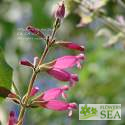
(Nuevo Leon Downy Sage) From the high mountains of Nuevo Leon, Mexico. This unusual variety has very large flowers in loose clusters. Early to bloom and more cold tolerant than other Downy Sage varieties, it is ideal for gardens on the edge of it's climatic adaptability.
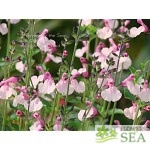
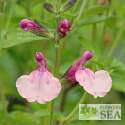
(Dancing Dolls Sage) Sages can be such tough plants. Many, such as Salvia 'Dancing Dolls', withstand heat and drought yet have delicate looking blossoms. Dancing Dolls features cream and rose bicolor flowers.
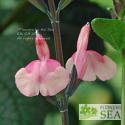
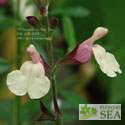
(Fancy Dancer Sage) Sages can be such tough plants withstanding heat and drought. Yet so many, including Salvia 'Fancy Dancer' have delicate looking blossoms. This one has bicolor flowers combining light and hot pink tones.
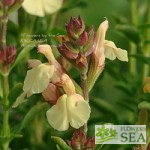
(Golden Girl Sage) Sages can be such tough plants. Many, such as Salvia 'Golden Girl', withstand heat and drought yet have delicate looking blossoms. Golden Girl features yellow flowers with a hint of rosy pink along with dark rose calyxes.
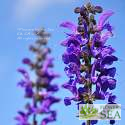
(Wild Meadow Sage) Meadow sages are native to Europe and include many hybrids. This lush, purple-flowered plant is a wild species that most likely is a hybrid of two ancient sages -- Salvia nemorosa and Salvia pratensis.
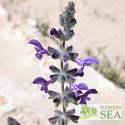
(Wooly Arabian Sage) "Radiant" is the word that garden writer and Salvia specialist Betsy Clebsch uses to describe the halo of white hairs covering the foliage and calyxes of Salvia lanigera.
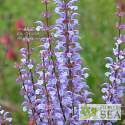
(Red Veined Sage) In 1827, John Wilkes referred to Salvia haematodes as "Bloody Sage" in his Encyclopaedia Londinensis, Volume 22. This might seem mysterious when first viewing the sage's upright yet somewhat relaxed spikes of whorled, violet-colored flowers.
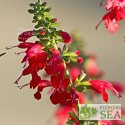
(Lady in Red Tropical Sage) Lady in Red is a variety of Salvia coccinea Juss. ex Murray, which is often called Texas Sage. It is the best red-flowering Tropical Sage that we grow.
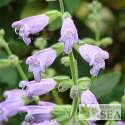
(Mystery Yunnan Sage) Sometimes we come across a beauty that has no name. This lovely species from China's Yunnan province is an excellent example. Aside from lacking scientific and common names, it arrived here as an imported seed with little information about how the plant was discovered.
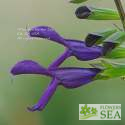
(Betsy's Choice Sage) Life and botany have their beautiful mysteries. Betsy's Choice Sage is one of them. We aren't certain of the parentage or history of this tall, attractive, fast-growing sage. However, we are certain that we love its long, royal purple flowers. Hummingbirds do as well.
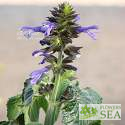
(Lolly's Mexican Sage) Our variety of Salvia mexicana 'Lolly' is the tall kind growing up to about shoulder height. A shorter form is often called "Lollie Jackson" or "Lolly Jackson." Who or what the mysterious Lolly is remains unclear.
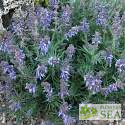
(Yugoslavian Cut Leaf Sage) This is a rare Baltic steppe plant that grows beautifully in sunny locations with little water and excellent drainage. It is endemic to a the Orlova Brdo region of the Former Yugoslav Republic of Macedonia.
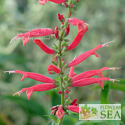
(Frieda Dixon Pineapple Sage) Most varieties of Salvia elegans have bright red flowers. But Frieda Dixon Pineapple Sage, which blooms abundantly beginning in late fall, has softer salmon-pink blossoms set against mid-green, lance-shaped leaves.
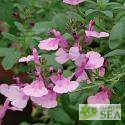
(Elk Bella Rosa Jame Sage) The large, creamy pink and burgundy flowers of this sage are stately in contrast with its deep green, veined, ovate foliage that is pleasantly fragrant. Elk Bella Rosa is as elegant as its name implies. It's also long blooming.
The following terms were added to your search to help improve the result. Click here to exclude these extra terms from the search.
- like, liked, likes
Common terms in this search: plum wine autumn sage frilly lavender-tinged pink flowers pretty white dot throat make another outstanding contribution from north carolina nurseryman richard dufresne blooms spring fall just because shrub covered lavender attractive butterflies hummingbirds doesnt mean isnt put-up-your-dukes tough plant deer dont like tangle tastebuds most salvias exception drought-resistant gets fine full sun partial shade upright growth taller than wide but