
Advanced Search
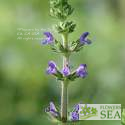
(Wild Sage) Toothed and attractively wrinkled, the gray-green, basal foliage of Wild Sage contrasts prettily with deep lavender-to-purple flowers supported by grassy green bracts. This cold-hardy sage is native to northern Africa and parts of Asia and Europe.
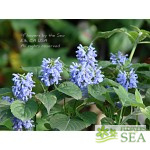
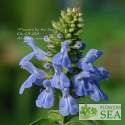
(Smith College Mystery Sage) This mysterious species came to us via Smith College in Northampton, Massachusetts. We refer to it as "Mystery Sage" as the origins of this fine plant are unclear.
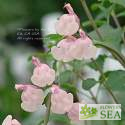
(Stormy Pink Autumn Sage) The dramatic name of this floriferous Autumn Sage is due to the calyxes cupping its smoky apricot-pink blossoms. Some gardeners report gray calyxes and others say dark plum. But for whatever reason, the Stormy Pink that we grow on our Northern California coastal farm has green calyxes with dark stripes.
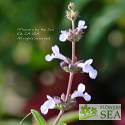
(Pacific Blue Sage) Whorls of deep lavender-blue flowers contrast brightly against the dark maroon stems of this likely hybrid of Salvia brandegeei and Salvia munzii.
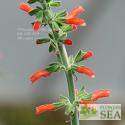
(Cundinamarca Sage) This Colombian Salvia is difficult to obtain outside of its home country. As far as we know, Flowers by the Sea is the first nursery to offer it in the United States.
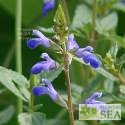
(Arizona Deep Blue Sage) In contrast to the lavender-blue flowers of Arizona Blue Sage (Salvia arizonica), the blossoms of Arizona Deep Blue are nearly purple. They are the kind of deep lavender that you might see in a southwestern sunset.
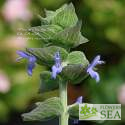
(Dark Flowered Bolivian Sage) Here is a water-loving beauty with dusky blue flowers --a native of the moist Yungas piedmont forests of Northwestern Argentina and Bolivia. Salvia atrocyanea is well adapted to both full sun and partial shade.
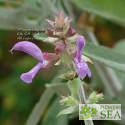
(Wooly Canary Island Sage) The pale magenta, parrot-beak flowers of this sage, supported by deeper magenta bracts, heat up the landscape. But when you get close, it may be the velvety texture of the foliage that makes you sigh.
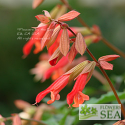
(Ember's Wish Sage) Bright coral-colored, tubular blossoms contrast handsomely with the deep maroon stems, rusty rose calyxes and mid-green foliage of Ember's Wish Sage.
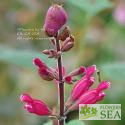
(Rosebud Pink Hybrid Sage) Protective, magenta pink, leaf-like bracts surround the buds of Salvia pulchella x involucrata like a hug, bursting open and eventually falling away as the fuzzy flowers blossom.
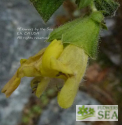
(Campanula Leaf Sage) The deep yellow flowers of Campanulata Leaf Sages are scarce among Salvias. Salvia campanulata CC#7706 is a sunny Himalayan beauty.
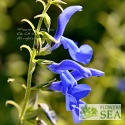
(Giant Gentian Sage) What makes Salvia patens 'De Flores Gigantes' truly giant is the size of its true blue flowers. However, this variety from Argentina is tall as well.
(Campanula Leaf Sage) The deep yellow flowers of Campanula Leaf Sages are scarce among Salvias. If British plant explorer Chris Chadwell is correct, what he has identified as Salvia aff. campanulata 'CC#7713' should be a sunny Himalayan beauty.
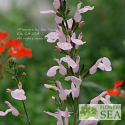

(Dwarf Bog Sage) Intense sky blue flowers with white beelines are set against mid-green foliage in this dwarf Bog Sage that is about half as tall and wide as its parent species when in bloom.
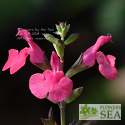
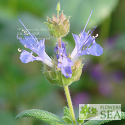
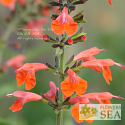
(Vermilion Tropical Sage) Tall and full of large, orange flowers, Salvia coccinea 'Vermilion' is a strain from the Louisiana gardens of hummingbird guru Nancy Newfield.
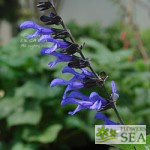
(Rhythm and Blues Anise-Scented Sage) The large, deep bluish-purple flowers of Salvia BODACIOUS ‘Rhythm and Blues’ are shaped like parrot beaks and supported by black calyxes. It's foliage smells sweet with a hint of licorice. It's superior to the old standby Salvia guaranitica 'Black and Blue'.
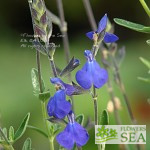
(Elk Blue Note Sage) In Europe and Australia there is a popular and widely used seed grown Salvia variety called 'Blue Note'. Our offering, 'Elk Blue Note', is the result of several generations of careful breeding and selection.
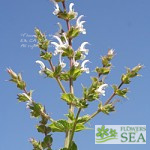
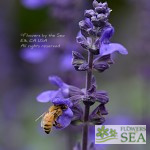
(Big Blue Sage) This new seed-grown strain can best be described as a much improved Indigo Spires Sage. It has deep blue-green, corrugated leaves and lots of deep blue flower spikes that bloom from summer till the end of the growing season.
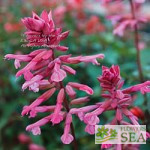
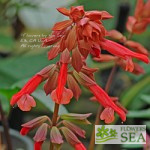
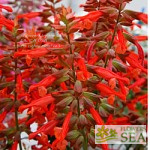
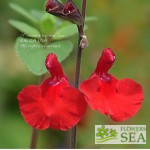
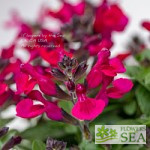
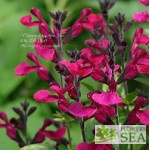
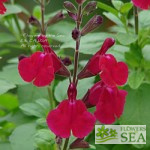
(Elk Raspberry Moose Sage) The deep raspberry flowers of this Salvia x Jamensis look good enough to eat, like spoonfuls of a silky, mouthwatering mousse dessert. Yet the 'moose' in its name isn't a misspelling. It refers to flowers that are larger than normal for a Jame Sage.
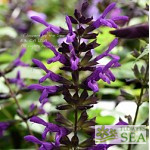
(Purple & Bloom Sage) Floriferous, dark-stemmed spikes of deep violet-purple blossoms surrounded by charcoal-purple bracts combined with dark green leaves shaped like elongated hearts make Salvia ‘Purple & Bloom’ dramatic.
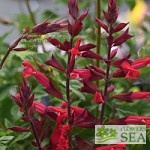
(Roman Red Sage) This handsome, long blooming hybrid sage features a dramatic combination of scarlet flowers and deep rust-to-merlot calyxes. Deadheading spent blossoms prolongs bloom time.
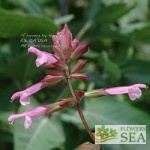
(Kisses and Wishes Sage) Blooming over multiple seasons, Salvia ‘Kisses and Wishes’ bursts with long, luminous, rosy pink blossoms nestled in pink-to-gold bracts. It’s so pretty that it seems unfair to refer to the newest member of the Wish Sages as a “mutation.”
The following terms were added to your search to help improve the result. Click here to exclude these extra terms from the search.
- love, lovers
Common terms in this search: wild sage toothed attractively wrinkled gray-green basal foliage contrasts prettily deep lavender-to-purple flowers supported grassy green bracts cold-hardy native northern africa parts asia europe tough long-blooming perennial also tolerates heat does well full sun partial shade although water lover drought-resistant species plant known number names scientifically verbenaca synonym other common include clary verbena vervain isnt any north america but has