
Advanced Search
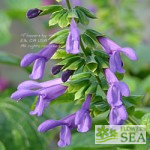
(COOL Lavender Mist Anise Scented Sage) Bright green bracts and rich lavender blossoms sing in Salvia COOL Lavender Mist. Hummingbirds keep this bountiful bloomer buzzing.
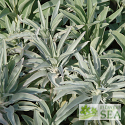
(Compact Sacred White Sage) Salvia apiana var. compacta is significantly shorter than the common species of Sacred White Sage and somewhat more cold tolerant. Its smaller leaves and compact form make it a tidier choice for home gardens with the right kind of growing conditions.
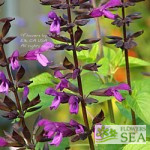
(Smokey Jazz Anise-Scented Sage) The dusky black calyxes of Salvia BODACIOUS® ‘Smokey Jazz’ support large flowers shaped like parrot beaks the unique color of boysenberries — a hue between red and purple.
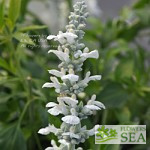
(White Flame Sage) Like bright white candle flames, the short vigorously upright flower spikes of petite Salvia x ‘White Flame’ light up flowerbeds.
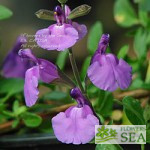
(Elk Grape Ape Jame Sage) Bountiful flowers that are larger than normal for Jame Sage cover Salvia x ‘Elk Grape Ape’ in a cloud of purple that is sort of amethyst to pinot gris in color.
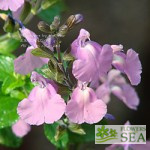
(Elk Smokey Grape Jame Sage) We think the dusky lavender flowers of Salvia x ‘Elk Smokey Grape’ look like the dusty, pale reddish-blue of Malbec grapes. This is a floriferous beauty.
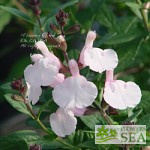
(Elk Pink Cloud Jame Sage II) Abounding with clusters of large, soft pink flowers on spreading branches, Salvia x ‘Elk Pink Cloud II’ looks like a fluffy, cumulonimbus cloud.
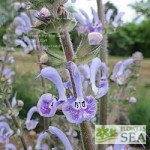
(Shangri-la Sage) Take a close look at Salvia moorcroftiana x indica ‘Shangri-la’ and you’ll notice that its lavender flowers have lighter lower lips with deep purple freckles.
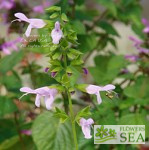
(COOL Pink Lace Anise Scented Sage) Cheerful Kelly-green bracts surround magenta buds that bloom into the soft pink yet magenta-tinged flowers of Salvia COOL Pink Lace. Its bright green leaves have a licorice-like fragrance.
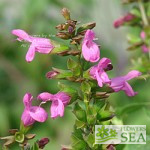
(COOL Wild Strawberry Anise Scented Sage) Prepare yourself for a heaping serving of large flowers the delicious color of strawberry ice cream when you plant Salvia COOL Wild Strawberry.
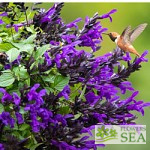
(Hummingbird Falls Anise-Scented Sage) Salvia BODACIOUS® ‘Hummingbird Falls’ is the world’s first hanging basket sage and a plant that hummingbirds battle over. It’s a natural alternative to plastic and glass nectar feeders that require frequent cleaning and refilling.
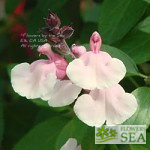
(Elk Crème Anglaise Jame Sage) Framed by minty green foliage, the blossoms of Salvia x ‘Elk Crème Anglaise’ transition from dreamy pale pink throats to white skirts. They look delectable.
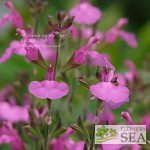
(Elk Xanadu Jame Sage) Like the magical, fictional land of Xanadu, there’s something heavenly about this sage. The flowers of Salvia x ‘Elk Xanadu’ look ethereal due to the bluish cast of their magenta-pink blossoms supported by deep magenta and green calyxes. It's a powerful attraction for pollinators, including hummingbirds.
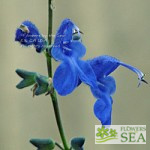
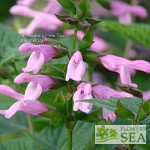
(COOL Shocking Pink Anise-Scented Sage) Dusky green bracts support the pastel magenta blossoms of Salvia COOL Shocking Pink. It’s a hummingbird favorite with bright green, fragrant foliage that may remind you of licorice.
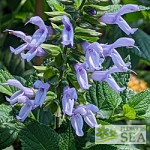
(COOL Periwinkle Anise-Scented Sage) Dusky green bracts cup the lavender-blue blossoms of Salvia COOL Periwinkle that attract hummingbirds. The fragrance of its bright green leaves may remind you of licorice.
Results for most from the blog
| 1. Fall Planting: 8 Best-of-Class Sages that Are Easy to Grow |
| "Best of Class" is the title that Flowers by the Sea bestows on plants we honor for being winners in many ways. They are lovely, abundant bloomers and reliable repeat performers that are useful in many landscapes, including low-water gardens designed to have a cottage, woodland or desert look. In the case of the sages ( Salvia spp.) described here, all are easy to grow because they thrive with little fuss. Many are heat tolerant and drought resistant. |
| Container Gardening |
| 2. Container Gardening Basics: Watering Potted Plants |
| Container plantings are welcome islands of color and fragrance whether in small or large yards. Their emergence signals the pleasures of summer, including icy glasses of lemonade. Potted plants have a mighty thirst, as well. Container garden plans for Salvias and companion plants need to factor in greater frequency of watering than the plants would receive in-ground. |
| Butterflies in the Garden |
| 3. Creating a Butterfly Garden with Delectable Salvias and Milkweeds |
| Creating a butterfly garden is like creating a teen-friendly home. You need to offer tasty snacks, healthy beverages, and comfortable accommodations that aren't too tidy. Like the teens that fill your basement and backyard, butterflies will keep coming back if you give them what they need. The variety of plants in your yard is the main reason why butterflies do or don’t visit. Salvias are among the popular plants for adult butterflies that love nectar. |
| Getting Started with Salvias |
| 4. Getting Started: Annual, Perennial and Shrub Sages |
| For beautiful floral display and refreshing greenery, every yard needs a combination of annual bedding plants, perennials and shrubs. Salvias provide a feast of landscaping possibilities. Flowers by the Sea explains all the different types of Salvias, including subshrubs, biennials and tree-like Salvias |
| 5. Getting Started: How Much Sun Salvias Need |
| Answering the question of how much sunlight Salvias need is dependent on the lands and conditions in which they originated. Also called true sages, Salvias may range from full sun to full shade species. But many prefer a combination of sun and shade. Flowers by the Sea is an online, mail-order nursery where you can buy hundreds of different sages. |
| 6. Getting Started: Salvias for New England |
| Some people think you only find sage and coyotes out West. But Canis latrans, the Eastern Coyote, slipped into New England in the 1930s, and who knows when all the sages arrived? The New England Wild Flower Society notes that Lyreleaf Sage ( Salvia lyrata ) is the region's only native sage. It's one among many Salvia species grown in the Botanic Garden of Smith College in Massachusetts, which has one of the largest collections of sage in the region. Flowers by the Sea Online Plant Nursery raises hundreds of sages, including many northeastern favorites. |
| 7. Getting Started: Salvias for the Mid-Atlantic |
| Outside of its cities, the Mid-Atlantic can be described as an overwhelmingly green place. If you love the Mid-Atlantic, you revel in its verdant landscape. However, if you aren't reveling in the predictable planting choices you see in neighbor's yards, it may be time to expand your horizons by exploring the Salvia genus. Flowers by the Sea discusses the boundaries, USDA Plant Hardiness Zones and Salvia choices for the region. |
| 8. Getting Started: Salvias for the Midwest |
| Severe winter chill and summer heat coupled with extreme humidity are challenges that gardeners face in the Midwest. Many Salvias are excellent choices as long-blooming annuals in the region while others -- ones that can withstand cold winters -- are reliable perennials. Flowers by the Sea Online Plant Nursery explains the confusing Midwest boundaries from Ohio west to Kansas and North Dakota south to Missouri. It talks about the range of USDA Plant Hardiness Zones in the region and the kinds of sages that grow best there. |
| 9. Getting Started: Salvias for Zone 9 |
| California's small, Mohave Desert city of Barstow averages about 5 inches of rain annually. Across the continent, Pensacola, Florida, has more than double Barstow's population and more than 12 times its amount of rainfall. Yet both cities are part of the U.S. Department of Agriculture's Plant Hardiness Zone 9 where you can plant perennials and shrubs that survive winter lows ranging from 20 to 30 degrees F. Flowers by the Sea takes readers on a triple coast road trip of Zone 9 and suggests plantings for varied growing conditions along the way. |
| 10. Getting Started: USDA Plant Hardiness Zones |
| USDA Plant Hardiness Zones aid in selecting Salvia perennials and shrubs that save gardeners money by re-emerging each spring to bloom again. Flowers by the Sea, an online, mail-order nursery specializing in Salvias can help you select the best ones for your USDA zone. |
| 11. Getting Started: What Is Drought and Xeriscaping |
| Drought is a shortage of precipitation over a season or more as in California where four years of drastic declines in rainfall and snowpack have created severe watering cutbacks. Drought is also defined by what and whom it affects from agriculture to homeowners. Flowers by the Sea Farm and Online Nursery explains drought and xeriscape, a water-conserving form of landscaping that is effective for gardening during drought and in dry climates. This article is part of the FBTS Getting Started series for gardeners becoming acquainted with Salvias (true sages). It includes a brief list of drought-resistant sages. |
| Sacred Sages |
| 12. Sacred Sage: Giant Bolivian Sage |
| Of all the mint family's more than 6,500 species worldwide, Giant Bolivian Sage (Salvia dombeyi) has the longest blossoms and tallest growth. Each tubular crimson flower grows up to 5 inches long and has a burgundy calyx at its base.The plant's bright green, heart-shaped leaves are equally long. In South America, the flowers are pollinated by hummingbirds with extremely long beaks. However, Giant Bolivian Sage don't need pollination to flower beautifully for many seasons if growing conditions are right. |
Common terms in this search: cool lavender mist anise scented sage bright green bracts rich blossoms sing hummingbirds keep bountiful bloomer buzzing its sweet-smelling foliage reminiscent licorice product our plant development program part fbts collection guaranitica hybrids unlike deep saturated blue purple flowers most sages series features surprising pastels native argentina brazil paraguay uruguay wild grows edge streams forest clearings similar other adaptable from full