
Advanced Search
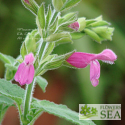
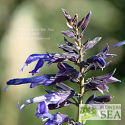
(Van Remsen's Anise-Scented Sage) Big and beautiful, this Anise-Scented Sage grows up to 7 feet tall in rich soil and has lavender-to-purple flowers. In our garden, it blossoms from late spring to fall, attracting both honeybees and hummingbirds.
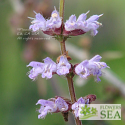
(Japanese Woodland Sage or Shu Wei Cao) This short, lavender-flowered, ornamental sage has purple-to-green foliage. In Asia, this woodland plant has long been an important medicinal herb, used in the treatment of conditions such as diabetes.
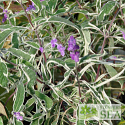
(Variegated Mexican Bush Sage) Although slow growing and somewhat finicky, this sage is a must-have for lovers of unique foliage. It has small purple flowers and highly variegated leaves with stems that are slightly twisted. The overall look is compact and dense.
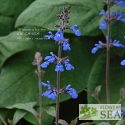
(Sinaloan Blue Sage) It's difficult to say which trait is more attractive about this sage -- the airy spikes of deep, true blue flowers or the fascinating spear-shaped foliage that varies from deep green to purple, forming a tidy mat.
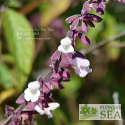
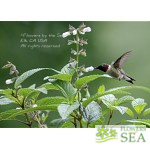
(Waverly Sage) A pale pink to lavender blush adds delicate color to the white flowers of Waverly Sage, which are supported by plum-colored calyxes. Its mid-green leaves are lance shaped and veined.
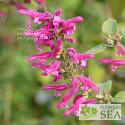
(Scandent Mexican Sage) Here's another winter-blooming hummingbird magnet for gardens in mild climates. This one is scandent, which means it is a climber and needs support. Its abundant, purple-to-magenta flowers are velvety and 6 inches long.
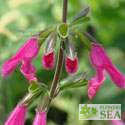
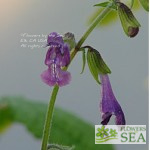
(Yunnan Sage or yun nan shu wei cao) Yunnan Sage's tall spikes of violet-to-purple flowers bloom from summer into fall. Native to Southwestern China's provinces of Yunnan, Guizhou and Sichuan, it grows on shady, grassy hillsides and along forest margins at elevations up to 9,500 feet.
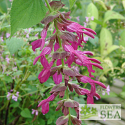
(Gravid Sage) This tender perennial from Michoacan, Mexico, has large, rich magenta flowers that hang from the arching branches in clusters up to 12 inches long. Growing up to 5 feet tall, this sage offers an unforgettable display when in bloom.
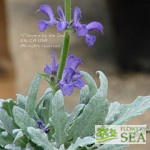
(Caucasus Sage) This hardy ground cover sage grows 4 to 12 inches tall and 12 inches wide. The velvety white fur of its foliage aids moisture retention. Its soft, royal purple flowers make it stand out. We think this Salvia deserves to spread far and wide.
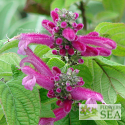
(Big Leaf Scandent Mexican Sage) Bigger leaves, larger, looser flowers and pink petioles -- the tiny stemlets connecting leaves to stems -- differentiate this this clone from its parent plant Salvia iodantha. A winter-blooming perennial, it's covered with velvety, 8-inch-long, magenta blossoms from fall into winter.
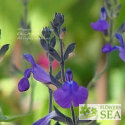
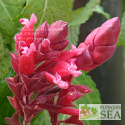
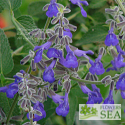
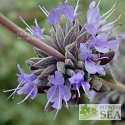
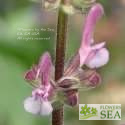
(Jerusalem Sage) This lovely herbaceous perennial is native to Cyprus, Israel, Jordan, Lebanon, Syria, and the West Bank. Its clear pink flowers change at times to a pink highlighted with violet lines and dots. Prominent glandular hairs on the buds, bracts and floral stems exude a fragrance that is delightful on a warm day.
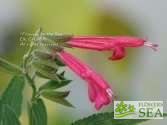
(Hybrid Bolivian Sage) This naturally occurring hybrid is a Bolivian native related to S. orbignaei and S. haenkei. Prettier than its parents, it has large, profuse, long-blooming flowers that are dark pink.
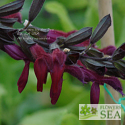
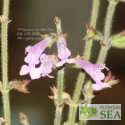
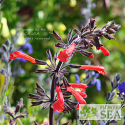
(Venezuelan Red Sage) Purple stems and calyxes so dark that they almost look black contrast dramatically with the deep red-orange flowers of this South American beauty. This tall, spectacular sage has been in cultivation for decades but is still rare in gardens. We'd like to see that change.
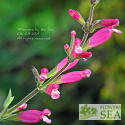
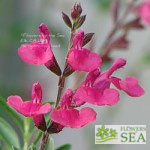
(Hadspen Roseleaf Sage) If you plant this sage in a mild-climate area where hummingbirds overwinter, you'll likely find hummers zinging back and forth among its magenta pink blossoms from fall through spring.
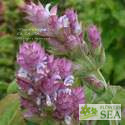
(Italian Clary Sage) Clary Sages are well known for their use in folk remedies, aromatherapy and cosmetics. Glowing purple bracts frame the spectacular white blooms of this cultivar on 5-foot-tall spikes. It is a delight for honeybees, hummingbirds and butterflies.
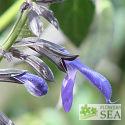
(Door of the Fox Mexican Sage) Purplish foliage contrasts attractively with the violet-to-purple flowers of this big sage, which grows 6 feet tall and 4 feet wide. Bloom time is autumn. This darkly dramatic Mexican Sage makes a particularly attractive entryway accent.
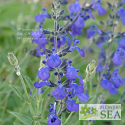
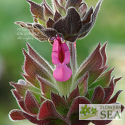
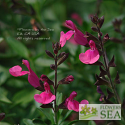
(Black Cherry Autumn Sage) Ripe Bing cherries come to mind when viewing the rich purple flowers of this full-sun sage that is adaptable to partial shade. Butterflies, honeybees and hummingbirds are drawn to its blossoms from spring into fall.
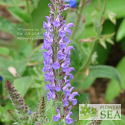
(The Queen's Sage) Regal spikes of lavender-to-purple flowers give weight to this sage's common name. It provides a stately show of bloom during summer in USDA Zones 6 to 10. Cold hardy and heat tolerant, this impressive perennial comes from the mountains of Turkey.
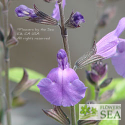
(Azure Hybrid Sage) Despite its name, the flowers of this tiny hybrid aren't really blue. They are a light purple. Due to its size, long bloom time, heat tolerance and drought resistance, Salvia x 'Mesa Azure' is a fine groundcover for areas where summers are hot and dry.
The following terms were added to your search to help improve the result. Click here to exclude these extra terms from the search.
- pink, purple
Common terms in this search: fruit scented sage native honduras has all big light-green leaves fuzzy soft large magenta-pink flowers smell intoxicating bloom from winter into spring one strongest most deliciously plants have encountered many salvias fascinating history tender perennial not named after daughter mythological greek titan instead doris zemurray stone american archeologist ethnographer who focused central america she different kind russian immigrant samuel founded