
Advanced Search
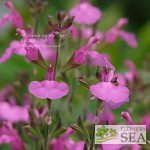
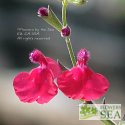
(Elk Xanadu Jame Sage) Like the magical, fictional land of Xanadu, there’s something heavenly about this sage. The flowers of Salvia x ‘Elk Xanadu’ look ethereal due to the bluish cast of their magenta-pink blossoms supported by deep magenta and green calyxes. It's a powerful attraction for pollinators, including hummingbirds.
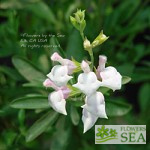
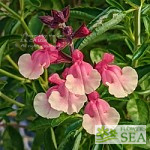
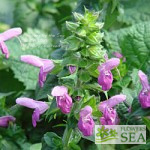
(Autumn Enchanter Japanese Woodland Sage) Salvia glabrescens ‘Autumn Enchanter’ has bicolored orchid pink flowers that are larger and bloom earlier than those of S. glabrescens ‘Shi Ho’. Autumn Enchanter is also more floriferous, blooms longer, and grows more rapidly with greater vigor.
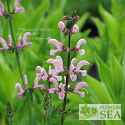
(Meadow Sage or Meadow Clary Sage) Meadow Sage is widespread in Europe, where it grows among other perennials and grasses. We use this plant in herbaceous borders, in containers, or anywhere we need a bright floral display with strong, dark green foliage.
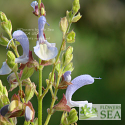
(Rough Blue Sage) Honeybees and butterflies love this deer-resistant shrub, which grows wild on the southwestern Cape of South Africa. It is a member of the most diverse plant community in the world, the fynbos -- an Afrikaans word, meaning "fine bush" and referring to scrub plants or shrubbery.
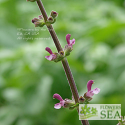
(Mid-East Sage) Native to the mountains shared by Israel and Lebanon, this tidy sage is drought resistant, heat tolerant and long blooming. Its basal foliage rises up and spreads only about 18 inches, but it has long flower spikes.
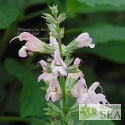
(Dandelion Leaf Sage) Brush or bruise the basal foliage of this Moroccan Salvia and it exudes a citrusy fragrance. Petite and heat tolerant, this is a sturdy, adaptable groundcover.
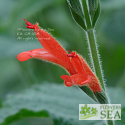
(Tubular Chilean Sage) Foggy days and moderate temperatures are the norm for this low-altitude, coastal mountain sage from northern Chile and Peru. It is grown as much for its handsome foliage as for the deep cranberry of its tiny, tubular flowers.
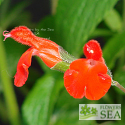
(Eyelash Sage) Small, eyelash-like hairs on the edge of its leaves give this Mexican native part of its name. A compact, gently mounding Salvia, it spreads gradually by underground stolons.
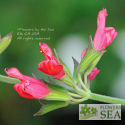
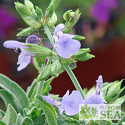
(Greek Sage) Most of the dried culinary sage sold in the United States is Greek Sage. Frescoes on the island of Crete dated to 1400 BC depict this plant, which was used by the Phoenicians and Greeks for cooking and medicine. It is an ancient and beloved friend of mankind.
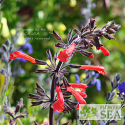
(Venezuelan Red Sage) Purple stems and calyxes so dark that they almost look black contrast dramatically with the deep red-orange flowers of this South American beauty. This tall, spectacular sage has been in cultivation for decades but is still rare in gardens. We'd like to see that change.
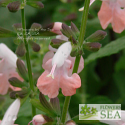
(Coral Nymph Tropical Sage) What a cutie! This award-winning cultivar of Tropical Sage is short and compact yet has a multitude of pastel salmon flowers larger than those of its bigger cousins. It is perfect for annual flower beds or patio containers.
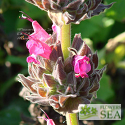
(Little Hummingbird Sage or Pitcher Sage) At one-fourth to one-half the size of our other Hummingbird Sages, this is the smallest variety of Salvia spathacea that we grow.
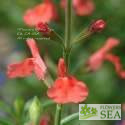
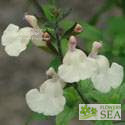
(Glimmering White Mountain Sage) Heatwave Glimmer isn't a mirage. It is a Salvia microphylla that tolerates extremely hot climates as well as cooler regions. It doesn't just survive; it thrives in the heat of Southern California, the Southwest and Texas.
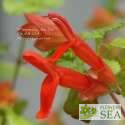
(Orange Mountain Sage) This is the reddest of the Salvia regla species and the most floriferous. Side by side with the other varieties, this one is a bit taller and has darker flowers.
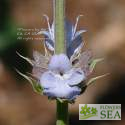
(Starlight Sage) Add sparkle to your dry garden with the pale pastel flowers of this hybrid of two Southern California native plants often seen growing together in the wild — Black Sage (Salvia mellifera) and White Sage (Salvia apiana). Salvia x 'Starlight' is a shrub that blooms early and long, attracting honeybees but not deer.
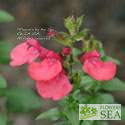
(People's Park Mountain Sage) Sometimes nature can be rebellious. This is one the Mountain Sages known as the Turbulent Sixties Series developed from an outlaw cultivar of the Southwestern native Salvia microphylla. Monterey Bay Nursery (MBN) named their accidental hybrid ‘Berzerkeley.’
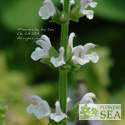
(Iranian Sage) Mixed in with short perennials that bloom over a wide range of seasons, Salvia staminea makes an attractive contribution to short borders during its summer bloom time. Our strain has dark bracts surrounding pastel white-to-blue-to-lavender flowers. The dark green, branching foliage has oblong to oval-shaped leaves.

(Anatolian Cushion Sage) Rising up only 6 to 8 inches, this is a pixie-sized sage that loves gritty soils. It is perfect for dry gardens with gritty soils in USDA Zones 5 to 9. In fact, it seems to love the colder zones best. We think it is particularly fond of frozen ground in winter, because that helps keep its roots from getting too damp.
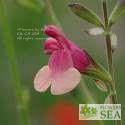
(Shell Dancer Sage) So many sages combine resilience and loveliness. This includes Salvia 'Shell Dancer', which withstands heat and drought yet has delicate looking blossoms and lush green foliage.
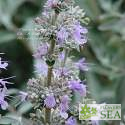
(Gayle Nielson Hybrid Sage) Whorl-like clusters of violet-blue flowers on slender stems as well as its height and width indicate that Gayle Nielson Hybrid Sage is related to some form of Salvia clevelandii.
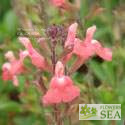
(Salmon Autumn Sage) Creamy salmon-colored flowers with white throats make this elegant Autumn Sage perfect for a pastel garden or as a cooling color in a mixed sage border. Bloom time is spring into fall for this petite Salvia greggii native to the American Southwest and Mexico.
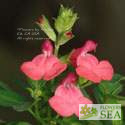
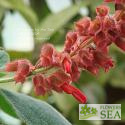
(Giant Colombian Red Mountain Sage) In 1898, physician and medical plant researcher Henry Hurd Rusby (1855-1940) found this towering sage with large, deep red flowers in the Sierra Nevada de Santa Marta mountains of Colombia.
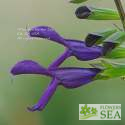
(Betsy's Choice Sage) Life and botany have their beautiful mysteries. Betsy's Choice Sage is one of them. We aren't certain of the parentage or history of this tall, attractive, fast-growing sage. However, we are certain that we love its long, royal purple flowers. Hummingbirds do as well.
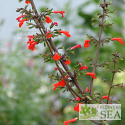
(Tall Red Colombian Sage) Salvia rubescens subsp. dolichothrix may tower over your head when in full bloom with its creamy red trumpet blossoms and dark calyxes. Its leaves are large and attractively textured.
The following terms were added to your search to help improve the result. Click here to exclude these extra terms from the search.
- pink, reddish
Common terms in this search: elk xanadu jame sage like magical fictional land there's something heavenly about flowers 'elk xanadu' look ethereal due bluish cast their magenta-pink blossoms supported deep magenta green calyxes one our rainbow sages which means jamensis hybrid developed plant breeding program sea farm native mexico american southwest occur where closely related species autumn greggii mountain microphylla meet such test gardens mexico's