
Advanced Search
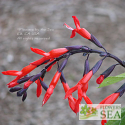
(Big Mexican Scarlet Sage) This heavily blooming Salvia from Mexico has heart-shaped leaves and spectacular flower spikes up to 18 inches long from winter through spring. The blooms are bright red-orange with rich purple-black calyxes.
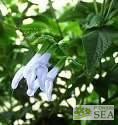
(Argentina Skies Anise-Scented Sage) PLEASE NOTE: A superior variety, 'Elk Argentina Skies' is now available.
The licorice-like fragrance of its foliage and the big whorls of large, sky blue flowers make this a stand-out sage. Tall and wide, it forms a tidy, long blooming background, screen or border.
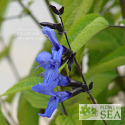
(Black & Blue Anise-Scented Sage) Hummingbirds go crazy for this variety of Salvia guaranitica. The black calyxes contrast handsomely with the rich, royal blue flowers. We highly recommend the much improved Salvia BODACIOUS 'Rhythm and Blues' as an alternative to this older variety.
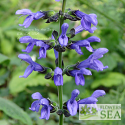
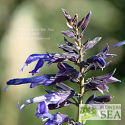
(Van Remsen's Anise-Scented Sage) Big and beautiful, this Anise-Scented Sage grows up to 7 feet tall in rich soil and has lavender-to-purple flowers. In our garden, it blossoms from late spring to fall, attracting both honeybees and hummingbirds.
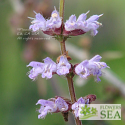
(Japanese Woodland Sage or Shu Wei Cao) This short, lavender-flowered, ornamental sage has purple-to-green foliage. In Asia, this woodland plant has long been an important medicinal herb, used in the treatment of conditions such as diabetes.
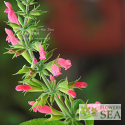
(Karwinski's Sage) From moist mountain areas in Mexico and Central America, this rugged, winter-blooming shrub is found in oak or pine forests at altitudes of 4,000 to 8,000 feet. This may account for this winter bloomer producing a few bright red flowers during short periods of freezing weather with temperatures as low as 20 degrees F.
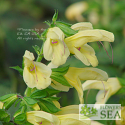
(Shinano-akigiri) Japan's largest island, Honshu, is home to Salvia koyamae, a shade- and moisture-loving herbaceous perennial that is perfect for woodland gardens or shady borders. It is notable for yellow flowers, which bloom from late summer into fall, as well as arrow-shaped foliage.
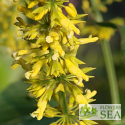
(Forysthia Sage) This statuesque perennial grows up to 10 feet tall, but spreads only 3 feet wide. It is a late bloomer from Mexico's Sierra Madre Oriental mountains where it grows at altitudes of 4,000 to 5,000 feet and tolerates temperatures down to 20 degrees F.
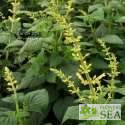
(Red Stem Forsythia Sage) The thick, square, red stems of this variety of Forsythia Sage make it conspicuously different from the species and from everything else in your garden. Its jointed stalks look a little like rhubarb gone mad!
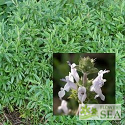
(Black Sage or Honey Sage) One of the most common and fragrant native shrubs in Central California's Coast Ranges, Black Sage is ideal for dry gardens. Admirably adaptable, it tolerates soils ranging from the most marginal to ones that are loamy and provide excellent drainage. It is a survivor.
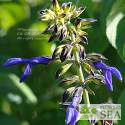
(La Placita Mexican Sage) Large and deep violet, the flowers of this tidy shrub bloom from late summer through fall. La Placita (the public square or small plaza) was collected in the mountains of Hidalgo, Mexico.
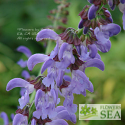
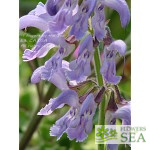
(Red Sage, Chinese Sage, Dan-shen) The bright red, finger-like roots of Salvia miltiorrhiza have a long history in traditional Chinese herbal medicine.
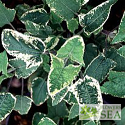
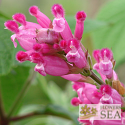
(El Butano Downy Sage) El Butano is a horticulturally rich area of Cumbres de Monterrey National Park in the mountains of Nuevo Leon, Mexico. El Butano Downy Sage was discovered in this area where it grows at elevations of 4,500 to 8,000 feet.
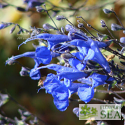
(Arrowleaf Sage) Brilliant royal blue flowers and unusual foliage attract the eye to Arrowleaf Sage. This large herbaceous perennial is found at elevations up to 10,500 feet in the Cordillera de los Andes of Chile, Ecuador and Peru.
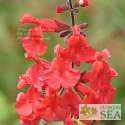
(Scarlet Spires Sage) This is a brilliant cross between the sturdy D'Arcy's Sage (Salvia darcyi) and the beautifully colored 'Raspberry Delight' Littleleaf Sage (Salvia microphylla 'Raspberry Delight').
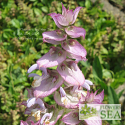
(Clary or Clear Eye Sage or Eyebright) Pink-purple bracts and violet-purple flowers form a pastel cloud over the large, rumpled leaves of Clary Sage in summer. It is a towering beauty growing up to 5 feet tall. Sacred to some due to age-old use in herbal remedies, it is heavenly to look at.
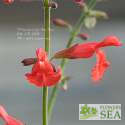
(Silke's Dream Salvia) Large red-orange blossoms combine with heart-shaped, light green, heavily veined leaves in this large, long-blooming sage. It's a subshrub, which means it combines it is a perennial that combines soft, herbaceous growth with some woodiness.
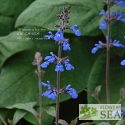
(Sinaloan Blue Sage) It's difficult to say which trait is more attractive about this sage -- the airy spikes of deep, true blue flowers or the fascinating spear-shaped foliage that varies from deep green to purple, forming a tidy mat.
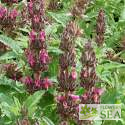
(Hummingbird Sage or Pitcher Sage) No sage we grow is more attractive to hummingbirds than this one. Spectacular in all ways, it is one of our favorite Salvias with its fragrant, evergreen foliage and jewel-like flowers and bracts.
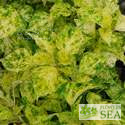
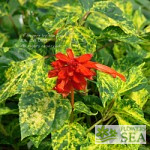
(Variegated Scarlet Sage) Crimson flowers topping bright yellow foliage mottled with deep green make this one of the most spectacular Salvias we grow.
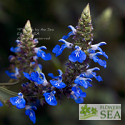
(Bog Sage) Highly adaptable, Salvia uliginosa is ideal for the beginning sage gardener. It isn't fussy about soil type, sun exposure, drainage or frequency of watering.
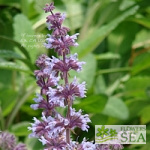
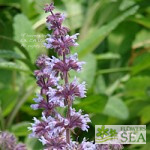
(Lilac Sage) We try not to brag too much, but this is our own variety of Salvia verticillata from home-grown seed, and we think it is spectacular. Butterflies and honeybees also are in love with this long-blooming perennial beauty.
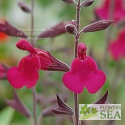
(Raspberry Delight Sage) Dark raspberry-red flowers, burgundy stems and calyxes and deep green foliage make this one of our most attention-grabbing varieties.
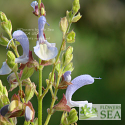
(Rough Blue Sage) Honeybees and butterflies love this deer-resistant shrub, which grows wild on the southwestern Cape of South Africa. It is a member of the most diverse plant community in the world, the fynbos -- an Afrikaans word, meaning "fine bush" and referring to scrub plants or shrubbery.
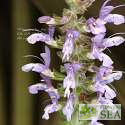
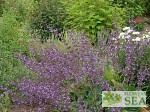
(Balkan Sage) Violet-blue whorls of flowers and plentiful, fuzzy, basal leaves that reach an impressive length of 18 inches are two notable features about this hardy, herbaceous perennial, which is native to the Southeastern Balkan Peninsula.
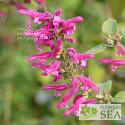
(Scandent Mexican Sage) Here's another winter-blooming hummingbird magnet for gardens in mild climates. This one is scandent, which means it is a climber and needs support. Its abundant, purple-to-magenta flowers are velvety and 6 inches long.
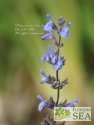
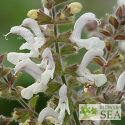
(North African Sage) This stunning herbaceous perennial has sky blue flowers on showy, branched spikes that grow up to 6 feet tall.
Common terms in this search: big mexican scarlet sage heavily blooming from mexico has heart-shaped leaves spectacular flower spikes inches long winter through spring blooms bright red-orange rich purple-black calyxes stems give full sun plenty room because grows feet tall almost wide needs protection strong winds rains can cause laden woody branches break variety gesneriiflora often called tequila reference its scientific name botanists southern californias