
Advanced Search
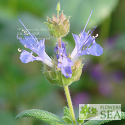
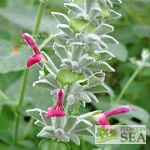
(White Headed Sage) One of the most visually stunning members of the genus, this large growing, tender, winter blooming species from the mountains of Ecuador will turn every head with its furry white calyxes and brilliant magenta red flowers.
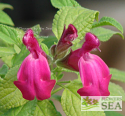
(Alice's Sage) We have John Fisher of Australia to thank for this fascinating intraspecific cross, which he named after his daughter. It really looks to be intermediate between the parents, and the fragrance of the leaves is divine.
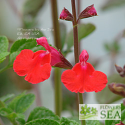
(Majestic Pink Sage) Very large richly colored hot pink blossoms and broad, glossy, intricately textured leaves are part of what makes Salvia x 'Majestic Pink' a standout. This is a complex hybrid involving several Salvia species from the ongoing breeding program at FBTS.
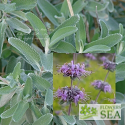
(Spreading California Purple Sage or Spreading California Gray Sage) Songbirds love this California native as do honeybees and hummingbirds. This Salvia leucophylla clone was collected in 1982 by Dr. Dale Smith of University of California Santa Barbara (UCSB #82152) at Point Sal near Santa Barbara.
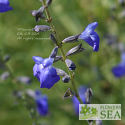
(Autumn Sapphire West Texas Grass Sage) Butterflies and honeybees particularly favor this West Texas mountain native. In contrast to the true blue flowers of regular Salvia reptans, this cultivar has deep blue blossoms and is remarkably compact.
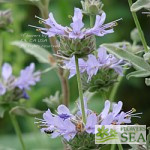
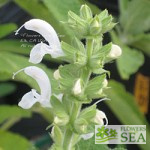
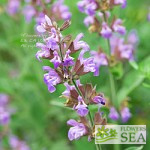
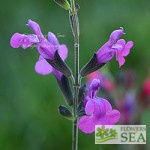
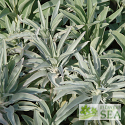
(Compact Sacred White Sage) Salvia apiana var. compacta is significantly shorter than the common species of Sacred White Sage and somewhat more cold tolerant. Its smaller leaves and compact form make it a tidier choice for home gardens with the right kind of growing conditions.
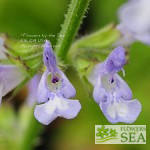
(Cut Leaf African Blue Sage) In botanical names, aurita means “ear shaped.” It’s the ear-like lobes of this sage’s leaves that give the species part of its name Salvia aurita ssp. galpinii. The cut leaf foliage is heavily lobed, mint green and lightly hairy.
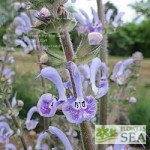
(Shangri-la Sage) Take a close look at Salvia moorcroftiana x indica ‘Shangri-la’ and you’ll notice that its lavender flowers have lighter lower lips with deep purple freckles.
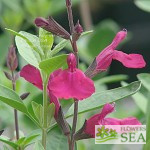
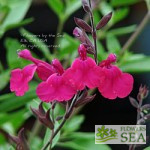
(Raspberry Autumn Sage) Dark calyxes and stems contrast intensely with the bright berry-colored flowers of Salvia greggii ‘Raspberry’. It's one of our fastest growing, earliest blooming Autumn Sages and has fragrant foliage.
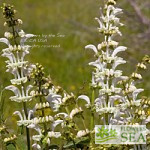
(Woolly White Sage) Salvia candidissima has tidy, upright stems covered with whorls of creamy white blossoms shaped like tiny parrot beaks. They rise from a mid-green rosette of leaves that become fuzzier and whiter as summer heat increases.
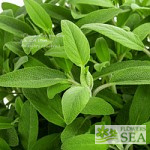
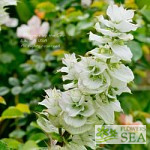
(Vatican White Clary Sage) Clary Sages are well known for their use in folk remedies, aromatherapy and cosmetics. Large white bracts frame the spectacular white blooms of this cultivar on 5-foot-tall spikes. It is a delight for honeybees and butterflies.

(Vermilion Bluffs® Mexican Sage) The brilliant red flowers of Vermilion Bluffs bloom abundantly from August to October. This variety of the Mexican native Salvia darcyi is cold hardy to Zone 5b at altitudes up to 5,500 feet.
The following terms were added to your search to help improve the result. Click here to exclude these extra terms from the search.
- dry
Common terms in this search: sand sage upward curling finely scalloped narrow lime-green leaves eremostachya cute capital whorls pale violet-blue flowers supported fuzzy burgundy calyxes equally appealing fragrant drought-resistant native southern california baja grows along western edge colorado desert which part sonoran short long blooming shrub thrives full sun dry air heat areas moderate winter temperatures due nectar its tubular honeybees hummingbirds love however deer