
Advanced Search
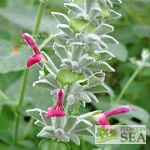
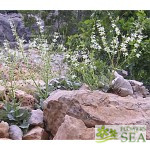
(White Headed Sage) One of the most visually stunning members of the genus, this large growing, tender, winter blooming species from the mountains of Ecuador will turn every head with its furry white calyxes and brilliant magenta red flowers.
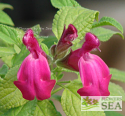
(Alice's Sage) We have John Fisher of Australia to thank for this fascinating intraspecific cross, which he named after his daughter. It really looks to be intermediate between the parents, and the fragrance of the leaves is divine.
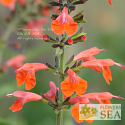
(Vermilion Tropical Sage) Tall and full of large, orange flowers, Salvia coccinea 'Vermilion' is a strain from the Louisiana gardens of hummingbird guru Nancy Newfield.
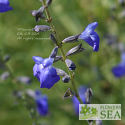
(Autumn Sapphire West Texas Grass Sage) Butterflies and honeybees particularly favor this West Texas mountain native. In contrast to the true blue flowers of regular Salvia reptans, this cultivar has deep blue blossoms and is remarkably compact.
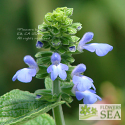
(Elk Blue Hard Leaf Sage) Soft baby blue & white flowers in abundance coupled with strong growth make this an ideal new variety for hummingbird gardeners. the specific epitaph, durifolia, means hard leaf. We don't find the leaf exactly hard but it is lovely and durable.
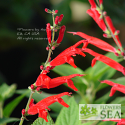
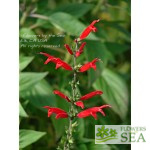
(Elk Sonoran Red Pineapple Sage) A new Pineapple Sage variety that has the traditional fruity fragrance but blooms much earlier in the season than the traditionally grown clone. Short and compact, it resembles the varieties 'Honey Melon' and 'Tangerine' size wise, but has the unmistakable aroma of ripe pineapples.
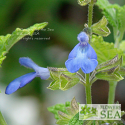
(Hybrid River Sage) This beautiful new plant is a FBTS hybrid between to rare South American species. In growth and flower it is intermediate between the parents, and fast growing because of it's hybrid vigor.
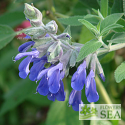
(Bolivian Lace Leaf Sage) A large decidious woody shrub, this is a distinctive and somewhat unique Salvia species. The large clusters of deep blue flowers appear in the spring and again in the fall. A native from a tropical savanna climate in Bolivia, this species grows best in climates with year-round warmth.
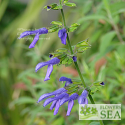
(Margie Griffith Sage) Salvia x 'Margie Griffith' is a big, purple-flowered beauty with glossy green, ribbed foliage. It feeds hummingbirds year round down South and on our coastal, Northern California farm where winter temperatures are moderate.
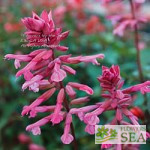
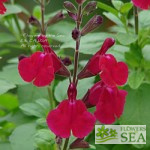
(Elk Raspberry Moose Sage) The deep raspberry flowers of this Salvia x Jamensis look good enough to eat, like spoonfuls of a silky, mouthwatering mousse dessert. Yet the 'moose' in its name isn't a misspelling. It refers to flowers that are larger than normal for a Jame Sage.
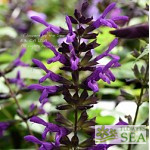
(Purple & Bloom Sage) Floriferous, dark-stemmed spikes of deep violet-purple blossoms surrounded by charcoal-purple bracts combined with dark green leaves shaped like elongated hearts make Salvia ‘Purple & Bloom’ dramatic.
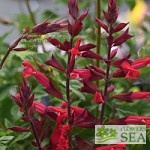
(Roman Red Sage) This handsome, long blooming hybrid sage features a dramatic combination of scarlet flowers and deep rust-to-merlot calyxes. Deadheading spent blossoms prolongs bloom time.
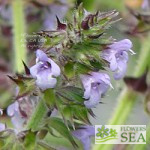
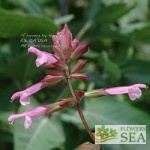
(Kisses and Wishes Sage) Blooming over multiple seasons, Salvia ‘Kisses and Wishes’ bursts with long, luminous, rosy pink blossoms nestled in pink-to-gold bracts. It’s so pretty that it seems unfair to refer to the newest member of the Wish Sages as a “mutation.”
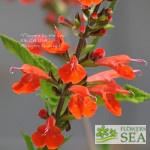
(Elk Vermilion Tropical Sage) Tall and full of large, orange flowers, Salvia coccinea 'Vermilion' is a clonal variety developed by FBTS.
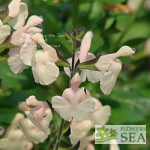
(Elk Morning Sun Jame Sage) Kelly green and black calyxes support the long blooming, creamy white and pale pink flowers of Salvia x ‘Elk Morning Sun’. A waterwise sage, it likes average watering but resists drought.
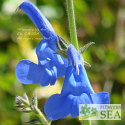
(Guanajuato Giant Gentian Sage) At 3 inches long, the flowers of this Gentian Sage are the largest of any we grow. Guanajuato Giant is also unique for its tall, upright growth and heavily textured foliage. This is our own tested seed strain of this rare plant.
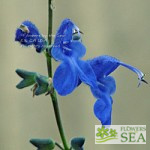
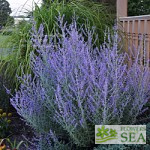
(Rocketman Russian Sage) A cloud of cool, lavender-blue flowers shoot upward from the fine-leafed, gray-green foliage of Salvia yangii ‘Rocketman’. This is a shorter, more upright form of Russian Sage, which was known botanically as Perovskia atriplicifolia until 2019 when the species was reclassified as a Salvia.
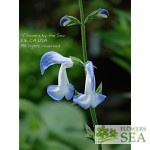
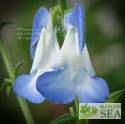
(Dot's Delight Bicolor Gentian Sage) This sage turns heads, because its large, white and blue bicolored flowers make it a unique variety of Gentian Sage. Developed in the UK, Dot's Delight is less vigorous and less sun tolerant than other varieties of the species. This is our own tested seed strain of this rare plant.

The following terms were added to your search to help improve the result. Click here to exclude these extra terms from the search.
- hot, not, too
Common terms in this search: white headed sage one most visually stunning members genus large growing tender winter blooming species from mountains ecuador will turn every head its furry calyxes brilliant magenta red flowers we've found rare plant does well full sun rich drained soil ample water not seem like overly moist conditions excellent drainage key factor moderately warm bloomer quite please make sure can