
Advanced Search
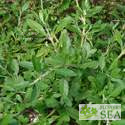
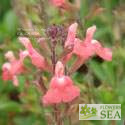
(Salmon Autumn Sage) Creamy salmon-colored flowers with white throats make this elegant Autumn Sage perfect for a pastel garden or as a cooling color in a mixed sage border. Bloom time is spring into fall for this petite Salvia greggii native to the American Southwest and Mexico.
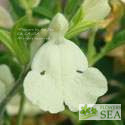
(Elk Butter Light Jame Sage) "Clear" is how we describe the translucent quality of Elk Butter Light's creamy yellow blossoms, which are supported by bright green calyxes. Unlike the green-tinged flowers of Elk Lemon Light Jame Sage, these blossoms are paler and one pure color.
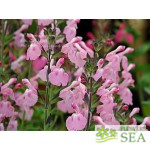
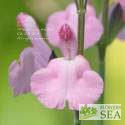
(Elk Cotton Candy Jame Sage) Rosy hairs on the upper lip and pale white throats highlight the translucent, blush pink blossoms of Elk Cotton Candy Jame Sage. Dark, deeply contrasting calyxes support the medium-size flowers.
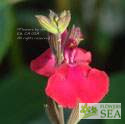
(Heatwave Red Mountain Sage) Compact and small, this Mountain Sage is another fine groundcover for Southern California, the Southwest and Texas. Similar to Salvia microphylla 'Heatwave Glimmer', it not only survives but thrives in extreme heat.
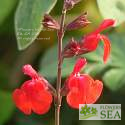
(Flame Autumn Sage) Crimson flowers contrast brightly against deep purple calyxes and stems in Flame Autumn Sage. The leaves -- tiny ellipses without veins -- are soft and shiver in the breeze.
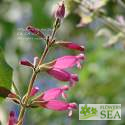
(Nuevo Leon Downy Sage) From the high mountains of Nuevo Leon, Mexico. This unusual variety has very large flowers in loose clusters. Early to bloom and more cold tolerant than other Downy Sage varieties, it is ideal for gardens on the edge of it's climatic adaptability.
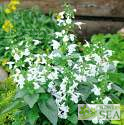
(Snow Nymph White Tropical Sage) Butterflies, hummingbirds and honeybees enjoy this award winner, which is an outstanding choice for pure white color from June to autumn. This type of Tropical Sage is generally the first to flower for us.
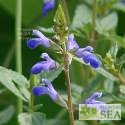
(Arizona Deep Blue Sage) In contrast to the lavender-blue flowers of Arizona Blue Sage (Salvia arizonica), the blossoms of Arizona Deep Blue are nearly purple. They are the kind of deep lavender that you might see in a southwestern sunset.
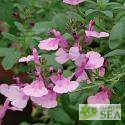
(Elk Bella Rosa Jame Sage) The large, creamy pink and burgundy flowers of this sage are stately in contrast with its deep green, veined, ovate foliage that is pleasantly fragrant. Elk Bella Rosa is as elegant as its name implies. It's also long blooming.
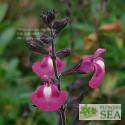
(Elk Plum Parfait Jame Sage) It's a toss-up as to which are more dramatic -- the deep purple calyxes so dark they almost look black or the plum-colored flowers with pronounced white beelines. Elk Plum Parfait is a rare treat.
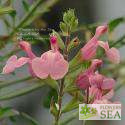
(Elk Twilight's Rosy Glow Jame Sage) Rosy red hairs accentuate the upper lip of each dusky, salmon-pink blossom of this cheery Jame Sage. The flowers are tiny but abundant and are supported by bright green calyxes.
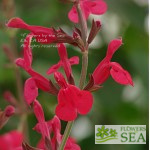
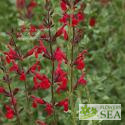
(Windwalker® Royal Red Salvia) Salvia darcyi x S. microphylla 'PWIN03S' is one of the top 2015 plants for USDA Cold Hardiness Zone 5 selected by Colorado's Plant Select®, a nonprofit organization that focuses on promoting plants for low-water gardens.
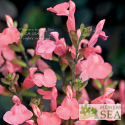
(Blast Pink Mountain Sage) Long blooming Salvia microphylla 'Heatwave Blast' produces prolific quantities of large, dusky salmon-pink blossoms and dense, mid-green foliage.
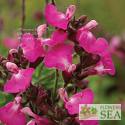
(Sparkle Pink Mountain Sage) Long blooming Salvia microphylla 'Heatwave Sparkle' produces prolific quantities of deep mauve-pink blossoms with white throats and dense, mid-green foliage.
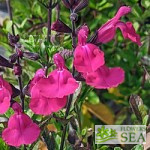
(Brilliance Pink Mountain Sage) Long blooming Salvia microphylla 'Heatwave Brilliance' produces prolific quantities of deep reddish-pink, or cerise, blossoms along with dense, mid-green foliage.
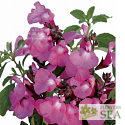
(Radiance Bright Pink Mountain Sage) Long blooming Salvia microphylla 'Heatwave Radiance' produces prolific quantities of hot pink blossoms along with dense, mid-green foliage.
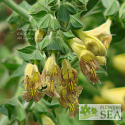
(Mellow Yellow Sage) Yellow-flowering Salvias always command attention in the garden. An intentional hybrid between the very rare and difficult to grow Salvia bulleyana and the energetic Salvia campanulata, this plant embodies the best characteristics of each parent.
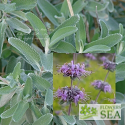
(Spreading California Purple Sage or Spreading California Gray Sage) Songbirds love this California native as do honeybees and hummingbirds. This Salvia leucophylla clone was collected in 1982 by Dr. Dale Smith of University of California Santa Barbara (UCSB #82152) at Point Sal near Santa Barbara.
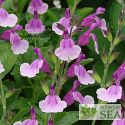
(Elk Chantily Lace Jame Sage) What color are the flowers of this FBTS introduction? Lavender? Periwinkle? Taffy? Yes to all for this hard to describe but easy to love plant.
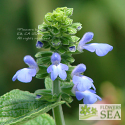
(Elk Blue Hard Leaf Sage) Soft baby blue & white flowers in abundance coupled with strong growth make this an ideal new variety for hummingbird gardeners. the specific epitaph, durifolia, means hard leaf. We don't find the leaf exactly hard but it is lovely and durable.
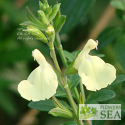
(Elk Lemon Sorbet Jame Sage) Unlike any other we have ever seen, this pale yellow flower seems at times to have a green tint. The foliege is typical of the Salvia microphylla parent - mid sized, round and textured. It is very different in flower and foliege from our popular variety 'Elk Lemon Lite'.
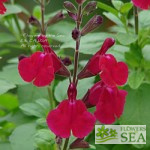
(Elk Raspberry Moose Sage) The deep raspberry flowers of this Salvia x Jamensis look good enough to eat, like spoonfuls of a silky, mouthwatering mousse dessert. Yet the 'moose' in its name isn't a misspelling. It refers to flowers that are larger than normal for a Jame Sage.
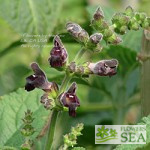
(Black Dan-shen) Growing into a basal rosette of leaves measuring up to 3 feet across, Salvia przewalskii 'CC5795' is known for its handsome foliage and deep purple, almost black flowers.
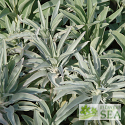
(Compact Sacred White Sage) Salvia apiana var. compacta is significantly shorter than the common species of Sacred White Sage and somewhat more cold tolerant. Its smaller leaves and compact form make it a tidier choice for home gardens with the right kind of growing conditions.
The following terms were added to your search to help improve the result. Click here to exclude these extra terms from the search.
- summer
Common terms in this search: jade carpet black sage mellifera one most common fragrant native shrubs california coast ranges ideal dry gardens inches tall feet wide variety excellent groundcover slightly taller has more grey leaf color than closely related 'terra seca' admirably adaptable tolerates soils ranging from marginal loamy drainage does well slopes loves full sun heat long elegant grey-green leaves attractively wrinkled powerfully aromatic