
Advanced Search
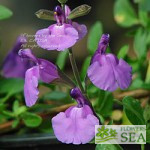
(Elk Grape Ape Jame Sage) Bountiful flowers that are larger than normal for Jame Sage cover Salvia x ‘Elk Grape Ape’ in a cloud of purple that is sort of amethyst to pinot gris in color.
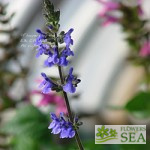
(Paula Flynn Sage) Floral spikes with whorls of bluish-purple flowers rise up amid the slightly relaxed, upright foliage of the mystery plant Salvia ‘Paula Flynn’. It features pebbly, deep green leaves with white, fuzzy undersides.
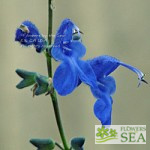
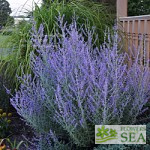
(Rocketman Russian Sage) A cloud of cool, lavender-blue flowers shoot upward from the fine-leafed, gray-green foliage of Salvia yangii ‘Rocketman’. This is a shorter, more upright form of Russian Sage, which was known botanically as Perovskia atriplicifolia until 2019 when the species was reclassified as a Salvia.
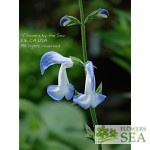
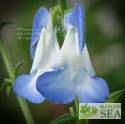
(Dot's Delight Bicolor Gentian Sage) This sage turns heads, because its large, white and blue bicolored flowers make it a unique variety of Gentian Sage. Developed in the UK, Dot's Delight is less vigorous and less sun tolerant than other varieties of the species. This is our own tested seed strain of this rare plant.
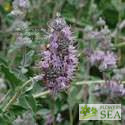
(Bee's Bliss Sage) If you are looking for a California native sage to use as a groundcover, Bee's Bliss is a fine choice. Low-growing, widespreading and colorful, it is ideal for choking weeds.
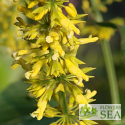
(Forysthia Sage) This statuesque perennial grows up to 10 feet tall, but spreads only 3 feet wide. It is a late bloomer from Mexico's Sierra Madre Oriental mountains where it grows at altitudes of 4,000 to 5,000 feet and tolerates temperatures down to 20 degrees F.
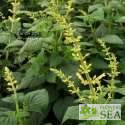
(Red Stem Forsythia Sage) The thick, square, red stems of this variety of Forsythia Sage make it conspicuously different from the species and from everything else in your garden. Its jointed stalks look a little like rhubarb gone mad!
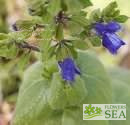
(Little Mexican Sage) This low-growing sage is a shrub in its warmest zones and a perennial in the cooler ones. It's just right for small spaces or tiny gardens. Short and compact, its flowers are similar to but smaller than those of S. mexicana 'Limelight'.
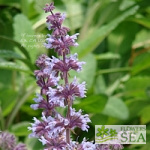
(Lilac Sage) We try not to brag too much, but this is our own variety of Salvia verticillata from home-grown seed, and we think it is spectacular. Butterflies and honeybees also are in love with this long-blooming perennial beauty.
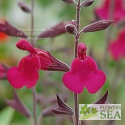
(Raspberry Delight Sage) Dark raspberry-red flowers, burgundy stems and calyxes and deep green foliage make this one of our most attention-grabbing varieties.
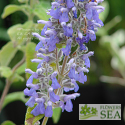
(Grape Scented Sage) With the grape scent of its pale lavender blossoms and its long history of medicinal use, it is no surprise that this sage is so widely distributed.
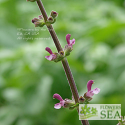
(Mid-East Sage) Native to the mountains shared by Israel and Lebanon, this tidy sage is drought resistant, heat tolerant and long blooming. Its basal foliage rises up and spreads only about 18 inches, but it has long flower spikes.
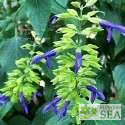
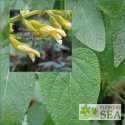
(Silver Leaf Forysthia Sage) It's the foliage of this clone that makes it so different from its parent plant. The leaves are a lovely silver and smaller than the green leaves of the species. However, they both have buttery yellow, Forsythia-like blossoms.
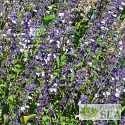
(Phyllis' Fancy Sage) The parentage of this lavender-flowered hybrid sage is unknown. However, it may be a cross between Mexican Bush Sage (Salvia leucantha) and Chiapas Sage (S. chiapensis).
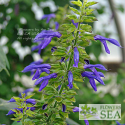
(Byron's Mexican Sage) One of our favorite Mexican Sages, this large variety is reputed to be a hybrid between Salvia mexicana and S. hispanica -- a species of Chia Sage.
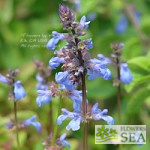
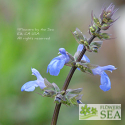
(Ground Ivy Sage) Native to Central Mexico's highlands, this creeping perennial grows at a altitudes of more than 10,000 feet and can handle some chill. Its common name comes from its scalloped yellow-green leaves, which resemble Ground Ivy or Glechoma.
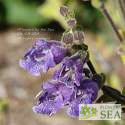
(Dan-shen Gansu) Growing into a large basal rosette of leaves measuring up to 3 feet across, Salvia przewalskii var. mandarinorum is known for its handsome foliage.
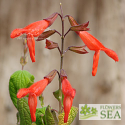
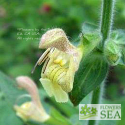
(Himalayan Cloud Sage) Nepal's Muktinath Valley -- a sacred site for Hindus and Buddhists -- is the place to go to see this majestically tall shade perennial in the wild. It grows at altitudes up to 14,000 feet and often emerges while the ground is still snowy.
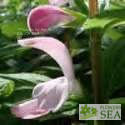
(Patio Rose Gentian Sage) Patio Rose is a lovely, dwarf variety of Salvia patens from Holland. It needs partial shade and is perfect for containers. The rose-colored flowers are larger than those of other Gentian Sages.
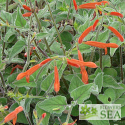
(Oaxaca Orange Wooly Sage) Tall, eye-catching spikes of dusky red-orange flowers that bloom from summer into fall make this one of our most impressive Salvias. Plus it's cold hardy into Zone 7.
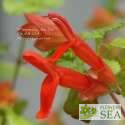
(Orange Mountain Sage) This is the reddest of the Salvia regla species and the most floriferous. Side by side with the other varieties, this one is a bit taller and has darker flowers.
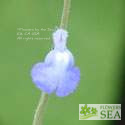
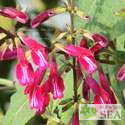
(Violet Calyx Sage) Here's another abundantly blooming sage from the cloud forest slopes of Chiapas, Mexico. Violet beelines mark the lower lip of the crimson blossoms, which are so numerous that it can be difficult to see the foliage at times.
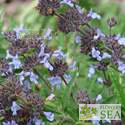
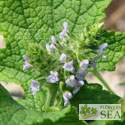

(Russell's Mexican Sage) Expect rapid, tall growth from this Salvia Mexicana . In the ground, Russell’s Mexican Sage can reach up to 10 feet tall and 5 feet wide, providing an effective screen of dark green, heart-shaped foliage. By late autumn it’s bursting with flowers.
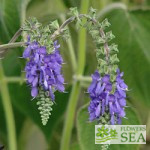
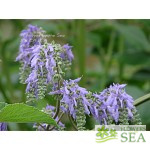
(Nodding Sage) "Dancing in the air" is how garden writer Joseph Tychonievich describes the tall, graceful flower spikes of Nodding Sage, which can tower up to 5 feet tall over the plant's 18-inch-tall foliage during the summer flowering season.
The following terms were added to your search to help improve the result. Click here to exclude these extra terms from the search.
- blue, purple
Common terms in this search: elk grape ape jame sage bountiful flowers larger than normal cover cloud purple sort amethyst pinot gris color short subshrub herbaceous perennial also bit woody fragrant foliage long blooming hybrid product fbtsplant development program like most other sages heat-tolerant sun lover appreciates partial shade during severe heat despite being drought tolerant thrives average watering based local rainfall don forget give