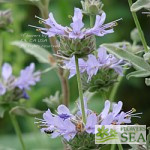
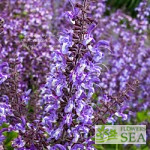
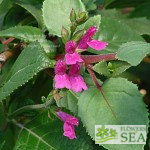
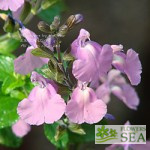
(Calamity Jane Sage) A super tough shrub with white to pale lavender flowers, this sage is named for Martha Jane Canary (1852-1903), better known as the sharpshooting frontierswoman Calamity Jane of Missouri.
(Auriculate Sage) Both Culinary Sage (Salvia officinalis) and Greek Sage (Salvia fruticosa) are grown in the spice trade as the Sage of commerce. As they are closely related and share much of the same range in the wild, hybrids between the two have been known to exist for a long while. These hybrids go by many names: Newe Ya'ar Sage & Silver Sage being two of the most common. The natural hybrid of these species is found on an island in Croatia, and the accepted name for it is Salvia x auriculata.
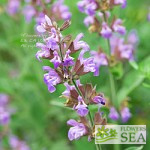
(Wand Sage) This species ranges from southwest Europe across southern Asia, generally in meadows or Steppe environments. It is also known as Southern Meadow Sage and is a hardy and adaptable herbaceous perennial.
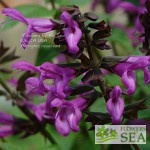
(COOL Fandango Anise Scented Sage) A combination of dark, rosy bracts and magenta blossoms make Salvia COOL Fandango dance. It’s vivid, floriferous, and a hummingbird favorite.
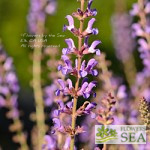
(Elk Dwarf Balkan Sage) Violet-blue whorls of flowers and plentiful, fuzzy, basal leaves that reach an impressive length of 18 inches are two notable features about this hardy, herbaceous perennial, which is native to western Asia. This is an extremely compact variety with dark green leaves, quite different in appearance compared with the common species.
(Elk Giant Chiapas Sage) This is a mega version of one of our favorite partial-shade Salvias. It's larger in all ways that the species, with inflorescence up to 2 feet long. Because of it's spread it is not suitable for small areas, but will delight gardeners and hummingbirds alike when given room to grow.
(Elk Smokey Grape Jame Sage) We think the dusky lavender flowers of Salvia x ‘Elk Smokey Grape’ look like the dusty, pale reddish-blue of Malbec grapes. This is a floriferous beauty.