
Advanced Search
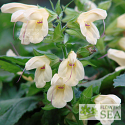
(Kyushu Woodland Sage) We are in love with this short forest sage from Kyushu, Japan. Its clusters of large creamy flowers pale as fresh-churned butter begin blooming in September. Even when not blooming, its foliage is showy in a shady garden.
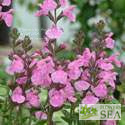
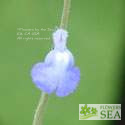
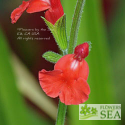
(Big Orange Mountain Sage) When temperatures are cooler in spring and fall, the persimmon-orange flowers of this large Mountain Sage darken. Gray-green foliage, bright green calyxes and reddish-green stems add to the plant's fascinating look, which mixes well with yellows and blues.
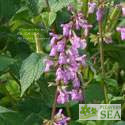
(Temascaltepec Sage) In full bloom, which is all year in mild climates, this mid-sized Salvia has far more flowers than foliage. Each 1/2-inch-long, bright pink bloom has two dark pink/purple spots and a pair of white stripes. The small, slightly furry leaves add to its soft, pleasing look.
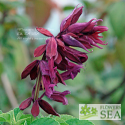
(Sao Borja Scarlet Sage) Three-inch-long, smokey purple blossoms that bloom from spring to fall are a major clue that this heat-tolerant perennial is not your grandmother's Scarlet Sage.
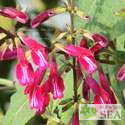
(Violet Calyx Sage) Here's another abundantly blooming sage from the cloud forest slopes of Chiapas, Mexico. Violet beelines mark the lower lip of the crimson blossoms, which are so numerous that it can be difficult to see the foliage at times.
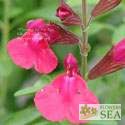
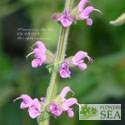
(Royal Crimson Distinction Woodland Sage) Grown for hundreds of years in cottage gardens throughout the world, Salvia nemorosa was described by Carl Linneaus in 1762. This variety's large flower spikes bloom a dark violet-crimson, then age to a softer pink.
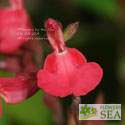
(Furman's Red Autumn Sage) Selected by noted Texas plantsman W.A. Furman in the 1970s, this hardy Texas native is beautiful and tough withstanding heat, drought and freezing winters. Its flowers, which bloom spring through fall, are a rich, saturated red bordering on magenta.
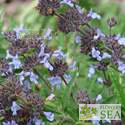
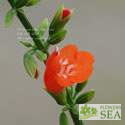
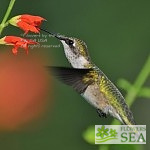
(Giant Brazilian Sage) Yes, this one is gigantic. The first season we grew this heat-tolerant sage, it reached 8 feet tall by July! Masses of small, red-orange, trumpet-shaped flowers attract hummingbirds and honeybees to long, upward curving flower spikes towering over heart-shaped foliage.
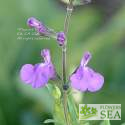
(Saint Isidro's Sage) This hardy, lavender-blue-flowered Salvia comes from Southern Texas and has the same breeding as the famous Ultra Violet Autumn Sage. Although it needs warmer winter temperatures and has smaller foliage, it also does well in stressful conditions, including drought.
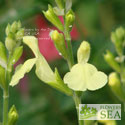
(Elk Lemon Light Jame Sage) We are proud to offer this luminescent, pure yellow Salvia x jamensis -- a color breakthrough from our own breeding program. The bright, light blossoms cool the landscape similar to white flowers, but with colorful impact. The glossy green leaves are quite small - a very attractive and distinctive characteristic.
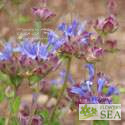
(Celestial Blue Sage) Fast growing and adaptable, this sage is a chance hybrid between Cleveland Sage (Salvia clevelandii) -- also called California Blue Sage -- and California Rose Sage (Salvia pachyphylla). It may also be related to California Purple Sage (Salvia leucophylla).
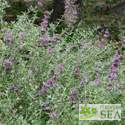
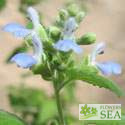
(Mejorana) In Spanish, Mejorana means ‘marjoram.” Similar to oregano-type Marjoram – another Mint family member -- this sage is used to flavor meat dishes. Our cultivar, which is native to Texas and Mexico, has lovely bluish-purple flowers that bloom summer to fall amid fragrant, fine, furry green foliage.
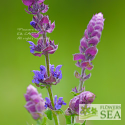
(Stem Clasping Violet Sage) Like a candelabra lit up with whorls of violet blossoms, the erect, branching flower spikes of Salvia amplexicaulis make this native of Southeastern Europe shine. On the Grecian island of Thassos, it brightens areas near the beach.
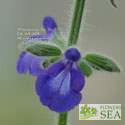
(Double Saw Tooth Sage) Vivid deep violet flowers bloom from summer into fall and contrast prettily with the bright green, rumply foliage of this tall sage from southeastern Mexico. Belgian botanist and orchid lover Jean Jules Linden was the first to record its discovery in 1838, according to records on file at Britain’s Royal Botanic Gardens, Kew.
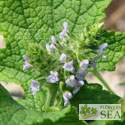
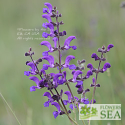
(Siberian Sage) Deep violet flowers surrounded by burgundy bracts form a handsome contrast with the pebbly, mint green foliage of this drought-resistant sage. It comes from the Central Asian steppe, which is similar in climate and geography to America’s high plains.
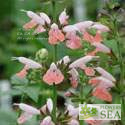
(Brenthurst Tropical Sage)Tropical Sage is popular as an annual throughout America and as a perennial in warm zones. It is particularly beloved in the Deep South where it withstands heat, wind, heavy rains and excessive humidity to bloom prolifically season after season. Brenthurst is a coral-flowered cultivar with dramatic, dark bracts and bright green, heart-shaped leaves.
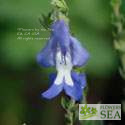
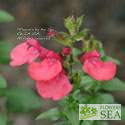
(People's Park Mountain Sage) Sometimes nature can be rebellious. This is one the Mountain Sages known as the Turbulent Sixties Series developed from an outlaw cultivar of the Southwestern native Salvia microphylla. Monterey Bay Nursery (MBN) named their accidental hybrid ‘Berzerkeley.’
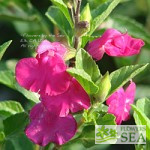
(Telegraph Avenue Dwarf Mountain Sage) Here’s another member of the Turbulent Sixties Series of Southwestern Mountain Sages (Salvia microphylla), which developed from one of nature’s rebels – an accidental hybrid that Monterey Bay Nursery (MBN) named ‘Berzerkeley’ after finding it taking a stand in the nursery’s gravel paving.
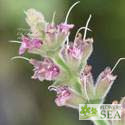
(Eig's Sage)Bicolor ruby and pale pink flowers bloom winter to spring on this small sage that is native to Northern Israel. Salvia eigii is at home in the silty, gravelly loam of low fallow fields near rivers. So it does best in rich soil aerated with plenty of humus.
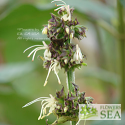
(Tree Sage)Whether you call it a shrub or a tree, Salvia arborsecens rises up to an impressive 12 feet tall and 5 feet wide. Commonly known as Sage Tree, this Salvia grows well in full sun, but prefers partial shade.
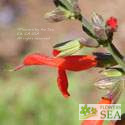
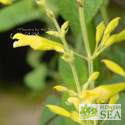
(Cabrillo Giant Yellow Sage) Large apricot-yellow flowers are an attraction of this cross between two Mexican species -- Salvia madrensis (Forsythia Sage) and the volcanic sage Salvia gesneriiflora (Mexican Scarlet Sage).
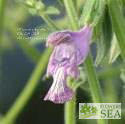
(san ye shu wei cao) So what do all those Pinyin words mean in this sage’s common name? We’ll give you an answer to the best of our ability in a minute. Meanwhile, we need to note that this medicinal Asian sage has handsome foliage and deep violet flowers.
The following terms were added to your search to help improve the result. Click here to exclude these extra terms from the search.
- plant, planters
Common terms in this search: kyushu woodland sage love short forest from japan its clusters large creamy flowers pale fresh-churned butter begin blooming september even when not foliage showy shady garden number scientific name where more descriptive appellation usually would plant's collection which assigned botanist gardener first discovers develops new cultivar thank bleddyn sue wynn-jones crug farm wales introducing beauty commercial horticulture grows well either