
Advanced Search
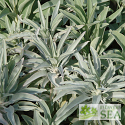
(Sacred White Sage) Bees, hummingbirds and spiritual blessings are all connected to Salvia apiana, an elegant shrubby sage that is an important herb to indigenous Californians. It deserves a place in salvia gardens that can meet its demands. Stiff and almost fleshy, its leaves are tight rosettes of brilliant, silvery green that is almost white.
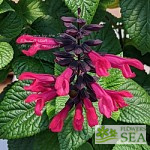
(Jammin Jazz Anise-Scented Sage) Deep chocolate calyxes and stems support the large, hot pink flowers of Salvia BODACIOUS® ‘Jammin’ Jazz’. This new cultivar of Salvia guaranitica has heavily veined, bright green foliage that smells a bit like licorice.
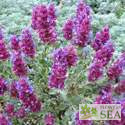
(Giant Purple Desert Sage) It’s best to plant this flamboyant native of the Southwest in spring or summer. However, once established, it tolerates winters from USDA Zones 5 to 9. Purple tubular flowers and burgundy bracts flare up its 10-inch flower spikes like flames on this softly rounded shrub.
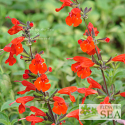
(Summer Jewel Red Tropical Sage) Butterflies, hummingbirds and honeybees enjoy this Fleuroselect Gold Medal winner, which is an outstanding choice for bright red color from June to autumn. This type of Tropical Sage is generally the first to flower for us.
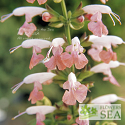
(Summer Jewel Pink Tropical Sage) Butterflies, hummingbirds and honeybees enjoy this Fleuroselect Gold Medal winner, which is an outstanding choice for bright pink & white color from June to autumn. This type of Tropical Sage is generally the first to flower for us.
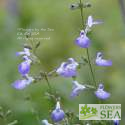
(Summer Skies West Texas Grass Sage) Butterflies and honeybees particularly favor this West Texas mountain native. In contrast to the true blue flowers of regular Salvia reptans, this cultivar has purple blossoms with cloud-like, lavender-to-white throats.
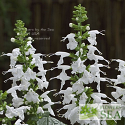
(Summer Jewel White Tropical Sage) Butterflies, hummingbirds and honeybees enjoy this All American 2016 winner, which is an outstanding choice for pure white color from June to autumn. The Summer Jewel varieties of Tropical Sage is generally the first to flower for us.
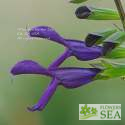
(Betsy's Choice Sage) Life and botany have their beautiful mysteries. Betsy's Choice Sage is one of them. We aren't certain of the parentage or history of this tall, attractive, fast-growing sage. However, we are certain that we love its long, royal purple flowers. Hummingbirds do as well.
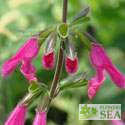
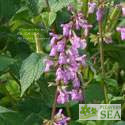
(Temascaltepec Sage) In full bloom, which is all year in mild climates, this mid-sized Salvia has far more flowers than foliage. Each 1/2-inch-long, bright pink bloom has two dark pink/purple spots and a pair of white stripes. The small, slightly furry leaves add to its soft, pleasing look.
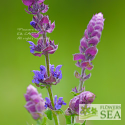
(Stem Clasping Violet Sage) Like a candelabra lit up with whorls of violet blossoms, the erect, branching flower spikes of Salvia amplexicaulis make this native of Southeastern Europe shine. On the Grecian island of Thassos, it brightens areas near the beach.
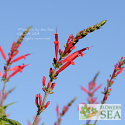
(Pineapple Sage) An indispensable fall-blooming addition to the garden, this tender perennial is, perhaps, the best of all hummingbird plants. When in bloom, it is covered in 3-inch-long red flowers.
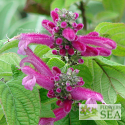
(Big Leaf Scandent Mexican Sage) Bigger leaves, larger, looser flowers and pink petioles -- the tiny stemlets connecting leaves to stems -- differentiate this this clone from its parent plant Salvia iodantha. A winter-blooming perennial, it's covered with velvety, 8-inch-long, magenta blossoms from fall into winter.
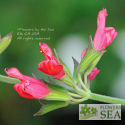
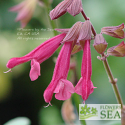
(Wendy's Wish Sage) A new hybrid Salvia from Australia, Wendy's Wish is absolutely spectacular! Quick to bloom, compact and tidy in habit, we believe this to be one of the finest of all Salvia varieties.
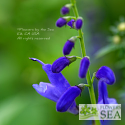
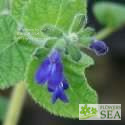
(Mexican Many Flowered Sage) Blooming from late summer into winter, this Mexican cloud-forest native has so many flowers that they are difficult to count. The deep violet blossoms develop distinct, white beelines after opening.
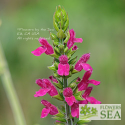
(Shaggy Chiapas Sage) This is a sweetheart! Glowing magenta flowers lure the eye as well as hummingbirds to this heat-tolerant sage. It begins blooming in late summer where weather is warm and in fall where it is cooler.
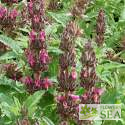
(Hummingbird Sage or Pitcher Sage) No sage we grow is more attractive to hummingbirds than this one. Spectacular in all ways, it is one of our favorite Salvias with its fragrant, evergreen foliage and jewel-like flowers and bracts.
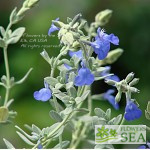
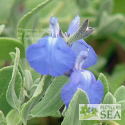
(Silver Germander Sage) With its compact habit, brilliant silver-white leaves and large, sky blue flowers, this is an outstanding heat-tolerant choice for dry, sunny gardens. We consider this to be one of the finest short ground covers for these conditions.
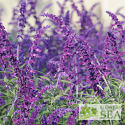
(Midnight Mexican Bush Sage) The typical Mexican Bush Sage has purple flowers surrounded by furry white bracts. This clone from the San Francisco Peninsula has deep purple flowers, calyxes and stems. It is a good groundcover due to a mounding habit, smaller size and generous amounts of flowers.
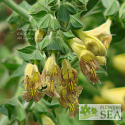
(Mellow Yellow Sage) Yellow-flowering Salvias always command attention in the garden. An intentional hybrid between the very rare and difficult to grow Salvia bulleyana and the energetic Salvia campanulata, this plant embodies the best characteristics of each parent.
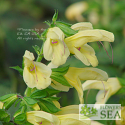
(Shinano-akigiri) Japan's largest island, Honshu, is home to Salvia koyamae, a shade- and moisture-loving herbaceous perennial that is perfect for woodland gardens or shady borders. It is notable for yellow flowers, which bloom from late summer into fall, as well as arrow-shaped foliage.
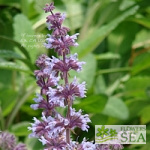
(Lilac Sage) We try not to brag too much, but this is our own variety of Salvia verticillata from home-grown seed, and we think it is spectacular. Butterflies and honeybees also are in love with this long-blooming perennial beauty.
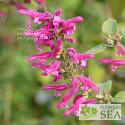
(Scandent Mexican Sage) Here's another winter-blooming hummingbird magnet for gardens in mild climates. This one is scandent, which means it is a climber and needs support. Its abundant, purple-to-magenta flowers are velvety and 6 inches long.
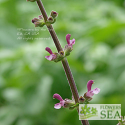
(Mid-East Sage) Native to the mountains shared by Israel and Lebanon, this tidy sage is drought resistant, heat tolerant and long blooming. Its basal foliage rises up and spreads only about 18 inches, but it has long flower spikes.
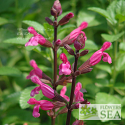
(Mulberry Jam Roseleaf Sage) Magenta flower buds burst into fuzzy, hot pink blossoms in this hybrid sage from the gardens of Betsy Clebsch, author of The New Book of Salvias.
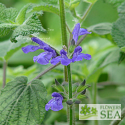
(Blue Bush Sage) Furry, large and heavily textured, the mid-green leaves of Salvia urica contrast attractively with its violet-blue flowers that bloom spring into summer.
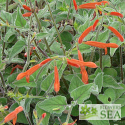
(Oaxaca Orange Wooly Sage) Tall, eye-catching spikes of dusky red-orange flowers that bloom from summer into fall make this one of our most impressive Salvias. Plus it's cold hardy into Zone 7.
The following terms were added to your search to help improve the result. Click here to exclude these extra terms from the search.
- blooming, summer
Common terms in this search: sacred white sage bees hummingbirds spiritual blessings all connected apiana elegant shrubby important herb indigenous californians deserves place insalvia gardens can meet its demands stiff almost fleshy leaves tight rosettes brilliant silvery green flower spikes soar above foliage hundreds small white-to-lavender flowers one most sources pollen nectar pollinators along southern california's coast mountains valleys also source native american smudge sticks