(Mellow Yellow Sage) Yellow-flowering Salvias always command attention in the garden. An intentional hybrid between the very rare and difficult to grow Salvia bulleyana and the energetic Salvia campanulata, this plant embodies the best characteristics of each parent.
Both parents are Zone 5 hardy herbaceous perennial from the mountains of Central China and are happy in shaded gardens with ample water and rich soil. The highly textured glossy green leaves form a mounding rosette, and the tall branched flower spikes display the numerous yellow and pastel purple flowers over a long summer blooming period. We find this variety to be the easiest to grow and most redwarding of the Chinese Salvias.
We highly recommend this new FBTS introduction for shady perennial borders and woodland-style gardens.
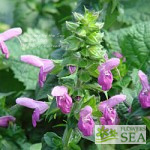
(Autumn Enchanter Japanese Woodland Sage) Salvia glabrescens ‘Autumn Enchanter’ has bicolored orchid pink flowers that are larger and bloom earlier than those of S. glabrescens ‘Shi Ho’. Autumn Enchanter is also more floriferous, blooms longer, and grows more rapidly with greater vigor.
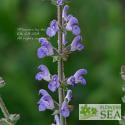
(Iranian Oil Sage) Butterflies and honeybees are drawn to the long blooming, dusky violet-blue flowers of Salvia atropatana. However, deer say no to its charms, due to its essential oils being less than tasty.
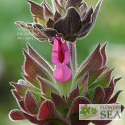
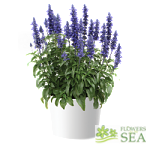
(SALLYFUN™ Blue Lagoon Sage) You can expect early and long bloom from SALLYFUN™ ‘Blue Lagoon', a dwarf border sage with dense, aromatic foliage. Its spikes of deep violet-blue flowers attract bees, butterflies, and hummingbirds.
Send to friend
Here are some guidelines for success with this plant in your garden.
Click on an individual icon for more detailed information.
Exposure

This plant grows well in partial shade, such as the kind on the edge of woodlands or under deciduous trees with breaks in the foliage through which dappled sunlight penetrates. Many Salvias thrive in partial shade, including ones that spend part of their day in full sunlight. Some species need partial shade to overcome severe heat and dry soil.
Growing Habit

Plant hardiness Zones defined by the U.S. Department of Agriculture tell you the minimum temperatures a plant can withstand in your garden. The USDA divides the nation into winter climate areas from coldest (Zone 1) to warmest (Zone 11).
However, it is sometimes possible to grow a Zone 6 Salvia as a perennial in Zone 5 if you provide preferential care, such as winter mulching and a location sheltered from harsh winds. In contrast, a Zone 9 Salvia may act like a perennial in Zone 10 if given a bit of shade or extra water.

To create a harmonious landscape plan, it is important to consider the heights of individual plants.
Height also affects function. Short Salvias often make excellent ground covers that conserve soil moisture and discourage weeds while also brightening your yard. Medium-height Salvias, such as ones 36 inches tall, often are ideal border plants. A tall Salvia planted singly can highlight a landscape; multiple plantings can form an attractive screen.

By considering the width of a plant, you can determine how many to place in a row or what other plants to grow with it.
For example, a narrow, moderate-height Salvia may look good interplanted with bushier species, kind of like Mutt and Jeff.
In contrast, wide-spreading Salvias are economical for hiding lengths of wall and fence or for creating hedge-like divisions in a yard.

Plant this herbaceous species in the USDA Zones where it grows as a perennial, returning year after year.
After dying back to the ground at frost, herbaceous perennials emerge in the Spring with soft, new growth. A Salvia that is perennial in one region, may be an annual in another depending on local conditions, such as winter temperatures.
If you live in USDA Zone 5, for example, Salvias in our catalog cited as growing well in Zone 5 or lower will be perennial. Those cited as doing well in Zones 6 or higher may do well in Zone 5, but generally will act like annuals coming back from seed instead of the parent plant’s roots.
Water Needs

This plant needs regular watering based on what is appropriate to your local conditions.
In some extremely hot, arid climates, this may mean daily watering in Summer. Although many drought-resistant Salvias survive on little to no watering due to local rainfall and deep roots meeting their moisture needs, others need regular doses. The size and frequency of the dose depends on your climate.

This plant thrives on or at least tolerates lots of water, especially when soil is well drained. They are generally not suitable for poorly drained soils.
A number of Salvias hold up well in areas where rainfall is a regular occurrence. Some even tolerate boggy conditions but only for a brief time. These are usually top-notch plants for regions of the country, such as the Southeast, where summers are soggy.
Blooming Season

This plant reaches peak bloom in Summer or flowers for much of the season.
Lots of Summer bloomers start flowering in Spring; others begin in Summer and keep up the show of color until frost.
There is a great deal of overlap in blooming seasons for Salvias.