
Advanced Search
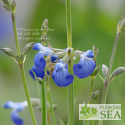
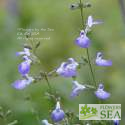
(Summer Skies West Texas Grass Sage) Butterflies and honeybees particularly favor this West Texas mountain native. In contrast to the true blue flowers of regular Salvia reptans, this cultivar has purple blossoms with cloud-like, lavender-to-white throats.
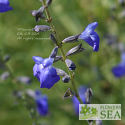
(Autumn Sapphire West Texas Grass Sage) Butterflies and honeybees particularly favor this West Texas mountain native. In contrast to the true blue flowers of regular Salvia reptans, this cultivar has deep blue blossoms and is remarkably compact.
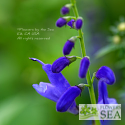

(Hidalgo Roseleaf Sage) The earliest flowering, hardiest and strongest growing cultivar of its species, Hidalgo Roseleaf Sage starts blooming in June on the Northern California coast. It continues, and becomes more spectacular every day, until cut down by hard frost. In our mild climate, it never stops blooming some years.
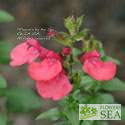
(People's Park Mountain Sage) Sometimes nature can be rebellious. This is one the Mountain Sages known as the Turbulent Sixties Series developed from an outlaw cultivar of the Southwestern native Salvia microphylla. Monterey Bay Nursery (MBN) named their accidental hybrid ‘Berzerkeley.’
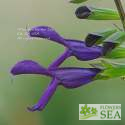
(Betsy's Choice Sage) Life and botany have their beautiful mysteries. Betsy's Choice Sage is one of them. We aren't certain of the parentage or history of this tall, attractive, fast-growing sage. However, we are certain that we love its long, royal purple flowers. Hummingbirds do as well.
Results for Grass from the blog
| Portraits in Gardening |
| 1. Portraits in Gardening: Michael and Kathi Rock's Hummingbird Journey |
| A wedding gift led to Kathi Johnson Rock and Michael Rock's passion for hummingbirds. These Wisconsin birders offer tips and plant suggestions for hummingbird gardeners at FBTS. Although now known as Madison's "Hummingbird People," the Rocks aren't ornithologists or biologists. They are home gardeners and customers of Flowers by the Sea. This article includes a list of favorite hummingbird plants found in the Rocks' gardens. |
| Salvias Down South |
| 2. Salvias Down South: Tough Texans Sing the Blues |
| Blue Salvias bring peace to flower gardens. True blues, such as West Texas Grass Sage (Salvia reptans), are especially eye-catching. The same anthocyanins that make berries a healthy dietary choice also give them their colors. Similarly these chemicals create the wide variety of blues, purples and reds in the petals of flowers such as Salvias. Flowers by the Sea offers six varieties of tough Texas sages that can help you create a soulful garden bursting with blue. Drought-resistant and long-blooming, they grow happily in USDA plant hardiness zones 8 to 9, with some flourishing in areas as cool as Zone 4 and as hot as Zone 11. |
| Ask Mr. Sage |
| 3. Ask Mr. Sage: Can I Plant Salvias in Summer? |
| Watch out for sayings that warn against planting in summer. It's a good time to transplant Salvias if you give them some extra care. Ask Mr. Sage is a regular feature of Our Everything Salvias Blog and is based on customer questions. |
| 4. 15 Select Salvias for Dry, Partial-Shade Gardening |
| Learning how to garden in dry shade requires mediation of the needs of all the plants involved. Dry shade is particularly abundant under trees, because they consume lots of water. Fortunately, numerous drought-resistant Salvias can handle life in dry, partial shade. Flowers by the Sea details basic considerations of dry shade gardening and identifies 15 sages for it. |
| Hummingbirds in the Garden |
| 5. Ten Favorite Flowers for Butterflies and Hummingbirds |
| Flowers that butterflies and hummingbirds favor are rich sources of nectar. But not all nectar-rich butterfly favorites are easy to access with long hummingbird beaks. Conversely, many flowers designed by nature to attract hummingbirds don't have the structure necessary for feeding butterflies or providing a perch. Here are ten Salvias and companion plants for backyard wildlife habitat that both butterflies and hummingbirds will enjoy. |
| Ask Mr. Sage |
| 6. Ask Mr. Sage: How to Control Snails |
| Ask Mr. Sage is a Q&A feature from Flowers by the Sea. This one talks about how to ward off snails and slugs safely through simple organic methods, including barriers and handpicking, as well as through careful use of iron-phosphate pesticides. It also talks about how to nurse damaged Salvias back to health. |
| 7. Battles in the Salvia Garden: Controlling Spider Mites - Part II |
| Pollinators lose important food sources when Salvias and other nectar-rich flowers are destroyed by spider mites. This is Part 2 of a two-part series about understanding and overcoming these dangerous pests. Along with the non-chemical interventions described in Part 1 of this series, gardeners sometimes need the help of predatory insects and mites, insecticidal soaps and horticultural oils. Pesticides called miticides may also eventually be necessary, but should be the last resort. |
| Book Reviews |
| 8. Book Review: Lawn Gone! Low-Maintenance, Sustainable, Attractive Alternatives for Your Yard |
| Lawn Gone by Texas landscaper and garden writer Pam Penick concerns replacement or minimization of lawns through xeriscape, the art of planting attractive waterwise landscapes. Penick redefines suburban yards through designs including perennial groundcovers and small shrubs -- such as Autumn Sages ( Salvia greggii spp.) -- as well as ornamental grasses, sedges and hardscape, including water features. Flowers by the Sea specializes in Salvias and other xeriscapic plants. |
| Sage Words About Wildlife |
| 9. Sage Words About Wildlife: Climate Change Alters Hummingbird Migration |
| Nature doesn't come to a sudden, overall halt, when the timing of its ecosystems slip, including ones involving hummingbirds. Instead, change occurs gradually. Plants and the animals that pollinate them have coevolved to meet each other's needs. You can help by planting hummingbird habitat in your home garden. Learn more in the Everything Salvias Blog at FBTS Online Nursery. |
| Cultivating Color |
| 10. Cultivating Color: Pastel Perennial Sages for Xeriscape |
| Not everyone who lives in a dry climate wants a cactus garden. And not all cottage gardens are filled with pansies and peonies. Flowers by the Sea highlights ten tough perennial Salvias in pastels for low-water cottage gardens. The palette of drought-resistant choices includes sages with blue, lavender, peach, pink and yellow flowers for a soothing touch in your landscape. |
| Sage Words About Wildlife |
| 11. Sage Words About Wildlife: Do Deer Devour Salvia? |
| Salvias are not a favorite food for deer. However, they will eat some when plants they consider tasty are in short supply. There is no such thing as deer-proof plants, but you can limit deer damage to your landscaping and vegetable garden by planting lots of sages and other plants that aren't among deer favorites. |
| Xeric Choices |
| 12. Drought Praise: Around the World with Sunny Groundcovers |
| Bring on the sun. Bring on the heat. Bring on the drought-resistant Salvia groundcovers.Flowers by the Sea offers a short list of top groundcovers from around the world for fighting drought. They come from Asia, California, Mexico and Morocco in lavender, purple and pink to do battle against the boring brown caused by water shortage. Similar to gravel, bark chip or pine needle mulch, these groundcovers discourage weeds, cool soil, conserve moisture and add color to gardens. They are living mulch. |
Common terms in this search: west texas grass sage small clusters true blue blossoms spaced widely along grass-like stems willowy mountain like many american native plants key food source honeybees butterflies hummingbirds scientific appellation repens refers its creeping roots spread mat-forming densely clumping heat-resistant spectactular during bloom time late summer fall also cold tolerant grows well usda zones stand-alone accent plant nothing short spectacular works