
Advanced Search
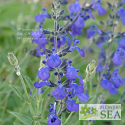
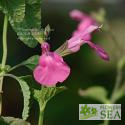
(Rosie O'Grady Mountain Sage) Honeybees and hummingbirds love the large, bright pink flowers of Salvia microphylla 'Rosie O'Grady', a drought-resistant sage. Dense and fragrant, it's large, glossy green leaves are veined and have finely serrated edges. This is a lush choice for dry gardens.
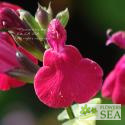
(Killer Cranberry Mountain Sage) Masses of magenta flowers on tall spikes lure honeybees and hummingbirds to the rich nectar of Salvia microphylla 'Killer Cranberry'. Its prolific flowers are a killer attraction for people too.
Results for completely from the blog
| Ask Mr. Sage |
| 1. Ask Mr. Sage: How Should I Prune my Salvias? |
| Flowers by the Sea Online Nursery specializes in Salvias and often receives questions about how to prune them. Although getting good at pruning takes practice, Salvias rebound quickly if you make mistakes. A key to successful pruning is understanding the varying needs of four main categories of sages. Ask Mr. Sage is a regular feature of the FBTS Everything Salvias Blog. |
| 2. Ask Mr. Sage: What to Do When a New Plant Fails |
| Ask Mr. Sage answers questions based on calls and emails that Flowers by the Sea receives, including ones concerning problems with plants customers have purchased. This article covers our unconditional guarantee to refund or credit purchases without making customers jump through hoops. It also touches on the process FBTS goes through in trying to diagnose plant ailments. |
| 3. Ask Mr. Sage: What Size Pot Is Best for Transplanting Sages? |
| After your Salvias from Flowers by the Sea arrive, what size pots should you transplant them in for your container garden? The answer depends on the kind of sages you need to transplant. Ask Mr. Sage is a regular feature in our FBTS Everything Salvias Blog that answers customer questions about growing sages and companion plants. |
| 4. A Community of Anise Scented Sages We Adore |
| You might expect the foliage of a plant called Anise-Scented Sage (Salvia guaranitica) to smell robustly like licorice, which shares the same fragrance as anise. Some gardeners detect a hint of licorice after crushing a leaf, but many say the foliage merely smells sweet. These popular sages are native to Brazil where indigenous peoples used their leaves as a medicine. Flowers by the Sea grows many varieties in a wide range of sizes and flower colors |
| Ask Mr. Sage |
| 5. Ask Mr. Sage: How to Combat Whiteflies Safely |
| Ask Mr. Sage is our blog's new question-and-answer feature, based on calls and emails received at Flowers by the Sea. This question concerns how to safely rid Salvias of Whiteflies and their eggs. |
| 6. Ask Mr. Sage: What Is Withering My Native Salvia? |
| A California native sage that looks like it is suffering from drought may actually have root disease caused by a water mold called Phytophthora. Natives are affected by types of this pathogen that strike when soil is moist and temperatures are hot. Ask Mr. Sage is a regular feature of the Everything Salvias Blog and is based on calls and emails from customers. |
| 7. Ask Mr. Sage: Why FBTS Uses Foam Packing Peanuts & How to Reuse Them |
| It isn't easy being completely green. Flowers by the Sea explains why polystyrene packing peanuts are essential for shipping and what you can do with them after unpacking your orders. Ecofriendly reuses include donating them to shipping companies and using them to lighten container plantings. Ask Mr. Sage is a Q&A feature based on topics raised in calls and emails to FBTS. |
| 8. Battles in the Salvia Garden: Controlling Spider Mites - Part I |
| Salvias often suffer when spider mites become legion in gardens. This is Part 1 of a two-part series about understanding and overcoming these dangerous pests. As summer temperatures rise, so do the numbers of the family Tetranychidae -- spider mites -- especially if conditions are dry. Controlling spider mites in your Salvia garden may be as simple as keeping plants hydrated and regularly spraying the little nippers off foliage. Or it may take a number of interventions, including biological controls, such as predatory mites, as well as the use of insecticidal soaps, oils and pesticides |
| 9. Battles in the Salvia Garden: Controlling Spider Mites - Part II |
| Pollinators lose important food sources when Salvias and other nectar-rich flowers are destroyed by spider mites. This is Part 2 of a two-part series about understanding and overcoming these dangerous pests. Along with the non-chemical interventions described in Part 1 of this series, gardeners sometimes need the help of predatory insects and mites, insecticidal soaps and horticultural oils. Pesticides called miticides may also eventually be necessary, but should be the last resort. |
| Business Buzz |
| 10. Buying Salvias Online from FBTS: How to Order & What to Expect - Updated |
| When you purchase plants online, it's understandable to feel a bit nervous. After all, a tender green life is being sent to you in a box. Will it survive the journey in healthy condition? Also, how secure will your credit card information and other data be? Furthermore, how do you sort through all those plants in the online catalog? Flowers by the Sea provides answers. |
| 11. Buying Salvias Online from FBTS: Unpacking and Planting |
| When your order arrives from Flowers by the Sea, open it up right away. What will you see? No plastic wrapping, that’s for sure. At FBTS we think plastic wrap is a poor packaging choice, because it speeds decomposition. Sending you plants that are beginning to mold and rot is the last think we want to do. |
| Sage Words About Wildlife |
| 12. Sage Words About Wildlife: Climate Change Alters Hummingbird Migration |
| Nature doesn't come to a sudden, overall halt, when the timing of its ecosystems slip, including ones involving hummingbirds. Instead, change occurs gradually. Plants and the animals that pollinate them have coevolved to meet each other's needs. You can help by planting hummingbird habitat in your home garden. Learn more in the Everything Salvias Blog at FBTS Online Nursery. |
Common terms in this search: sally greenwood sage greenwoods small gray-green leaves striking backdrop complicated velvety royal purple its abundant flowers overlaid blue sheen unusual both color tight mounding habit beauty isnt plant diva although does look best when receives some irrigation tough drought resistant prettier water soil amendments lean however gentle shearing after blooming keeps tidy effective groundcover but also looks pretty patio containers