
Advanced Search
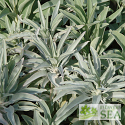
(Sacred White Sage) Bees, hummingbirds and spiritual blessings are all connected to Salvia apiana, an elegant shrubby sage that is an important herb to indigenous Californians. It deserves a place in salvia gardens that can meet its demands. Stiff and almost fleshy, its leaves are tight rosettes of brilliant, silvery green that is almost white.
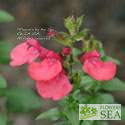
(People's Park Mountain Sage) Sometimes nature can be rebellious. This is one the Mountain Sages known as the Turbulent Sixties Series developed from an outlaw cultivar of the Southwestern native Salvia microphylla. Monterey Bay Nursery (MBN) named their accidental hybrid ‘Berzerkeley.’
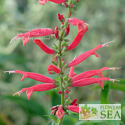
(Frieda Dixon Pineapple Sage) Most varieties of Salvia elegans have bright red flowers. But Frieda Dixon Pineapple Sage, which blooms abundantly beginning in late fall, has softer salmon-pink blossoms set against mid-green, lance-shaped leaves.
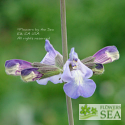
(Puna Sage) The deep violet-blue flowered Salvia calolophos has white beelines and oblong, mid-green leaves. It is a high-altitude native of northern Argentina.
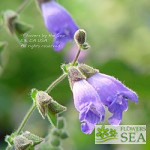
(Himalayan Sage or Kashmir Sage) The word "hians" in Salvia hians means "gaping" and refers to the hanging lip of this sage's flowers, which bloom from late spring through early fall. This may or may not the "true" species as it is described, hence the term aff or affnis in the name, which indicates that this plant is related to, has an affinity to, but is not identical to Salvia hians.
Results for environment from the blog
| 1. Battles in the Salvia Garden: Controlling Spider Mites - Part II |
| Pollinators lose important food sources when Salvias and other nectar-rich flowers are destroyed by spider mites. This is Part 2 of a two-part series about understanding and overcoming these dangerous pests. Along with the non-chemical interventions described in Part 1 of this series, gardeners sometimes need the help of predatory insects and mites, insecticidal soaps and horticultural oils. Pesticides called miticides may also eventually be necessary, but should be the last resort. |
| 2. Our Paperless Catalog Is Wallet-Friendly and Ecofriendly |
| Customers often ask us how they can receive a print catalog of the hundreds of plants grown and sold by our online nursery, Flowers by the Sea. The answer is that we have never printed a catalog and never will for financial, managerial and environmental reasons. We prefer our online-only garden catalog, because it is wallet-friendly, encourages diversity in the garden, offers efficiency and helps protect the environment. |
| Getting Started with Salvias |
| 3. Getting Started: Salvias for Zone 9 |
| California's small, Mohave Desert city of Barstow averages about 5 inches of rain annually. Across the continent, Pensacola, Florida, has more than double Barstow's population and more than 12 times its amount of rainfall. Yet both cities are part of the U.S. Department of Agriculture's Plant Hardiness Zone 9 where you can plant perennials and shrubs that survive winter lows ranging from 20 to 30 degrees F. Flowers by the Sea takes readers on a triple coast road trip of Zone 9 and suggests plantings for varied growing conditions along the way. |
| Sage Experts |
| 4. Sage Experts: Meet Huntington Gardens Curator Kathy Musial |
| The Sage Experts series focuses on Salvia specialists — both amateurs and professionals -- in settings ranging from botanic gardens to universities. Kathy Musial, curator of live collections at Southern California's Huntington Gardens, is the subject of this profile. If you imagine a great dinner party involving lots of garden talk, Kathy Musial would be an ideal guest who could share her experiences plant trekking in Australia and Chile or co-managing some 14,000 varieties of plants at Huntington. |
| Xeric Choices |
| 5. Xeric Choices: Salvias in the Waterwise Garden |
| Lush but not lushes - that's one way you might sum up the majority of Salvias. Despite their long bloom times and bushy foliage, Salvias don't generally belly up to the water hose. Overall, they are perfect for xeriscape gardening -- the art of creating great beauty in the garden while conserving water. |
| 6. Xeric Choices: How Xeriscape Won the West |
| How Xeriscape Won the West: Feast or famine: that’s the water situation out West. Unexpected torrential rains, flash floods and long periods of drought are acts of God that people can partially control through water diversion and storage as well as strategic conservation. Low-water landscaping -- coined as "xeriscape" by a Denver environmental planner -- has become popular in the West in the last 30 years. |
| Ask Mr. Sage |
| 7. Ask Mr. Sage: How to Select Plants in Warm Zones |
| Ask Mr. Sage answers questions based on calls and emails that Flowers by the Sea receives. This one concerns how to select plants when you move to a different USDA cold hardiness zone, such as in a warmer climate. |
| 8. Ask Mr. Sage: How to Water Desert Plants |
| Overwatering harms desert plants more than underwatering. When growing them, you need to consider the quantity, duration and timing of watering. Excellent soil drainage is also essential. This article talks about how to identify overwatering and establish an effective watering schedule. Ask Mr. Sage is a Q&A feature based on topics raised in calls and emails to FBTS. |
| 9. Ask Mr. Sage: How to Identify Fertilizer Burn |
| Ask Mr. Sage is our blog's new question-and-answer feature, based on calls and emails received at Flowers by the Sea. This question concerns dark spotting on foliage that may be caused by fertilizer burn. |
| 10. Ask Mr. Sage: What Is Average Watering? |
| Confusion about watering of plants is understandable, because moisture needs vary so much from one species to another. It also varies based on your local growing conditions. Ask Mr. Sage, a regular feature of the Everything Salvias blog at Flowers by the Sea Online Plant Nursery, explains the differences between the labels drought resistant, average water and water loving classifications for estimating water needs. Some FBTS average water plants also grow well in dry or damp settings. |
| 11. Battles in the Salvia Garden: Pretty Southern Pink Moth |
| Southern Pink Moth (Pyrausta inornatalis) is diminutive and pretty, but it’s a powerful pest in Salvia gardens. As the common name indicates, it is primarily found in the South. Yet it is flitting into gardens further north. Read more to learn how to identify and control this pest. |
| Business Buzz |
| 12. Buying Salvias Online from FBTS: Unpacking and Planting |
| When your order arrives from Flowers by the Sea, open it up right away. What will you see? No plastic wrapping, that’s for sure. At FBTS we think plastic wrap is a poor packaging choice, because it speeds decomposition. Sending you plants that are beginning to mold and rot is the last think we want to do. |
Common terms in this search: sacred white sage bees hummingbirds spiritual blessings all connected apiana elegant shrubby important herb indigenous californians deserves place insalvia gardens can meet its demands stiff almost fleshy leaves tight rosettes brilliant silvery green flower spikes soar above foliage hundreds small white-to-lavender flowers one most sources pollen nectar pollinators along southern california's coast mountains valleys also source native american smudge sticks