
Advanced Search
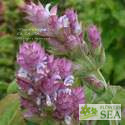
(Italian Clary Sage) Clary Sages are well known for their use in folk remedies, aromatherapy and cosmetics. Glowing purple bracts frame the spectacular white blooms of this cultivar on 5-foot-tall spikes. It is a delight for honeybees, hummingbirds and butterflies.
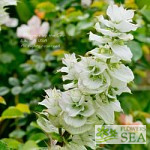
(Vatican White Clary Sage) Clary Sages are well known for their use in folk remedies, aromatherapy and cosmetics. Large white bracts frame the spectacular white blooms of this cultivar on 5-foot-tall spikes. It is a delight for honeybees and butterflies.
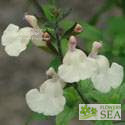
(Glimmering White Mountain Sage) Heatwave Glimmer isn't a mirage. It is a Salvia microphylla that tolerates extremely hot climates as well as cooler regions. It doesn't just survive; it thrives in the heat of Southern California, the Southwest and Texas.
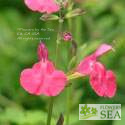
(Pink Preference Autumn Sage) Two-tone, hot pink flowers and contrasting bracts make this Autumn Sage stand out. This drought tolerant Autumn Sage from Central Texas is also compact, rugged, heat tolerant and capable of handling Zone 6 chill.
Results for frame from the blog
| 1. August in the Salvia Garden |
| August is a time when many sages grow rapidly and feed a frenzy of pollinators in need of rich nectar and pollen. It's hot, so you have to be careful not to let plants or yourself wilt. Here are some tips for tasks from watering to planning when tending your garden this month. |
| Quick Digs |
| 2. Quick Digs: Overwintering Salvias in Containers Outdoors |
| In chilly climates, such as USDA Cold Hardiness Zones with winter temperatures lower than those of Zone 8, it is difficult for potted plants to survive outdoors when the mercury dips. Soil in containers freezes harder and thaws more rapidly than the ground. This third article in our Quick Digs series on preparation for winter in the Salvia garden discusses how to improve chances of survival when overwintering sages in containers outdoors. |
| 3. September in the Salvia Garden |
| Depending on where you live, September may be a time to keep busy planting perennial Salvias or to hunker-down and plan garden recovery following storm damage. Here are some tips from FBTS maintaining and beautifying your Salvia garden this month. New plantings and transplanting of sages in autumn works well; dividing or pruning them doesn't. |
| Views from the Garden |
| 4. Beneficial Insects at Flowers by the Sea |
| Beneficial insects help control destructive insects in greenhouses and gardens. Flowers by the Sea uses beneficials to keep plants free of pests and to avoid use of harmful pesticides. FBTS is a horticultural farm in Northern California specializing in hundreds of ornamental Salvia species. In this video, FBTS horticulturist and co-owner Kermit Carter talks about the use of predatory mites called Persimilis and Fallacis to attack plant-eating spider mites and Encarsia wasps to control whiteflies. Carter shows how a tiny box from an insectary contains thousands of helpful insects, including ladybugs, which keep his farm free of pests. The microscopically small predatory mites come packaged with bean leaves that make it easy to distribute them in the garden. Paper strips for overhead hanging contain the wasp eggs. This video is part of the FBTS Everything Salvias Blog series Views from the Garden. |
| 5. Dividing Herbaceous Perennial Salvias |
| Overgrown herbaceous perennial Salvias need to be divided into multiple smaller plantings. In this video, Flowers by the Sea horticulturist and co-owner Kermit Carter demonstrates how to split perennials, which are plants that die to ground in cold weather but return annually. Many perennial Salvias with basal, rosette foliage have roots that spread to form clumps of multiple plants. Carter says that breaking a clump into smaller pieces is similar to working a jigsaw puzzle; find the clump's crowns and you find the division points. Carter demonstrates how to complete the task quickly using simple tools, such as your fingers and a serrated bread knife. He removes dead foliage and spent soil to ready the plants for replanting in quality potting mix. Then he explains how to encourage root growth by placing the pots in partial sun so soil doesn't get too dry. Dividing Herbaceous Perennial Salvias is part of the Views from the Garden video series published in the FBTS Everything Salvias blog . Flowers by the Sea is a farm and online, mail order nursery specializing in Salvias. |
| 6. Growing Salvia from Seed at FBTS |
| In this video, Flowers by the Sea horticulturist and co-owner Kermit Carter explains a simple method for starting Salvias from seed. First, he mixes a pinch each of two powdered inoculants into enough potting soil for a plant. Carter explains that the inoculants combat bacterial diseases, strengthen roots and aid transfer of nutrients from the potting soil, which is a soilless mix containing peat, perlite and biofungicides. He places the soil in a short, 3 1/2-inch container and tamps it down gently so the pot is about half full. Next, he adds an inch of lava gravel mixed with perlite to improve drainage so seedlings won't rot. The final steps include scattering seeds on the lava mix, then applying an ultra-thin layer of horticultural grit, such as crushed granite, on top before watering. The grit keeps the seeds in place but allows sunlight to penetrate for germination. FBTS Growing Salvia from Seed is part of the Views from the Garden video series published in the Everything Salvias blog of Flowers by the Sea, a horticultural farm and an online, mail order plant nursery. |
| 7. Our Paperless Catalog Is Wallet-Friendly and Ecofriendly |
| Customers often ask us how they can receive a print catalog of the hundreds of plants grown and sold by our online nursery, Flowers by the Sea. The answer is that we have never printed a catalog and never will for financial, managerial and environmental reasons. We prefer our online-only garden catalog, because it is wallet-friendly, encourages diversity in the garden, offers efficiency and helps protect the environment. |
| Portraits in Gardening |
| 8. Portraits in Gardening: Ward Dasey |
| Portraits in Gardening is a blog series from Flowers by the Sea that profiles customers who are passionate about the Salvia genus. This article focuses on wildlife gardener, birder and dedicated volunteer Ward W. Dasey III, who grows Salvias at New Jersey's Palmyra Cove Nature Park. Dasey and nature-loving friends proposed the park to make bird watching easier on the Delaware River. |
| Quick Digs |
| 9. Quick Digs: Improving Soil for Spring in Salvia Gardens |
| This is the fifth article in our Quick Digs series about getting ready for spring in Salvia gardens. The previous post talked about weed control. Now we dig into soil and amendments, which aren't just additions to legal documents. The word also refers to materials added to soil to improve its structure and chemistry. These include organic matter, such as compost, as well as chemical fertilizers and minerals (lime and crushed rock are examples). Choices depend on the plants you want to grow and the current make-up of your garden soil. |
| Views from the Garden |
| 10. How to prune Salvia elegans 'Tangerine' |
| Pruning makes some people nervous. Am I doing too much or too little? Will I kill the plant? Is this the right time? Salvia specialist and longtime horticulturist Kermit Carter, co-owner of Flowers by the Sea Farm and Online Mail-Order Nursery, describes the pruning of Tangerine Scented Sage and answers all these questions. This video is part of the FBTS Everything Salvias Blog series Views from the Garden . |
| 11. Hummingbird Falls Salvia: A Natural Nectar Nirvana |
| Salvia BODACIOUS® ‘Hummingbird Falls’ is a natural substitute for sugar-water feeders. It’s also the world’s first hanging basket sage. Hummingbirds love this long blooming, cascading sage as you can see in this video filmed in a greenhouse at Flowers by the Sea (FBTS) Farm and Online Nursery. Hummingbird Falls is a heat-tolerant Salvia guaranitica hybrid developed at FBTS by Kermit Carter, who demonstrates how to plant it for optimum growth of its dense, glossy foliage and abundant, violet-blue flowers. Carter offers tips about choosing the best size and type of planters, selecting well-draining potting mix , avoiding soil compaction, and creating a snug planting hole that protects roots and encourages growth. This video about Salvia BODACIOUS® ‘Hummingbird Falls’ is part of our Views from the Garden video series published in the FBTS Everything Salvias Blog. Flowers by the Sea is a farm and online, mail order nursery specializing in the Salvia genus. |
| 12. Repotting Salvias: The Basics |
| When a container-planted Salvia grows too large for it pot, it's time to move it to roomier quarters. But how much extra space is too much and what kinds of containers are best? In this video from Northern California's Flowers by the Sea family farm, FBTS horticulturist and co-owner Kermit Carter shows how to select the right size of pot for a Salvia based on its size and need for moisture. He talks about the differences between plastic and clay pots: Carter explains that although plastic pots may be best for conserving moisture in semi-arid parts of the nation, he prefers terra cotta clay pots for their better breathability and drainage. FBTS specializes in the Salvia genus, which contains about 1,000 species. This video is part of the FBTS Everything Salvias Blog series Views from the Garden . |
Common terms in this search: italian clary sage sages well known their use folk remedies aromatherapy cosmetics glowing purple bracts frame spectacular white blooms cultivar -foot-tall spikes delight honeybees butterflies foot-long hairy leaves rosette-forming herbaceous perennial striking symmetry dark petioles flowering begins early summer remove spent bloom time continues until close fall borders background plantings key long-term success ancient species never allow seed form pruning