
Advanced Search
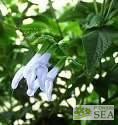
(Argentina Skies Anise-Scented Sage) PLEASE NOTE: A superior variety, 'Elk Argentina Skies' is now available.
The licorice-like fragrance of its foliage and the big whorls of large, sky blue flowers make this a stand-out sage. Tall and wide, it forms a tidy, long blooming background, screen or border.
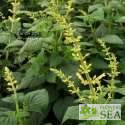
(Red Stem Forsythia Sage) The thick, square, red stems of this variety of Forsythia Sage make it conspicuously different from the species and from everything else in your garden. Its jointed stalks look a little like rhubarb gone mad!
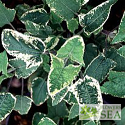
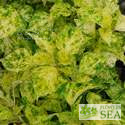
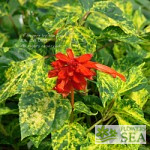
(Variegated Scarlet Sage) Crimson flowers topping bright yellow foliage mottled with deep green make this one of the most spectacular Salvias we grow.
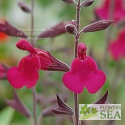
(Raspberry Delight Sage) Dark raspberry-red flowers, burgundy stems and calyxes and deep green foliage make this one of our most attention-grabbing varieties.
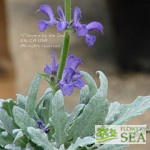
(Caucasus Sage) This hardy ground cover sage grows 4 to 12 inches tall and 12 inches wide. The velvety white fur of its foliage aids moisture retention. Its soft, royal purple flowers make it stand out. We think this Salvia deserves to spread far and wide.

(Variegated Mexican Sage) Although its deep violet flowers are compelling, it is the foliage of this sage that is its greatest attraction. Kelsi is full of surprises, including asymmetrical leaves that make this variety easy to identify.
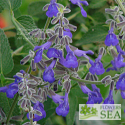
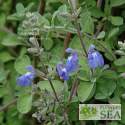
(Snowflake Sage) Wiry, trailing stems of small white leaves make this plant look like fresh snowfall. Numerous, small, sky blue flowers with prominent bee lines further add to the cooling look. This dry-garden plant is native to the mountains of the Chihuahuan desert of North Central Mexico.
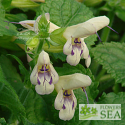
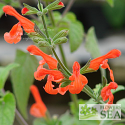
(Elk Super Scarlet Rooster Sage) From the mountains of Mexico we have this stunning Sage, which seems never to be out of bloom. A superior hummingbird plant, the warm orange flowers that cover this shrubby perennial make it a standout in the garden.
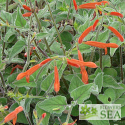
(Oaxaca Orange Wooly Sage) Tall, eye-catching spikes of dusky red-orange flowers that bloom from summer into fall make this one of our most impressive Salvias. Plus it's cold hardy into Zone 7.
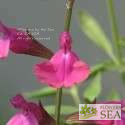
(Plum Wine Autumn Sage) Frilly, lavender-tinged, pink flowers with a pretty white dot at the throat make this another outstanding contribution from North Carolina nurseryman Richard Dufresne.
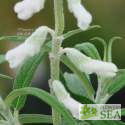
(White Mischief Mexican Bush Sage) Profuse white blossoms and true white velvety bracts make the flowers of this South African hybrid a lovely choice for a wedding. In our experience, many of the plants sold as White Mischief are not the real thing. This tough, compact, long blooming sage is.
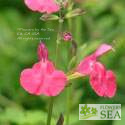
(Pink Preference Autumn Sage) Two-tone, hot pink flowers and contrasting bracts make this Autumn Sage stand out. This drought tolerant Autumn Sage from Central Texas is also compact, rugged, heat tolerant and capable of handling Zone 6 chill.
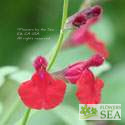
(Cherry Red Mountain Sage) This isn't just another red sage. Brilliant cherry-red flowers with dark purple bracts and cold weather tolerance to USDA Zone 6 make this a valuable landscaping plant.
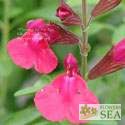
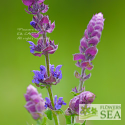
(Stem Clasping Violet Sage) Like a candelabra lit up with whorls of violet blossoms, the erect, branching flower spikes of Salvia amplexicaulis make this native of Southeastern Europe shine. On the Grecian island of Thassos, it brightens areas near the beach.
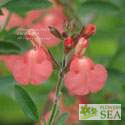
(Tangerine Ballet Hybrid Jame Sage) Soft pinkish-orange flowers with contrasting yellow eyes make this Jame Sage look as tasty as sorbet. Hardy to at least 10 degrees F, Tangerine Ballet is also heat tolerant, drought resistant and long blooming-- all marks of Salvias in the closely related Autumn and Mountain Sage group.
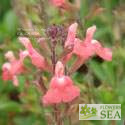
(Salmon Autumn Sage) Creamy salmon-colored flowers with white throats make this elegant Autumn Sage perfect for a pastel garden or as a cooling color in a mixed sage border. Bloom time is spring into fall for this petite Salvia greggii native to the American Southwest and Mexico.
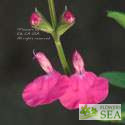
(Wild Watermelon Mountain Sage) Large, watermelon-pink flowers and the fruity fragrance of this long-blooming sage's mid-green, veined leaves make this Mountain Sage a treat to grow.
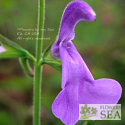
(Dorset Lavender Gentian Sage) Large, deep lavender flowers shaped like parrot beaks make Salvia patens 'Chilcombe' distinctive in the Gentian Sage group, which is dominated by true blues.
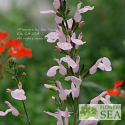
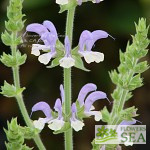
(Golden Leaf Sage) A tinge of gold in its fuzzy, pebbled foliage gives Salvia chrysophylla its common name. Abundant lavender flowers with pale cream lower lips make it stand out in the landscape.
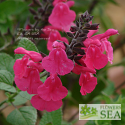
(Grace Pink Autumn Sage) Dark hot pink flowers and contrasting, dark bracts make this Autumn Sage stand out. Originally fom the JC Raulston Arboretum in North Carolina. This variety is large but compact, rugged, heat tolerant and capable of handling Zone 6 chill.
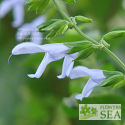
(Elk Argentina Skies Anise-Scented Sage) Developed at FBTS, this new introduction is superior to the old standby, 'Argentina Skies'. Superior growth and earlier flowering make it a must-have choice for hummingbird gardeners.
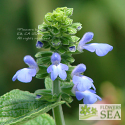
(Elk Blue Hard Leaf Sage) Soft baby blue & white flowers in abundance coupled with strong growth make this an ideal new variety for hummingbird gardeners. the specific epitaph, durifolia, means hard leaf. We don't find the leaf exactly hard but it is lovely and durable.
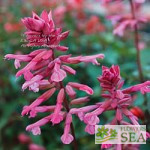
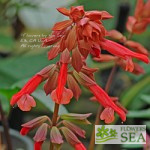
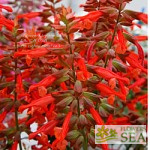
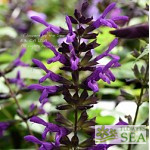
(Purple & Bloom Sage) Floriferous, dark-stemmed spikes of deep violet-purple blossoms surrounded by charcoal-purple bracts combined with dark green leaves shaped like elongated hearts make Salvia ‘Purple & Bloom’ dramatic.
Results for make from the blog
| New at FBTS |
| 1. New at FBTS: Ember's Wish & Love and Wishes Salvias |
| Plants contribute to our lives in many ways -- as sources of beauty, building materials, clothing, food, fragrance, medicine and oxygen. Add hope and fulfillment to the list, because that is what three abundantly blooming Salvias from Australia add to the lives of seriously ill children. These plants form the Wish Collection -- Wendy's Wish Sage, Ember's Wish Sage, and Love and Wishes Sage. Flowers by the Sea is one of the first online nurseries in America to sell all three. Although we have grown and sold Wendy's Wish for a number of years, Ember's Wish and Love and Wishes are new at FBTS. |
| 2. Garden to Kitchen: Holiday Scent of Sage |
| Nothing says holidays like the fragrance of sage coming from the kitchen. It has even inspired writers, such as newspaper columnist and mystery novelist Denise Hamilton. Sage is the stuff of musky perfumes, fragrant Christmas candles and great homecooked meals cooking in the kitchen. It wraps us in the warmth as well as the chill of the season. |
| Salvias Down South |
| 3. Salvias Down South: Tough Texans that Look Hot |
| A little bit of a hot color warms the garden landscape; a lot sizzles. Salvias that are red, orange, salmon and intensely pink make eyes snap to attention when grown en masse or as highlights complementing cool-colored perennials. Texas is home to a number of tough, drought-resistant species that can make a garden look hot. In this article, Flowers by the Sea focuses on varieties to light up southern landscapes. |
| 4. A Community of Anise Scented Sages We Adore |
| You might expect the foliage of a plant called Anise-Scented Sage (Salvia guaranitica) to smell robustly like licorice, which shares the same fragrance as anise. Some gardeners detect a hint of licorice after crushing a leaf, but many say the foliage merely smells sweet. These popular sages are native to Brazil where indigenous peoples used their leaves as a medicine. Flowers by the Sea grows many varieties in a wide range of sizes and flower colors |
| Ask Mr. Sage |
| 5. Ask Mr. Sage: Why Don't You Grow this New Salvia? |
| Plant developers introduce dozens of new Salvia varieties yearly. Flowers by the Sea Farm & Online Nursery selects the best following a careful trialing process. Learn more at Ask Mr. Sage, a column responding to customer questions in the FBTS Everything Salvias Blog. |
| 6. Guide to Understanding & Using Fertilizer |
| Identifying the kind of fertilizer your flowers need can be a trial-and-error experience. This is especially true if you are growing plants that don’t thrive in fertile soils like loam. Flowers by the Sea Online Nursery hopes to clear up some of the confusion in this Guide to Understanding and Using Fertilizer . |
| Quick Digs |
| 7. Quick Digs: Wintering Over Salvias Indoors |
| For some gardeners, bringing outdoor plants inside during winter is a practical matter. You want to save money. For others, plants are a bit like pets. You feel tender about your tender perennials and can't bear to think of a lovely sage dying from exposure to harsh weather. This fourth article in our Quick Digs series on preparation for winter in the Salvia garden suggests ways to overwinter sages indoors. |
| Culinary Sages |
| 8. Sassy Sage Holiday Cooking |
| Nothing says holidays like the fragrance of sage coming from the kitchen. It has even inspired writers, such as newspaper columnist and mystery novelist Denise Hamilton. Sage is the stuff of musky perfumes, fragrant Christmas candles and great homecooked meals cooking in the kitchen. It wraps us in the warmth as well as the chill of the season. |
| Ask Mr. Sage |
| 9. Ask Mr. Sage: How FBTS Chooses New Salvias |
| Some Salvia collectors want to obtain a broad range of sages including all the new introductions on the market. But Flowers by the Sea can't and doesn't want to grow all the new cultivars available, partly because there is a growing abundance of Salvia introductions. Instead, FBTS focuses on selecting the most superior new plants even when introducing its own hybrids in its series of Rainbow Jame Sages. Ask Mr. Sage is a regular feature based on calls and emails received by FBTS. |
| 10. Ask Mr. Sage: What to Do When a New Plant Fails |
| Ask Mr. Sage answers questions based on calls and emails that Flowers by the Sea receives, including ones concerning problems with plants customers have purchased. This article covers our unconditional guarantee to refund or credit purchases without making customers jump through hoops. It also touches on the process FBTS goes through in trying to diagnose plant ailments. |
| 11. Battles in the Salvia Garden: Controlling Spider Mites - Part II |
| Pollinators lose important food sources when Salvias and other nectar-rich flowers are destroyed by spider mites. This is Part 2 of a two-part series about understanding and overcoming these dangerous pests. Along with the non-chemical interventions described in Part 1 of this series, gardeners sometimes need the help of predatory insects and mites, insecticidal soaps and horticultural oils. Pesticides called miticides may also eventually be necessary, but should be the last resort. |
| Book Reviews |
| 12. Book Review: A Field Guide to the Wildflowers of Mexico's Copper Canyon Region |
| Copper Canyon is one of four labyrinthine gorges in Northwest Mexico's state of Chihuahua. The canyon lands are home to the indigenous Tarahumara Indians, who are famous for their reclusive culture, herbal knowledge and habit of easily running ultra marathon distances. The gorges are also home to a fabulous array of wildflowers, including Salvias, that amateur botanist Linda J. Ford documents in " "font-style: italic;">A Field Guide to the Wildflowers of Mexico's Copper Canyon Region." |
Common terms in this search: argentina skies anise-scented sage please note superior variety elk skies' now available longer grow licorice-like fragrance its foliage big whorls large sky blue flowers make stand-out tall wide forms tidy long blooming background screen border unlike many guaranitica clones clumps but does not runners water-loving well full sun partial shade appreciates fertile soil butterflies hummingbirds love deer charles cresson who