
Advanced Search
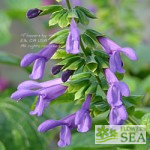
(COOL Lavender Mist Anise Scented Sage) Bright green bracts and rich lavender blossoms sing in Salvia COOL Lavender Mist. Hummingbirds keep this bountiful bloomer buzzing.
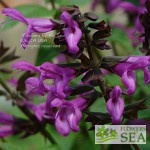
(COOL Fandango Anise Scented Sage) A combination of dark, rosy bracts and magenta blossoms make Salvia COOL Fandango dance. It’s vivid, floriferous, and a hummingbird favorite.
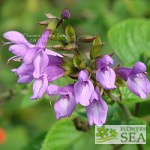
(COOL Lavender Blush Anise Scented Sage) Dusky green and red-edged bracts surround the pale-throated lavender blossoms of Salvia COOL Lavender Blush. It's a magnet for hummingbirds.
Results for mist from the blog
| 1. A Community of Anise Scented Sages We Adore |
| You might expect the foliage of a plant called Anise-Scented Sage (Salvia guaranitica) to smell robustly like licorice, which shares the same fragrance as anise. Some gardeners detect a hint of licorice after crushing a leaf, but many say the foliage merely smells sweet. These popular sages are native to Brazil where indigenous peoples used their leaves as a medicine. Flowers by the Sea grows many varieties in a wide range of sizes and flower colors |
| Hummingbirds in the Garden |
| 2. Guide to Fuchsia Cultivation & History |
| Like tiny dancers dressed in fancy skirts, Fuchsia flowers dangle from upright shrubs in long blooming hedges and from trailing branches in hanging baskets. Fuchsias are hummingbird favorites that come in many rosy colors. Read about them in the FBTS Guide to Fuchsia Cultivation & History . |
| Ask Mr. Sage |
| 3. Ask Mr. Sage: How to Identify Fertilizer Burn |
| Ask Mr. Sage is our blog's new question-and-answer feature, based on calls and emails received at Flowers by the Sea. This question concerns dark spotting on foliage that may be caused by fertilizer burn. |
| 4. Pretty, Practical Cottage Gardens Rooted in Pandemic History |
| Romantic visions of small, rose-covered houses with thatched roofs and bountifully blooming yards don't tell the story of how cottage gardens came to be in the Middle Ages due to a devastating pandemic. FBTS Farm and Online Nursery talks about cottage gardening past and present. |
| 5. 15 Select Salvias for Dry, Partial-Shade Gardening |
| Learning how to garden in dry shade requires mediation of the needs of all the plants involved. Dry shade is particularly abundant under trees, because they consume lots of water. Fortunately, numerous drought-resistant Salvias can handle life in dry, partial shade. Flowers by the Sea details basic considerations of dry shade gardening and identifies 15 sages for it. |
| Hummingbirds in the Garden |
| 6. 6 Indispensable Hummingbird Flowers for Long, Easy Bloom |
| Hummingbirds are like tiny combat jets dive bombing each other when staking claim to the nectar-rich flowers they need for survival. Fights over nectar habitat can reduce hummingbird gardens to single occupancy. FBTS Farm and Online Nursery details and tells stories about its top six hummingbird flowers. Plant lots of them to accommodate a village of hungry hummers. |
| Container Gardening |
| 7. A Guide to Successful Potting Soils for Salvias |
| One of the decisions that Salvia gardeners face in spring is what kind of potting mix to use for outdoor container plants. Find answers in FBTS Farm & Online Nursery's guide to successful potting soils for Salvias. |
| Hummingbirds in the Garden |
| 8. Annual Salvias that Hummingbirds Adore |
| If a hummingbird could talk, he or she would tell you it's hard work packing for a long journey. Consuming mightily from dawn to dusk, day after day, hummingbirds double their weight before migration. They can't afford to run out of fuel before their next meal. To help hummingbirds, particularly on their northward journey, home gardeners can celebrate the arrival of spring by planting gardens filled with early blooming Salvias and companion plants that are excellent annuals in areas where winters are too chilly for survival as perennials. |
| Ask Mr. Sage |
| 9. Ask Mr. Sage: How FBTS Chooses New Salvias |
| Some Salvia collectors want to obtain a broad range of sages including all the new introductions on the market. But Flowers by the Sea can't and doesn't want to grow all the new cultivars available, partly because there is a growing abundance of Salvia introductions. Instead, FBTS focuses on selecting the most superior new plants even when introducing its own hybrids in its series of Rainbow Jame Sages. Ask Mr. Sage is a regular feature based on calls and emails received by FBTS. |
| 10. Ask Mr. Sage: How Should I Prune my Salvias? |
| Flowers by the Sea Online Nursery specializes in Salvias and often receives questions about how to prune them. Although getting good at pruning takes practice, Salvias rebound quickly if you make mistakes. A key to successful pruning is understanding the varying needs of four main categories of sages. Ask Mr. Sage is a regular feature of the FBTS Everything Salvias Blog. |
| Hummingbirds in the Garden |
| 11. Hummingbirds in the Garden: Attracting Hummingbirds to Your Garden |
| Planting a hummingbird garden filled with nectar-rich, long-blooming Salvias aids preservation of hummingbird species that migrate each year throughout North America. It also gives you a front-row seat to a fascinating aerobatics show. Backyard islands of colorful sages are like gas stations for hummingbirds' long-distance journeys. Salvias can keep your garden whirring with the helicopter-like flight of hummingbirds from spring through autumn and -- in warm climates -- into winter. |
| 12. Battles in the Salvia Garden: Controlling Spider Mites - Part II |
| Pollinators lose important food sources when Salvias and other nectar-rich flowers are destroyed by spider mites. This is Part 2 of a two-part series about understanding and overcoming these dangerous pests. Along with the non-chemical interventions described in Part 1 of this series, gardeners sometimes need the help of predatory insects and mites, insecticidal soaps and horticultural oils. Pesticides called miticides may also eventually be necessary, but should be the last resort. |
Common terms in this search: cool lavender mist anise scented sage bright green bracts rich blossoms sing hummingbirds keep bountiful bloomer buzzing its sweet-smelling foliage reminiscent licorice product our plant development program part fbts collection guaranitica hybrids unlike deep saturated blue purple flowers most sages series features surprising pastels native argentina brazil paraguay uruguay wild grows edge streams forest clearings similar other adaptable from full