
Advanced Search
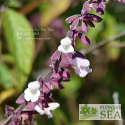
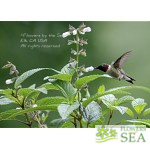
(Waverly Sage) A pale pink to lavender blush adds delicate color to the white flowers of Waverly Sage, which are supported by plum-colored calyxes. Its mid-green leaves are lance shaped and veined.

(Cayman Island Sage) Compact and intensely fragrant, this shrubby sage is excellent for containers or the edge of a pathway. Small blue and white flowers mass about its densely branched foliage. It loves rich, moist soil and warm weather.
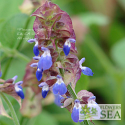
(Rosy Bract Sage) Sub-shrub salvias have both woody and soft, herbaceous growth. Rosy Bract Sage is a tidy, small leafed sub-shrub smothered with large clusters of 1/2-inch, violet-blue flowers and rosy red bracts. Its bracts deepen in color as the season proceeds.
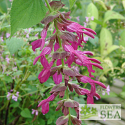
(Gravid Sage) This tender perennial from Michoacan, Mexico, has large, rich magenta flowers that hang from the arching branches in clusters up to 12 inches long. Growing up to 5 feet tall, this sage offers an unforgettable display when in bloom.
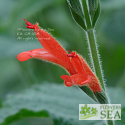
(Tubular Chilean Sage) Foggy days and moderate temperatures are the norm for this low-altitude, coastal mountain sage from northern Chile and Peru. It is grown as much for its handsome foliage as for the deep cranberry of its tiny, tubular flowers.
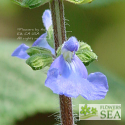
(Bitter Mexican Sage) Hummingbirds love this heat-tolerant Salvia, which is one of our best choices for shady, moist areas. The large-lipped, baby-blue flowers with white striations bloom from late summer through fall.
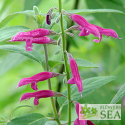
(Pink Tehuacan Sage) Large clusters of big, fuzzy, hot magenta-pink flowers top the elegant foliage of this Mexican sage. It is long blooming beginning in late spring and does well in full sun or partial shade. We want to help spread this rare sage that deserves to be widely planted.
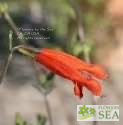
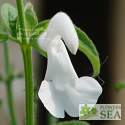
(White Trophy Gentian Sage) White Trophy loves partial shade and is the finest white Salvia patens available, with very large flowers that age to pale blue.
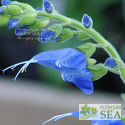
(Tall Big Leaf Sage) Cobalt blue flowers seem to float in airy clusters on 12-inch-tall branching spikes above the bright green, velvety foliage of this South American native. Up to 5-feet tall, tidy and upright in habit, this sage makes a fine background or border planting when massed.
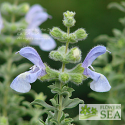
(Blue African Sage or Blousalie) A handsome, densely branched shrub with small, gray leaves, this Salvia puts on a show when in full bloom. The pale blue flowers bloom on foot-long spikes that cover the plant. Each flower has a large, trumpet-shaped, green-and-red bract at its base.
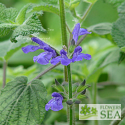
(Blue Bush Sage) Furry, large and heavily textured, the mid-green leaves of Salvia urica contrast attractively with its violet-blue flowers that bloom spring into summer.
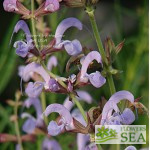
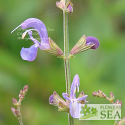
(Blue Turkish Sage) Large velvety gray-green to white leaves in loose rosettes give this sage a distinctive look as does the celestial violet-blue of its flowers. The blossoms seem much too large for this short sage and its thin, candelabra-branched flower spikes.
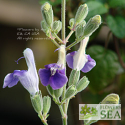
(Candelabra Spanish Sage) Tall, well-branched spikes display large two-tone blue flowers above a compact shrubby mass of attractive, furry white leaves. When in bloom, this drought-resistant native of Spain will awe every visitor to your garden.
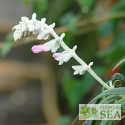
(Pink Mexican Bush Sage) Although native to Mexico and Central America, this elegant variety of Salvia leucantha was hybridized in South Africa. It is compact, long blooming and profusely covered by soft pink flowers surrounded by velvety white bracts.
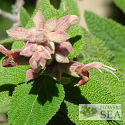
(Wooly Multicolor Sage) In Greek, "lasiantha" means "wooly flower." The flowers of Salvia lasiantha are surrounded by wooly bracts, but are even more notable for transforming from apricot-orange in the morning to reddish-purple later in the day.
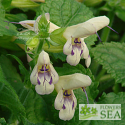
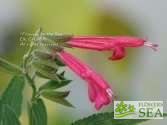
(Hybrid Bolivian Sage) This naturally occurring hybrid is a Bolivian native related to S. orbignaei and S. haenkei. Prettier than its parents, it has large, profuse, long-blooming flowers that are dark pink.
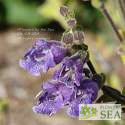
(Dan-shen Gansu) Growing into a large basal rosette of leaves measuring up to 3 feet across, Salvia przewalskii var. mandarinorum is known for its handsome foliage.
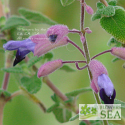
(Pine Mountain Sage) Small but numerous, violet and deep purple flowers surrounded by pink bracts are sprinkled throughout this well-branched,shrubby sage like confections. This is one of the showiest Salvias we grow.
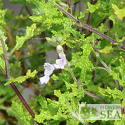
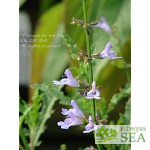
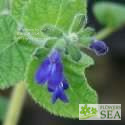
(Mexican Many Flowered Sage) Blooming from late summer into winter, this Mexican cloud-forest native has so many flowers that they are difficult to count. The deep violet blossoms develop distinct, white beelines after opening.
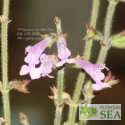
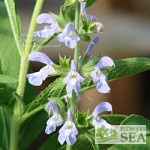
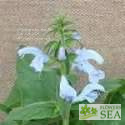
(Patio Sky Blue Gentian Sage) Patio Sky Blue is a handsome, dwarf variety of Salvia patens from Holland. It loves partial shade and is perfect for containers. The sky-blue flowers are larger than those of other Gentian Sages.
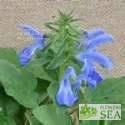
(Patio Deep Blue Gentian Sage) Patio Deep Blue is a handsome, dwarf variety of Salvia patens from Holland. It loves partial shade and has dusky, deep blue flowers that are larger than those of other Gentian Sages.
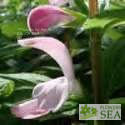
(Patio Rose Gentian Sage) Patio Rose is a lovely, dwarf variety of Salvia patens from Holland. It needs partial shade and is perfect for containers. The rose-colored flowers are larger than those of other Gentian Sages.
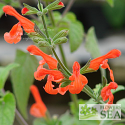
(Elk Super Scarlet Rooster Sage) From the mountains of Mexico we have this stunning Sage, which seems never to be out of bloom. A superior hummingbird plant, the warm orange flowers that cover this shrubby perennial make it a standout in the garden.
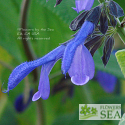
(Ocampo Mexican Sage) Growing from 7 to 10 feet tall each year, this is the largest of our Mexican Sages. Yet due to its erect form, this sage only spreads 36 inches. It has large, deep violet flowers with almost black calyxes that rise up on tall spikes and dark green, heavily veined foliage.
The following terms were added to your search to help improve the result. Click here to exclude these extra terms from the search.
- contain, contained, container, contains
Results for containing from the blog
| Ask Mr. Sage |
| 1. Ask Mr. Sage: How to Prevent Root Disease in Plants for Dry Gardens |
| Learn how to prevent root rot and keep dry-garden Salvias healthy by providing optimum growing conditions and avoiding overwatering. Ask Mr. Sage is a Q&A feature based on topics raised in calls and emails to Flowers by the Sea. This one, which concerns a Salvia species that is drought resistant and native to a dry climate, considers how to identify and prevent rot caused by a complex of soil pathogens that attack when roots. |
| 2. Ask Mr. Sage: What Sages Grow in Clay Soils? |
| Ask Mr. Sage answers questions based on calls and emails that Flowers by the Sea receives, such as concerns about what Salvias will grow in clay soils. This article talks about specific plants for dry and wet clay conditions, how to improve soil drainage and planting on slopes in wet areas. |
| Hummingbirds in the Garden |
| 3. Hummingbirds in the Garden: Attracting Hummingbirds to Your Garden |
| Planting a hummingbird garden filled with nectar-rich, long-blooming Salvias aids preservation of hummingbird species that migrate each year throughout North America. It also gives you a front-row seat to a fascinating aerobatics show. Backyard islands of colorful sages are like gas stations for hummingbirds' long-distance journeys. Salvias can keep your garden whirring with the helicopter-like flight of hummingbirds from spring through autumn and -- in warm climates -- into winter. |
| Ask Mr. Sage |
| 4. Ask Mr. Sage: How to Select Plants in Warm Zones |
| Ask Mr. Sage answers questions based on calls and emails that Flowers by the Sea receives. This one concerns how to select plants when you move to a different USDA cold hardiness zone, such as in a warmer climate. |
| 5. Battles in the Salvia Garden: Controlling Spider Mites - Part II |
| Pollinators lose important food sources when Salvias and other nectar-rich flowers are destroyed by spider mites. This is Part 2 of a two-part series about understanding and overcoming these dangerous pests. Along with the non-chemical interventions described in Part 1 of this series, gardeners sometimes need the help of predatory insects and mites, insecticidal soaps and horticultural oils. Pesticides called miticides may also eventually be necessary, but should be the last resort. |
| Ask Mr. Sage |
| 6. Ask Mr. Sage: What Hummingbird and Butterfly Salvias Tolerate Lots of Moisture |
| Ask Mr. Sage answers questions based on calls and emails that Flowers by the Sea receives. This one explains how to cruise the Flowers by the Sea online catalog to find butterfly and hummingbird Salvias that can handle lots of moisture. |
| Container Gardening |
| 7. Container Gardening Basics: Selecting a Good Potting Mix |
| Why is regular garden soil a poor choice for container gardening, and why is sterilized, soilless potting mix better. The term "sterilized" indicates that a potting medium is free of pathogens, weed seed and toxins. "Soilless" means that although it contains organic and inorganic matter, it isn't a garden soil. One of the main reasons to use a soilless mix is that it allows water to drain better in a confined space. Flowers by the Sea explains the basics of potting mixes and why no one recipe fits all needs. |
| Cultivating Color |
| 8. Cultivating Color: New FBTS Tools Aid Garden Design |
| Have we got tools for you! No, we aren't selling Ginzu clippers, rust-free shovels, a miraculous compost-in-minutes machine or anything requiring payments. We're talking about a set of color tools for accurately visualizing and comparing the floral and foliage colors of Salvias. As you wander through the riot of hues in our online catalog at Flowers by the Sea, these tools aid plant selection and landscape planning. Beginning in fall 2014, we began identifying the colors of all FBTS plants based on the internationally standardized color system published by the U.K.'s Royal Horticultural Society. This improves descriptions of plant colors and makes color comparisons of plants easier for garden design. |
| 9. Battles in the Salvia Garden: Pretty Southern Pink Moth |
| Southern Pink Moth (Pyrausta inornatalis) is diminutive and pretty, but it’s a powerful pest in Salvia gardens. As the common name indicates, it is primarily found in the South. Yet it is flitting into gardens further north. Read more to learn how to identify and control this pest. |
| Getting Started with Salvias |
| 10. Getting Started: Salvias for the Coastal Southeast |
| True sages are members of the Salvia genus and number in the hundreds. They are native to a wide variety of environments worldwide, which is why some are ideal for the dry gardens of California and others can handle the abundant moisture of the American Southeast. Flowers by the Sea raises many sages that grow well in the Southeast, including some that are either native to the region or have jumped fences from gardens into the wild. |
| 11. Getting Started: Salvias for the Midwest |
| Severe winter chill and summer heat coupled with extreme humidity are challenges that gardeners face in the Midwest. Many Salvias are excellent choices as long-blooming annuals in the region while others -- ones that can withstand cold winters -- are reliable perennials. Flowers by the Sea Online Plant Nursery explains the confusing Midwest boundaries from Ohio west to Kansas and North Dakota south to Missouri. It talks about the range of USDA Plant Hardiness Zones in the region and the kinds of sages that grow best there. |
| 12. In the Native Garden: Colorful California Salvias Plus a Cousin |
| Native plants, including California's many indigenous sages, are like the boys or girls next door who were overlooked until outsiders discovered their good looks and other fine attributes. Flowers by the Sea grows hardy, drought-resistant California Salvias that are native to a broad swath of the West Coast ranging from Northern Baja to Southern Oregon. Many tolerate heat. They are well suited to waterwise landscapes, including dry gardens. |
Common terms in this search: waverly sage pale pink lavender blush adds delicate color white flowers which supported plum-colored calyxes its mid-green leaves lance shaped veined tender woody shrub may remain evergreen herbaceous perennial dies ground depending winter temperatures where live first called marks mystery long-blooming sun-loving plant can tolerate some shade appears related mexican bush leucantha but likely well never know all details heritage