
Advanced Search
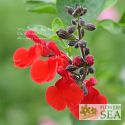
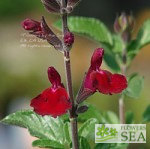
(Red Velvet Mountain Sage) This is one of the most intense red-flowering variety of Mountain Sage we grow. Medium-sized flowers are profuse on this large, vigorous plant -- particularly in spring and fall. Dark stems and calyxes intensify the plant's drama along with glossy green foliage.
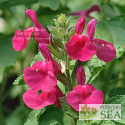
(St. Charles Day Mountain Sage) Especially in spring and fall, masses of red-violet flowers bloom amid the silvery green foliage of Salvia microphylla 'San Carlos Festival'. Put this one into the "must have" column.
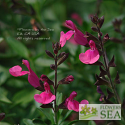
(Black Cherry Autumn Sage) Ripe Bing cherries come to mind when viewing the rich purple flowers of this full-sun sage that is adaptable to partial shade. Butterflies, honeybees and hummingbirds are drawn to its blossoms from spring into fall.
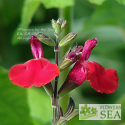
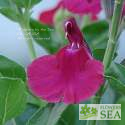
(Elk Pomegranate Autumn Sage) We're proud to say that this is an FBTS cultivar. It is one of the finest dark flowered, compact Autumn Sage varieties we have seen. Its extraordinarily large, raspberry blossoms bloom from spring into fall.
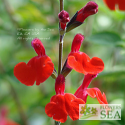
(Royal Bumble Mountain Sage) Almost black, the stems and calyxes of this UK hybrid form a pleasing contrast with its medium-size scarlet flowers and glossy green leaves. Bloom time is spring to fall. This Mountain Sage suckers freely and forms a dense clump.
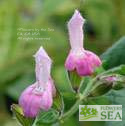
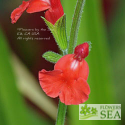
(Big Orange Mountain Sage) When temperatures are cooler in spring and fall, the persimmon-orange flowers of this large Mountain Sage darken. Gray-green foliage, bright green calyxes and reddish-green stems add to the plant's fascinating look, which mixes well with yellows and blues.
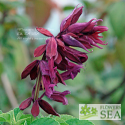
(Sao Borja Scarlet Sage) Three-inch-long, smokey purple blossoms that bloom from spring to fall are a major clue that this heat-tolerant perennial is not your grandmother's Scarlet Sage.
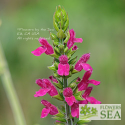
(Shaggy Chiapas Sage) This is a sweetheart! Glowing magenta flowers lure the eye as well as hummingbirds to this heat-tolerant sage. It begins blooming in late summer where weather is warm and in fall where it is cooler.
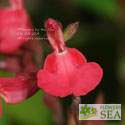
(Furman's Red Autumn Sage) Selected by noted Texas plantsman W.A. Furman in the 1970s, this hardy Texas native is beautiful and tough withstanding heat, drought and freezing winters. Its flowers, which bloom spring through fall, are a rich, saturated red bordering on magenta.
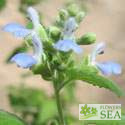
(Mejorana) In Spanish, Mejorana means ‘marjoram.” Similar to oregano-type Marjoram – another Mint family member -- this sage is used to flavor meat dishes. Our cultivar, which is native to Texas and Mexico, has lovely bluish-purple flowers that bloom summer to fall amid fragrant, fine, furry green foliage.
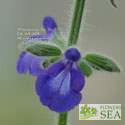
(Double Saw Tooth Sage) Vivid deep violet flowers bloom from summer into fall and contrast prettily with the bright green, rumply foliage of this tall sage from southeastern Mexico. Belgian botanist and orchid lover Jean Jules Linden was the first to record its discovery in 1838, according to records on file at Britain’s Royal Botanic Gardens, Kew.
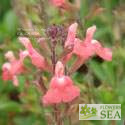
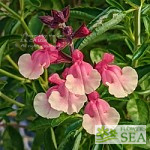
(Salmon Autumn Sage) Creamy salmon-colored flowers with white throats make this elegant Autumn Sage perfect for a pastel garden or as a cooling color in a mixed sage border. Bloom time is spring into fall for this petite Salvia greggii native to the American Southwest and Mexico.
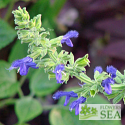
('Blue Seniorita' Mexican Sage) Smallish rich cobalt blue flowers come in large clusters on this unusually strong growing shrub. From late summer through fall you and the hummingbirds will be delighted with this rare variety.
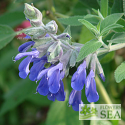
(Bolivian Lace Leaf Sage) A large decidious woody shrub, this is a distinctive and somewhat unique Salvia species. The large clusters of deep blue flowers appear in the spring and again in the fall. A native from a tropical savanna climate in Bolivia, this species grows best in climates with year-round warmth.
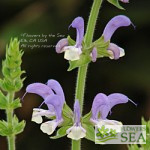
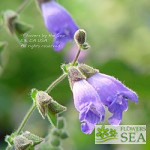
(Himalayan Sage or Kashmir Sage) The word "hians" in Salvia hians means "gaping" and refers to the hanging lip of this sage's flowers, which bloom from late spring through early fall. This may or may not the "true" species as it is described, hence the term aff or affnis in the name, which indicates that this plant is related to, has an affinity to, but is not identical to Salvia hians.
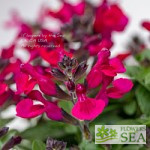
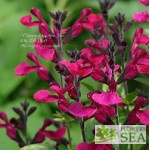
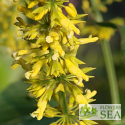
(Forysthia Sage) This statuesque perennial grows up to 10 feet tall, but spreads only 3 feet wide. It is a late bloomer from Mexico's Sierra Madre Oriental mountains where it grows at altitudes of 4,000 to 5,000 feet and tolerates temperatures down to 20 degrees F.
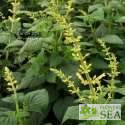
(Red Stem Forsythia Sage) The thick, square, red stems of this variety of Forsythia Sage make it conspicuously different from the species and from everything else in your garden. Its jointed stalks look a little like rhubarb gone mad!
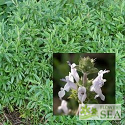
(Black Sage or Honey Sage) One of the most common and fragrant native shrubs in Central California's Coast Ranges, Black Sage is ideal for dry gardens. Admirably adaptable, it tolerates soils ranging from the most marginal to ones that are loamy and provide excellent drainage. It is a survivor.
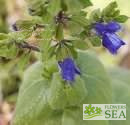
(Little Mexican Sage) This low-growing sage is a shrub in its warmest zones and a perennial in the cooler ones. It's just right for small spaces or tiny gardens. Short and compact, its flowers are similar to but smaller than those of S. mexicana 'Limelight'.
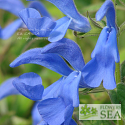
(Blue Angel Gentian Sage) Since the 1838 discovery of this herbaceous species from Central Mexico, Salvia patens has been a mainstay of the perennial garden. Blue Angel is one of the smallest of the full-sized varieties.
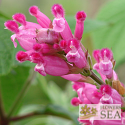
(El Butano Downy Sage) El Butano is a horticulturally rich area of Cumbres de Monterrey National Park in the mountains of Nuevo Leon, Mexico. El Butano Downy Sage was discovered in this area where it grows at elevations of 4,500 to 8,000 feet.
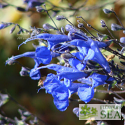
(Arrowleaf Sage) Brilliant royal blue flowers and unusual foliage attract the eye to Arrowleaf Sage. This large herbaceous perennial is found at elevations up to 10,500 feet in the Cordillera de los Andes of Chile, Ecuador and Peru.
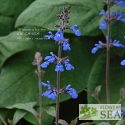
(Sinaloan Blue Sage) It's difficult to say which trait is more attractive about this sage -- the airy spikes of deep, true blue flowers or the fascinating spear-shaped foliage that varies from deep green to purple, forming a tidy mat.
The following terms were added to your search to help improve the result. Click here to exclude these extra terms from the search.
- f, falls
Results for fall from the blog
| Getting Started with Salvias |
| 1. Getting Started: Salvias for the Rocky Mountain West |
| High altitude, distance from large bodies of water and powerful chinook winds make the Rocky Mountain West a dry gardening environment even in years of higher than average rain and snow. The region's steep mountains have a major impact on where and how precipitation falls. Instead of a single mountain chain, the Rocky Mountains are made up of 100 separate ranges. Similarly, the Salvia genus contains a broad range of sages, many of which thrive in the climactic extremes of the Mountain West. |
| Salvias Down South |
| 2. Salvias Down South: 15 Sages to Pink Up Landscapes |
| Winter is a good time for warm thoughts about rosy colors pinking up the landscape. Not only is pink pleasant, but it is soothing. As psychologists discovered in the late 20th century, it's also the color of calm and is used in serenity gardens. Flowers by the Sea details a variety of pink sages here, some of which bloom in winter. |
| Celebrity Salvias |
| 3. The Roseleaf Sage Group: Who's Who & What's What |
| Differentiating between the plants in a closely related group can feel similar to being an outsider attending a large family reunion. Identifying who's who and how they are connected is a challenge. That's the way it is with Mexico's Roseleaf Sage ( Salvia involucrata ) Group, which is well loved by hummingbirds. FBTS Online Plant Nursery grows a number of species from this winter-blooming group. |
| Hummingbirds in the Garden |
| 4. Ten Favorite Flowers for Butterflies and Hummingbirds |
| Flowers that butterflies and hummingbirds favor are rich sources of nectar. But not all nectar-rich butterfly favorites are easy to access with long hummingbird beaks. Conversely, many flowers designed by nature to attract hummingbirds don't have the structure necessary for feeding butterflies or providing a perch. Here are ten Salvias and companion plants for backyard wildlife habitat that both butterflies and hummingbirds will enjoy. |
| 5. 6 Indispensable Hummingbird Flowers for Long, Easy Bloom |
| Hummingbirds are like tiny combat jets dive bombing each other when staking claim to the nectar-rich flowers they need for survival. Fights over nectar habitat can reduce hummingbird gardens to single occupancy. FBTS Farm and Online Nursery details and tells stories about its top six hummingbird flowers. Plant lots of them to accommodate a village of hungry hummers. |
| Cultivating Color |
| 6. Pantone Pageant Cheerful Lemon Zest and Nectarine Designer Salvias |
| Let there be light; let there be brightness. Yellows and oranges are cheerful colors to combine in a grouping of perennials. Pantone's spring 2013 designer colors -- golden yellow Lemon Zest 13-0756 and its hot orange Nectarine 16-1360 -- are fun colors to match to sages ( Salvia spp.) that can turn up the light in a garden whether sunny or shady. Two groupings for sunny or shady gardens are offered |
| Sage Experts |
| 7. Sage Experts: Nancy Newfield, Hummingbird Gardener, Part II |
| Salvias are among the best hummingbird flowers and red is tops. That's what hummingbird researcher, Nancy L. Newfield began discovering more than 40 years ago. She found that flower nectar was more attractive than nectar feeders. This is the second article in a 3-part series on Newfield and hummingbird gardening. It includes an excerpt from her book Hummingbird Gardens and an FBTS list of red hummingbird favorites. Bud Hensley photographed the hummingbird pictured here enjoying Salvia subrotunda. |
| Salvias Down South |
| 8. Salvias Down South: 15 Thirsty Salvias for Florida |
| Flowers by the Sea grows Salvias that are already popular in the Southeast as well as others we would like to introduce to gardeners seeking thirsty flowering plants that can also adjust to dry spells. Many are fine choices for Florida hummingbird gardens. Our suggestions are organized into categories based on moisture tolerance – average and ample -- as well as sun requirements. |
| Xeric Choices |
| 9. Colorful Salvias Break Myth of Dry Garden Drabness |
| Dry gardens are flowerbeds or entire landscapes based on ornamental perennials that require little to no watering once well rooted. Many Salvias are excellent, drought-resistant choices for these gardens. Flowers by the Sea Farm and Online Nursery talks about dry garden myths as well as low-water plants. |
| Shade Gardening |
| 10. Made for Shade: Japanese Woodland Salvias |
| Sturdy, shade-loving Japanese Salvias are lovely additions to woodland gardens with their lush, large-leafed foliage and delicate-looking flowers in colors including pinks, purples and yellows. They're ideal for bordering shady paths where they invite visitors to pause for close-up views. Flowers by the Sea suggests Japanese species for woodland gardens and organizes them according to their cold hardiness. |
| Hummingbirds in the Garden |
| 11. 5 Big Orange Bedding Plant Beauties for Hummingbirds |
| You'll hear a lot about red when planting annuals for wildlife gardens, because hummingbirds garden love red, tubular, nectar-rich flowers. But orange is another hummingbird favorite not to be neglected. Flowers by the Sea suggests five long blooming species for your landscape that begin shouting "Orange, orange, orange" in spring when hummingbirds are big-time hungry now, now, now as they head north for the nesting season. |
| Xeric Choices |
| 12. Drought Praise: 5 Hot Red Salvias for Hummingbirds |
| Hummingbirds love the nectar of Salvias, particularly red ones, which they can see but bees can't. Also, unlike most birds, hummingbirds can taste sweets and seek out flowers that produce lots of sugary nectar. However, nectar can be difficult to come by during drought. The Salvia genus is well known for its bright flowers, rich nectar and many drought-tolerant plants. We suggest five bright red, drought-tolerant Salvias that hummingbirds love. |
Common terms in this search: red velvet mountain sage one most intense red-flowering variety grow medium-sized flowers profuse large vigorous plant particularly spring fall dark stems calyxes intensify plant's drama along glossy green foliage mixed group closely related species autumn greggii always first notice can handle full sun but flourishes partial shade even blooms needs well-drained soil regular watering based local conditions inches tall wide