
Advanced Search
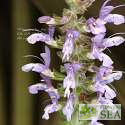
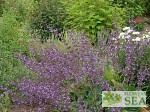
(Balkan Sage) Violet-blue whorls of flowers and plentiful, fuzzy, basal leaves that reach an impressive length of 18 inches are two notable features about this hardy, herbaceous perennial, which is native to the Southeastern Balkan Peninsula.
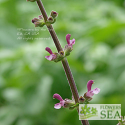
(Mid-East Sage) Native to the mountains shared by Israel and Lebanon, this tidy sage is drought resistant, heat tolerant and long blooming. Its basal foliage rises up and spreads only about 18 inches, but it has long flower spikes.
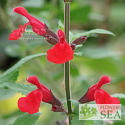
(John Whittlesey Sage) Hardy, vigorous and long blooming, John Whittlesey Sage is a hybrid of D'Arcy's Sage (Salvia darcyi) -- a native of Mexico -- and Mountain Sage (S. microphylla), which is native to the American Southwest and Mexico.
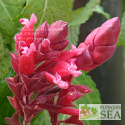
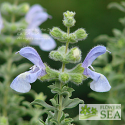
(Blue African Sage or Blousalie) A handsome, densely branched shrub with small, gray leaves, this Salvia puts on a show when in full bloom. The pale blue flowers bloom on foot-long spikes that cover the plant. Each flower has a large, trumpet-shaped, green-and-red bract at its base.
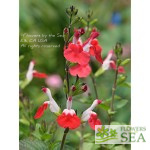
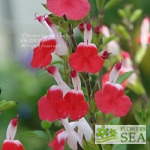
(Hot Lips Sage) What a winner for fascinating flowers! Salvia microphylla ‘Hot Lips’ is a native of Mexico that produces a combination of solid red, solid white, and bicolor red and white blossoms all on the same plant and sometimes at the same time.
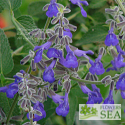
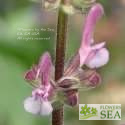
(Jerusalem Sage) This lovely herbaceous perennial is native to Cyprus, Israel, Jordan, Lebanon, Syria, and the West Bank. Its clear pink flowers change at times to a pink highlighted with violet lines and dots. Prominent glandular hairs on the buds, bracts and floral stems exude a fragrance that is delightful on a warm day.
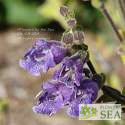
(Dan-shen Gansu) Growing into a large basal rosette of leaves measuring up to 3 feet across, Salvia przewalskii var. mandarinorum is known for its handsome foliage.
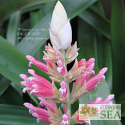
(Pink & White Wagner's Sage) Instead of pink, leaf-life bracts, this variety of Wagner's Sage has white bracts surrounding the hot pink flowers. It blooms from November to March on our coastal Northern California farm where it feeds Anna's hummingbirds all winter long.
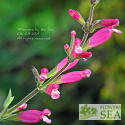
(Hadspen Roseleaf Sage) If you plant this sage in a mild-climate area where hummingbirds overwinter, you'll likely find hummers zinging back and forth among its magenta pink blossoms from fall through spring.
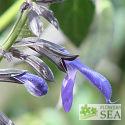
(Door of the Fox Mexican Sage) Purplish foliage contrasts attractively with the violet-to-purple flowers of this big sage, which grows 6 feet tall and 4 feet wide. Bloom time is autumn. This darkly dramatic Mexican Sage makes a particularly attractive entryway accent.
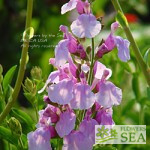
(Pink Beach Autumn Sage) When it blooms from spring into fall, this heat- and chill-tolerant sage is covered with large, two-tone pink flowers that attract butterflies, honeybees and hummingbirds. This compact, drought-tolerant beauty also features small, shiny, bright green leaves.
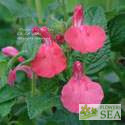
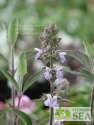
(Kellerman's Sage) Rare in the United States, this wooly leafed, upright shrub comes from Southern Mexico and Guatemala. Mid-size, powder-blue flowers bloom on its long, airy stems from summer through winter in mild climates. It's lovely in mixed, drought-resistant plantings.
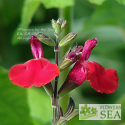
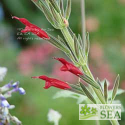
(Red Michoacán Sage) No other Salvia has flowers that are such a deep blood red. The 3-to-4 inch long tubular blossoms of this shade-loving shrub are displayed in clusters at the ends of the stems, which have light green, textured leaves that are almost round.
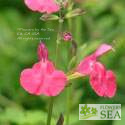
(Pink Preference Autumn Sage) Two-tone, hot pink flowers and contrasting bracts make this Autumn Sage stand out. This drought tolerant Autumn Sage from Central Texas is also compact, rugged, heat tolerant and capable of handling Zone 6 chill.
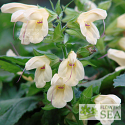
(Kyushu Woodland Sage) We are in love with this short forest sage from Kyushu, Japan. Its clusters of large creamy flowers pale as fresh-churned butter begin blooming in September. Even when not blooming, its foliage is showy in a shady garden.
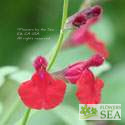
(Cherry Red Mountain Sage) This isn't just another red sage. Brilliant cherry-red flowers with dark purple bracts and cold weather tolerance to USDA Zone 6 make this a valuable landscaping plant.
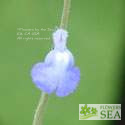
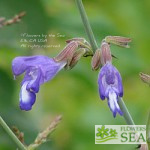
(Mount Olympus Sage) The deep violet and white flowers of Salvia ringens are eyecatching. Their wiry, branched spikes rise up to 5 feet tall from a dark green basal rosette.
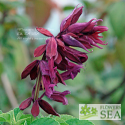
(Sao Borja Scarlet Sage) Three-inch-long, smokey purple blossoms that bloom from spring to fall are a major clue that this heat-tolerant perennial is not your grandmother's Scarlet Sage.
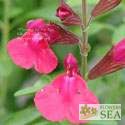
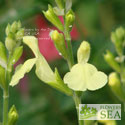
(Elk Lemon Light Jame Sage) We are proud to offer this luminescent, pure yellow Salvia x jamensis -- a color breakthrough from our own breeding program. The bright, light blossoms cool the landscape similar to white flowers, but with colorful impact. The glossy green leaves are quite small - a very attractive and distinctive characteristic.
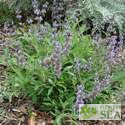
(Dry Earth Black Sage) Black Sage Salvia mellifera is one of the most common and fragrant native shrubs in the California Coast Ranges and is ideal for dry gardens. At 12 inches tall by 5 feet wide, this variety is an excellent groundcover.
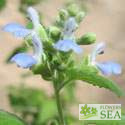
(Mejorana) In Spanish, Mejorana means ‘marjoram.” Similar to oregano-type Marjoram – another Mint family member -- this sage is used to flavor meat dishes. Our cultivar, which is native to Texas and Mexico, has lovely bluish-purple flowers that bloom summer to fall amid fragrant, fine, furry green foliage.
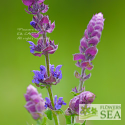
(Stem Clasping Violet Sage) Like a candelabra lit up with whorls of violet blossoms, the erect, branching flower spikes of Salvia amplexicaulis make this native of Southeastern Europe shine. On the Grecian island of Thassos, it brightens areas near the beach.
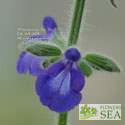
(Double Saw Tooth Sage) Vivid deep violet flowers bloom from summer into fall and contrast prettily with the bright green, rumply foliage of this tall sage from southeastern Mexico. Belgian botanist and orchid lover Jean Jules Linden was the first to record its discovery in 1838, according to records on file at Britain’s Royal Botanic Gardens, Kew.
The following terms were added to your search to help improve the result. Click here to exclude these extra terms from the search.
- naming, name, named, names
Common terms in this search: balkan sage violet-blue whorls flowers plentiful fuzzy basal leaves reach impressive length inches two notable features about hardy herbaceous perennial which native southeastern peninsula found coniferous forests meadows slopes from bulgaria turkey's black sea coast however named after century finnish plant collector peter forssk who collected botanical samples further south saudi arabia although deciduous areas cold winters blooms nine months