
Advanced Search
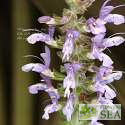
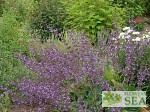
(Balkan Sage) Violet-blue whorls of flowers and plentiful, fuzzy, basal leaves that reach an impressive length of 18 inches are two notable features about this hardy, herbaceous perennial, which is native to the Southeastern Balkan Peninsula.
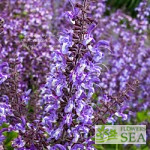
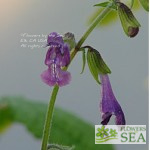
(Yunnan Sage or yun nan shu wei cao) Yunnan Sage's tall spikes of violet-to-purple flowers bloom from summer into fall. Native to Southwestern China's provinces of Yunnan, Guizhou and Sichuan, it grows on shady, grassy hillsides and along forest margins at elevations up to 9,500 feet.
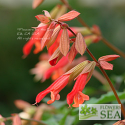
(Ember's Wish Sage) Bright coral-colored, tubular blossoms contrast handsomely with the deep maroon stems, rusty rose calyxes and mid-green foliage of Ember's Wish Sage.
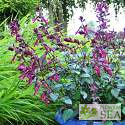
(Love and Wishes Sage) Deep purple calyxes support the magenta-purple, tubular blossoms of Salvia x 'Love and Wishes'. They contrast handsomely with dark stems and mid-green foliage.
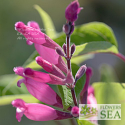
(Boutin Roseleaf Sage) Boutin means "button" in French. Perhaps the creamy, mulberry pink flowers of Salvia involucrata 'Boutin' looked cute as buttons to whoever named the cultivar.
Results for plentiful from the blog
| Ask Mr. Sage |
| 1. Ask Mr. Sage: What Tropical Sage Should I Select? |
| Selecting the right types of Tropical Sage ( Salvia coccinea ) can be confusing when viewing them in a catalog and seeing similar flower colors. Yet they may differ in cultivation needs, foliage, heat tolerance, and size. Mr. Sage offers ideas for comparing differences and similarities. Ask Mr. Sage is a regular feature of the FBTS Everything Salvias Blog , which responds to questions from customers. |
| Hummingbirds in the Garden |
| 2. Hummingbirds in the Garden: Attracting Hummingbirds to Your Garden |
| Planting a hummingbird garden filled with nectar-rich, long-blooming Salvias aids preservation of hummingbird species that migrate each year throughout North America. It also gives you a front-row seat to a fascinating aerobatics show. Backyard islands of colorful sages are like gas stations for hummingbirds' long-distance journeys. Salvias can keep your garden whirring with the helicopter-like flight of hummingbirds from spring through autumn and -- in warm climates -- into winter. |
| 3. Guide to Understanding & Using Fertilizer |
| Identifying the kind of fertilizer your flowers need can be a trial-and-error experience. This is especially true if you are growing plants that don’t thrive in fertile soils like loam. Flowers by the Sea Online Nursery hopes to clear up some of the confusion in this Guide to Understanding and Using Fertilizer . |
| Hummingbirds in the Garden |
| 4. Hummingbird Falls Sage: Answers to Your Questions |
| Hummingbirds are vital pollinators that need lots of rich nectar to survive and keep gardens blooming. Salvia BODACIOUS 'Hummingbird Falls' is a unique hanging basket plant that is a natural replacement for plastic nectar feeders. |
| Container Gardening |
| 5. A Guide to Successful Potting Soils for Salvias |
| One of the decisions that Salvia gardeners face in spring is what kind of potting mix to use for outdoor container plants. Find answers in FBTS Farm & Online Nursery's guide to successful potting soils for Salvias. |
| Hummingbirds in the Garden |
| 6. Annual Salvias that Hummingbirds Adore |
| If a hummingbird could talk, he or she would tell you it's hard work packing for a long journey. Consuming mightily from dawn to dusk, day after day, hummingbirds double their weight before migration. They can't afford to run out of fuel before their next meal. To help hummingbirds, particularly on their northward journey, home gardeners can celebrate the arrival of spring by planting gardens filled with early blooming Salvias and companion plants that are excellent annuals in areas where winters are too chilly for survival as perennials. |
| Ask Mr. Sage |
| 7. Ask Mr. Sage: Why Didn't My Fall Blooming Salvia Flower? |
| When growing Salvias that begin blooming in fall, Mr. Sage says it's important to know when first frost likely will occur in your area. Ask Mr. Sage is a regular feature of the FBTS Everything Salvias Blog. |
| 8. Ask Mr. Sage: What Is Average Watering? |
| Confusion about watering of plants is understandable, because moisture needs vary so much from one species to another. It also varies based on your local growing conditions. Ask Mr. Sage, a regular feature of the Everything Salvias blog at Flowers by the Sea Online Plant Nursery, explains the differences between the labels drought resistant, average water and water loving classifications for estimating water needs. Some FBTS average water plants also grow well in dry or damp settings. |
| Book Reviews |
| 9. Book Review: The Plant Lover's Guide to Salvias |
| The Plant Lover's Guide to Salvias by John Whittlesey not only is a lavishly photographed, well-organized resource about the Salvia genus but also a lovely coffee table book that may inspire anyone who opens its pages to spend time in the garden. Whittlesey says his Canyon Creek Nursery in rural Northern California has an "extreme" Mediterranean climate with little rainfall from summer through early autumn when temperatures can reach up to 108 degrees F. |
| Xeric Choices |
| 10. Drought Praise: 5 Hot Red Salvias for Hummingbirds |
| Hummingbirds love the nectar of Salvias, particularly red ones, which they can see but bees can't. Also, unlike most birds, hummingbirds can taste sweets and seek out flowers that produce lots of sugary nectar. However, nectar can be difficult to come by during drought. The Salvia genus is well known for its bright flowers, rich nectar and many drought-tolerant plants. We suggest five bright red, drought-tolerant Salvias that hummingbirds love. |
| Getting Started with Salvias |
| 11. Getting Started: Salvias for the Mid-Atlantic |
| Outside of its cities, the Mid-Atlantic can be described as an overwhelmingly green place. If you love the Mid-Atlantic, you revel in its verdant landscape. However, if you aren't reveling in the predictable planting choices you see in neighbor's yards, it may be time to expand your horizons by exploring the Salvia genus. Flowers by the Sea discusses the boundaries, USDA Plant Hardiness Zones and Salvia choices for the region. |
| 12. Getting Started: Salvias for Zone 5 |
| To bloom yearly, Salvia perennials and shrubs in USDA Hardiness Zone 5 need to tolerate deep freeze winters with average low temperatures of -20 degrees F. The success of Zone 5 sages also depends on local growing conditions. Learn more at Flowers by the Sea, an online, mail-order Salvia nursery. |
Common terms in this search: balkan sage violet-blue whorls flowers plentiful fuzzy basal leaves reach impressive length inches two notable features about hardy herbaceous perennial which native southeastern peninsula found coniferous forests meadows slopes from bulgaria turkey's black sea coast however named after century finnish plant collector peter forssk who collected botanical samples further south saudi arabia although deciduous areas cold winters blooms nine months