
Advanced Search
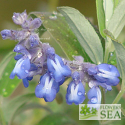
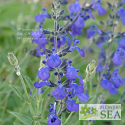
(Blue Ecuadorian Sage) A densely branched shrub with silvery leaves and dusky blue flowers, this rare species was once thought to be Salvia cruickshanksii. In the nursery trade, it sometimes is called Salvia 'Equador'.
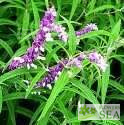
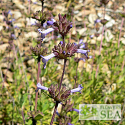
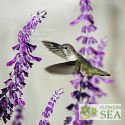
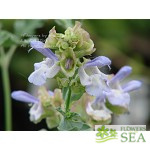
(Mexican Bush Sage or Velvet Sage) Large purple and white flowers bloom abundantly on this compact dwarf plant. If you love the rich colors and velvety foliage of Mexican Bush Sage but have limited space or need a container variety, this one is is for you.
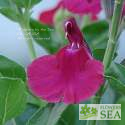
(Elk Pomegranate Autumn Sage) We're proud to say that this is an FBTS cultivar. It is one of the finest dark flowered, compact Autumn Sage varieties we have seen. Its extraordinarily large, raspberry blossoms bloom from spring into fall.
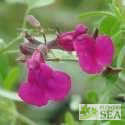
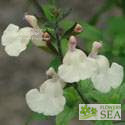
(Glimmering White Mountain Sage) Heatwave Glimmer isn't a mirage. It is a Salvia microphylla that tolerates extremely hot climates as well as cooler regions. It doesn't just survive; it thrives in the heat of Southern California, the Southwest and Texas.
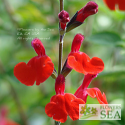
(Royal Bumble Mountain Sage) Almost black, the stems and calyxes of this UK hybrid form a pleasing contrast with its medium-size scarlet flowers and glossy green leaves. Bloom time is spring to fall. This Mountain Sage suckers freely and forms a dense clump.
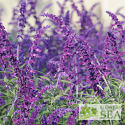
(Midnight Mexican Bush Sage) The typical Mexican Bush Sage has purple flowers surrounded by furry white bracts. This clone from the San Francisco Peninsula has deep purple flowers, calyxes and stems. It is a good groundcover due to a mounding habit, smaller size and generous amounts of flowers.
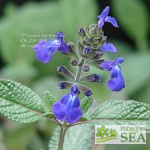
(Elk Blue Little Sage) if it were up to us, we would never have named this plant Little Sage. Although it is dainty, it is also one of the most fascinating species we grow. We particularly love its pebbly, oval leaves that are a shiny purple/green on top and a furry white below.
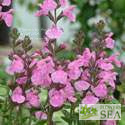
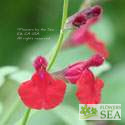
(Cherry Red Mountain Sage) This isn't just another red sage. Brilliant cherry-red flowers with dark purple bracts and cold weather tolerance to USDA Zone 6 make this a valuable landscaping plant.
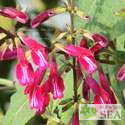
(Violet Calyx Sage) Here's another abundantly blooming sage from the cloud forest slopes of Chiapas, Mexico. Violet beelines mark the lower lip of the crimson blossoms, which are so numerous that it can be difficult to see the foliage at times.
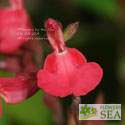
(Furman's Red Autumn Sage) Selected by noted Texas plantsman W.A. Furman in the 1970s, this hardy Texas native is beautiful and tough withstanding heat, drought and freezing winters. Its flowers, which bloom spring through fall, are a rich, saturated red bordering on magenta.
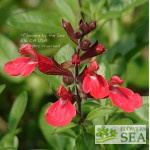
(Lipstick Autumn Sage) Similar to a little bit of lipstick on a pretty face, the rosy flowers of this hardy, heat-tolerant sage add a finishing touch to a perennial Salvia border. The creamy pinkish-red blossoms have a contrasting white throat and are cupped by rosy brown calexes on long spikes.
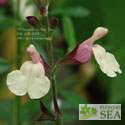
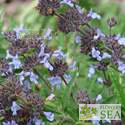
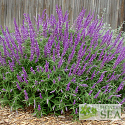
(Santa Barbara Mexican Bush Sage) This compact Mexican Bush Sage was found in the Santa Barbara garden of Kathiann Brown. It is, without a doubt, the finest short Mexican Bush Sage -- hardy, tough and long blooming. Add drought tolerance and dark, rich purple flowers to its list of merits.
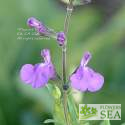
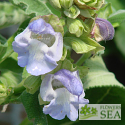
(Saint Isidro's Sage) This hardy, lavender-blue-flowered Salvia comes from Southern Texas and has the same breeding as the famous Ultra Violet Autumn Sage. Although it needs warmer winter temperatures and has smaller foliage, it also does well in stressful conditions, including drought.
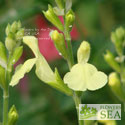
(Elk Lemon Light Jame Sage) We are proud to offer this luminescent, pure yellow Salvia x jamensis -- a color breakthrough from our own breeding program. The bright, light blossoms cool the landscape similar to white flowers, but with colorful impact. The glossy green leaves are quite small - a very attractive and distinctive characteristic.
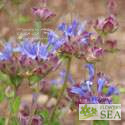
(Celestial Blue Sage) Fast growing and adaptable, this sage is a chance hybrid between Cleveland Sage (Salvia clevelandii) -- also called California Blue Sage -- and California Rose Sage (Salvia pachyphylla). It may also be related to California Purple Sage (Salvia leucophylla).
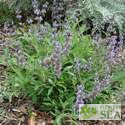
(Dry Earth Black Sage) Black Sage Salvia mellifera is one of the most common and fragrant native shrubs in the California Coast Ranges and is ideal for dry gardens. At 12 inches tall by 5 feet wide, this variety is an excellent groundcover.
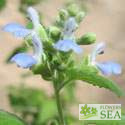
(Mejorana) In Spanish, Mejorana means ‘marjoram.” Similar to oregano-type Marjoram – another Mint family member -- this sage is used to flavor meat dishes. Our cultivar, which is native to Texas and Mexico, has lovely bluish-purple flowers that bloom summer to fall amid fragrant, fine, furry green foliage.
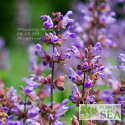
(Wand Sage) Whorls of deep violet blossoms are cupped by dark bracts on the flower spikes of this mid-height herbaceous sage from Turkey. Its foliage is thick, corrugated and fragrant. This plant is lovely and hardy, so it is surprising that it wasn’t introduced to commercial cultivation until 2007.
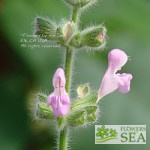
(Turkish Cliff Sage) Spring into early summer, Turkish Cliff Sage produces erect, branching flower spikes 24 to 36 inches long that rise from basal foliage. They’re covered with whorls of pale pink blossoms with delicate white markings.
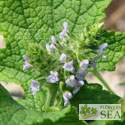
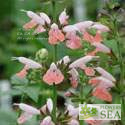
(Brenthurst Tropical Sage)Tropical Sage is popular as an annual throughout America and as a perennial in warm zones. It is particularly beloved in the Deep South where it withstands heat, wind, heavy rains and excessive humidity to bloom prolifically season after season. Brenthurst is a coral-flowered cultivar with dramatic, dark bracts and bright green, heart-shaped leaves.
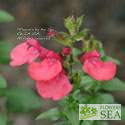
(People's Park Mountain Sage) Sometimes nature can be rebellious. This is one the Mountain Sages known as the Turbulent Sixties Series developed from an outlaw cultivar of the Southwestern native Salvia microphylla. Monterey Bay Nursery (MBN) named their accidental hybrid ‘Berzerkeley.’
The following terms were added to your search to help improve the result. Click here to exclude these extra terms from the search.
- honey, honeybees
Results for honeybee from the blog
| Xeric Choices |
| 1. Drought Praise: 5 Hot Red Salvias for Hummingbirds |
| Hummingbirds love the nectar of Salvias, particularly red ones, which they can see but bees can't. Also, unlike most birds, hummingbirds can taste sweets and seek out flowers that produce lots of sugary nectar. However, nectar can be difficult to come by during drought. The Salvia genus is well known for its bright flowers, rich nectar and many drought-tolerant plants. We suggest five bright red, drought-tolerant Salvias that hummingbirds love. |
| 2. Drought Praise: Hot Pink and Purple Autumn Bloomers |
| Late summer is a good time to plant at the coolest times of day. Settling in Autumn Sage ( Salvia greggii ) and Mountain Sage ( S. microphylla ) before Indian summer will give their roots a chance for strong growth so they can withstand winter's chill and leaf out again next spring. These drought-resistant species are closely related and hybridize freely when they meet. They also cross with other sages they encounter. FBTS details seven pink and purple varieties that bloom off and on spring to fall. |
| 3. Fall Planting: 8 Best-of-Class Sages that Are Easy to Grow |
| "Best of Class" is the title that Flowers by the Sea bestows on plants we honor for being winners in many ways. They are lovely, abundant bloomers and reliable repeat performers that are useful in many landscapes, including low-water gardens designed to have a cottage, woodland or desert look. In the case of the sages ( Salvia spp.) described here, all are easy to grow because they thrive with little fuss. Many are heat tolerant and drought resistant. |
| 4. Fall Planting: 8 Sages for Fragrance by Your Front Door |
| Colorful plantings make entryways attractive. Even better are pretty plantings that are fragrant and provide a sensory lift before you journey indoors. Scent wakes up memories and makes us see in a different way. Here are eight sensible suggestions for adding lovely scents to your landscape. |
| Xeric Choices |
| 5. Four Top Drought-Resistant Perennials for Dry Shade |
| Searching for shade-tolerant plants is difficult. Finding ones that grow well in dry conditions, especially as groundcovers, is even more challenging. Flowers by the Sea talks about different types of shade and four drought-resistant perennials for these varying levels of sun exposure. It also explains how to search the company's extensive product menu. |
| Getting Started with Salvias |
| 6. Getting Started: Salvias for the Rocky Mountain West |
| High altitude, distance from large bodies of water and powerful chinook winds make the Rocky Mountain West a dry gardening environment even in years of higher than average rain and snow. The region's steep mountains have a major impact on where and how precipitation falls. Instead of a single mountain chain, the Rocky Mountains are made up of 100 separate ranges. Similarly, the Salvia genus contains a broad range of sages, many of which thrive in the climactic extremes of the Mountain West. |
| Cultivating Color |
| 7. Gray and Silver Foliage Lights Up the Landscape Day and Night |
| It isn't easy describing green in the garden. Foliage can span greens so pale they are almost white to blue-greens so deep they murmur the forest primeval. Amid this range, you'll find shimmering silver- and gray-leaf species. To locate these types of Salvias and companion plants in the Flowers by the Sea catalog, please visit our " Gray and Silver Leaf Plants" category in the FBTS catalog menu. This article includes a small sampler of our selection. |
| 8. In the Native Garden: Colorful California Salvias Plus a Cousin |
| Native plants, including California's many indigenous sages, are like the boys or girls next door who were overlooked until outsiders discovered their good looks and other fine attributes. Flowers by the Sea grows hardy, drought-resistant California Salvias that are native to a broad swath of the West Coast ranging from Northern Baja to Southern Oregon. Many tolerate heat. They are well suited to waterwise landscapes, including dry gardens. |
| 9. July in the Salvia Garden |
| July is a time of lush plant growth and pollinator activity in Salvia gardens. Aside from weeding and taking breaks to watch bees, hummingbirds and other small wildlife, there are many tasks to attend to in the sage garden during July. Flowers by the Sea Farm and Online Nursery offers a list of midsummer tasks to keep your garden buzzing and blooming. |
| 10. Leonotis: Mint Family Members that Roar in the Landscape |
| Orange is an aggressive color in the garden. It doesn't purr. The fuzzy, shaggy, hot orange flowers of Lion's Ear ( Leonotis ) growl for attention. Their stems are so tall that they may reach up to 6 feet, towering over the foliage like gawky Dr. Seuss blossoms. You'll find them at Flowers by the Sea Online Nursery. |
| Xeric Choices |
| 11. Drought Praise: Around the World with Sunny Groundcovers |
| Bring on the sun. Bring on the heat. Bring on the drought-resistant Salvia groundcovers.Flowers by the Sea offers a short list of top groundcovers from around the world for fighting drought. They come from Asia, California, Mexico and Morocco in lavender, purple and pink to do battle against the boring brown caused by water shortage. Similar to gravel, bark chip or pine needle mulch, these groundcovers discourage weeds, cool soil, conserve moisture and add color to gardens. They are living mulch. |
| 12. Plant Safari Salvia in the South African Fynbos -- Part 2 |
| Flowers by the Sea is a home away from home for a number of South African Salvias that enjoy our moderate, Mediterranean climate. None are endangered species, but all face the threat of land development in the Western Cape's Fynbos Biome -- unparalleled for its variety of medicinal and ornamental native plants found nowhere else in the world. Preservationists are working to balance changes in land use and to maintain biodiversity in the CFR. Brutal poaching of rhinoceroses is one of the toughest problems they face. |
Common terms in this search: blue ecuadorian sage densely branched shrub silvery leaves dusky flowers rare species once thought cruickshanksii nursery trade sometimes called 'equador' true great groundcover shrubby border perennial warm areas find does best ample water but remarkably drought tolerant necessary warmer garden larger grows monster plants feet tall have been reported hills above monterey bay which seem never stop blooming strongly marked