
Advanced Search
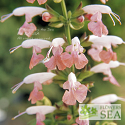
(Summer Jewel Pink Tropical Sage) Butterflies, hummingbirds and honeybees enjoy this Fleuroselect Gold Medal winner, which is an outstanding choice for bright pink & white color from June to autumn. This type of Tropical Sage is generally the first to flower for us.
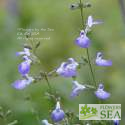
(Summer Skies West Texas Grass Sage) Butterflies and honeybees particularly favor this West Texas mountain native. In contrast to the true blue flowers of regular Salvia reptans, this cultivar has purple blossoms with cloud-like, lavender-to-white throats.
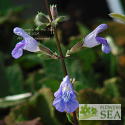
(Turkish Tea Sage) Sometimes an attractive plant is also medically powerful. That's true of the lavender flowered Salvia aucheri, which has strong white beelines. This Turkish native is consumed as an ingredient in teas used as folk remedies for many problems, including abdominal bloating and infections.
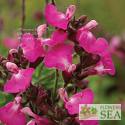
(Sparkle Pink Mountain Sage) Long blooming Salvia microphylla 'Heatwave Sparkle' produces prolific quantities of deep mauve-pink blossoms with white throats and dense, mid-green foliage.

(Dwarf Bog Sage) Intense sky blue flowers with white beelines are set against mid-green foliage in this dwarf Bog Sage that is about half as tall and wide as its parent species when in bloom.
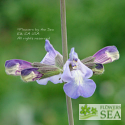
(Puna Sage) The deep violet-blue flowered Salvia calolophos has white beelines and oblong, mid-green leaves. It is a high-altitude native of northern Argentina.
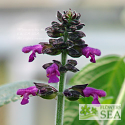
(Columbian Mountain Sage) Deep purple bracts support the small, lighter purple flowers of Salvia cuatrecasana, which is a rare Colombian sage. White beelines mark the flowers of this long-blooming shrub, which is a hummingbird favorite.
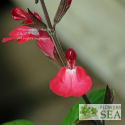
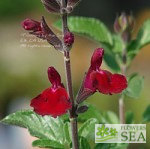
(Elk Bright Eyes Sage) Dark green and red calyxes support the raspberry-red flowers of Salvia x 'Elk Bright Eyes'. The pink throats of the blossoms are topped with white beelines, or eyes. This is a unique and eyecatching color.
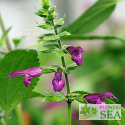
(Elk Magenta Hybrid Sage) Combining the best characteristics of both parents, this robust, large leafed hybrid has deep magenta and white flowers that delight hummingbirds.
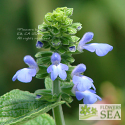
(Elk Blue Hard Leaf Sage) Soft baby blue & white flowers in abundance coupled with strong growth make this an ideal new variety for hummingbird gardeners. the specific epitaph, durifolia, means hard leaf. We don't find the leaf exactly hard but it is lovely and durable.
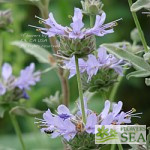
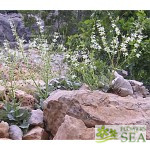
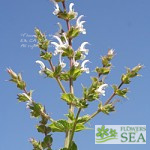
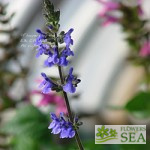
(Paula Flynn Sage) Floral spikes with whorls of bluish-purple flowers rise up amid the slightly relaxed, upright foliage of the mystery plant Salvia ‘Paula Flynn’. It features pebbly, deep green leaves with white, fuzzy undersides.
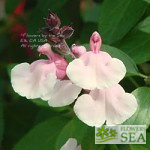
(Elk Crème Anglaise Jame Sage) Framed by minty green foliage, the blossoms of Salvia x ‘Elk Crème Anglaise’ transition from dreamy pale pink throats to white skirts. They look delectable.
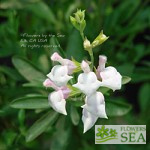
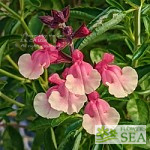
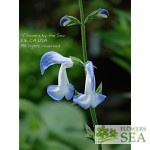
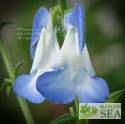
(Dot's Delight Bicolor Gentian Sage) This sage turns heads, because its large, white and blue bicolored flowers make it a unique variety of Gentian Sage. Developed in the UK, Dot's Delight is less vigorous and less sun tolerant than other varieties of the species. This is our own tested seed strain of this rare plant.
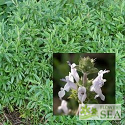
(Black Sage or Honey Sage) One of the most common and fragrant native shrubs in Central California's Coast Ranges, Black Sage is ideal for dry gardens. Admirably adaptable, it tolerates soils ranging from the most marginal to ones that are loamy and provide excellent drainage. It is a survivor.
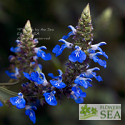
(Bog Sage) Highly adaptable, Salvia uliginosa is ideal for the beginning sage gardener. It isn't fussy about soil type, sun exposure, drainage or frequency of watering.
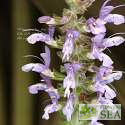
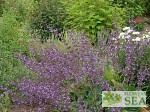
(Balkan Sage) Violet-blue whorls of flowers and plentiful, fuzzy, basal leaves that reach an impressive length of 18 inches are two notable features about this hardy, herbaceous perennial, which is native to the Southeastern Balkan Peninsula.
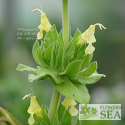
(Yellow Hummingbird Sage or Yellow Pitcher Sage) The Santa Barbara Botanic Garden introduced this rare yellow variety of fragrant Hummingbird Sage. Similar to other varieties of this species, Avis Keedy is alluring to butterflies, honeybees and hummingbirds.
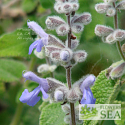
(Big Grape Sage) This lavender-flowered native of Northern Mexico resembles Salvia melissodora (Grape Scented Sage), but is bigger and also has larger leaves and flowers. It's a great companion plant for its little brother, which shares the same cultural needs and affinity for Zones 8 to 10. Both bloom from summer into fall.

(Variegated Mexican Sage) Although its deep violet flowers are compelling, it is the foliage of this sage that is its greatest attraction. Kelsi is full of surprises, including asymmetrical leaves that make this variety easy to identify.
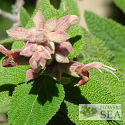
(Wooly Multicolor Sage) In Greek, "lasiantha" means "wooly flower." The flowers of Salvia lasiantha are surrounded by wooly bracts, but are even more notable for transforming from apricot-orange in the morning to reddish-purple later in the day.
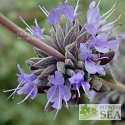
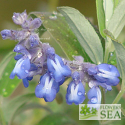
(Blue Ecuadorian Sage) A densely branched shrub with silvery leaves and dusky blue flowers, this rare species was once thought to be Salvia cruickshanksii. In the nursery trade, it sometimes is called Salvia 'Equador'.
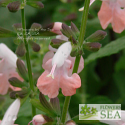
(Coral Nymph Tropical Sage) What a cutie! This award-winning cultivar of Tropical Sage is short and compact yet has a multitude of pastel salmon flowers larger than those of its bigger cousins. It is perfect for annual flower beds or patio containers.
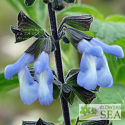
(Confused Argentine Sage) Similar in many ways to the indispensable garden favorites of the Anise Scented Sage (Salvia guaranitica spp.) group, this plant is a perfect companion for its better known cousin.
The following terms were added to your search to help improve the result. Click here to exclude these extra terms from the search.
- white
Common terms in this search: summer jewel pink tropical sage butterflies hummingbirds honeybees enjoy fleuroselect gold medal winner which outstanding choice bright white color from june autumn type generally first flower easy grow great addition annual beds containers prefers rich well-drained soil regular watering plant full sun partial shade tender perennial mild climates elsewhere reaching inches tall wide ideal border use where want create intense