
Advanced Search
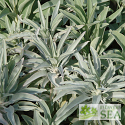
(Sacred White Sage) Bees, hummingbirds and spiritual blessings are all connected to Salvia apiana, an elegant shrubby sage that is an important herb to indigenous Californians. It deserves a place in salvia gardens that can meet its demands. Stiff and almost fleshy, its leaves are tight rosettes of brilliant, silvery green that is almost white.
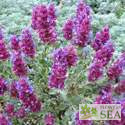
(Giant Purple Desert Sage) It’s best to plant this flamboyant native of the Southwest in spring or summer. However, once established, it tolerates winters from USDA Zones 5 to 9. Purple tubular flowers and burgundy bracts flare up its 10-inch flower spikes like flames on this softly rounded shrub.
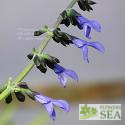
(Huntington Garden Mexican Sage) In areas with mild end-of-year weather, this sage is a tower of nectar for hummingbirds. Large blue-to-purple flowers shaped like open parrot beaks reach out from dark calyxes. Their spikes stretch out horizontally and gently curve upward from the plant's mid-green foliage.
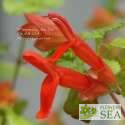
(Orange Mountain Sage) This is the reddest of the Salvia regla species and the most floriferous. Side by side with the other varieties, this one is a bit taller and has darker flowers.
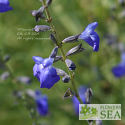
(Autumn Sapphire West Texas Grass Sage) Butterflies and honeybees particularly favor this West Texas mountain native. In contrast to the true blue flowers of regular Salvia reptans, this cultivar has deep blue blossoms and is remarkably compact.
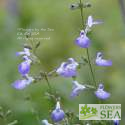
(Summer Skies West Texas Grass Sage) Butterflies and honeybees particularly favor this West Texas mountain native. In contrast to the true blue flowers of regular Salvia reptans, this cultivar has purple blossoms with cloud-like, lavender-to-white throats.
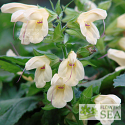
(Kyushu Woodland Sage) We are in love with this short forest sage from Kyushu, Japan. Its clusters of large creamy flowers pale as fresh-churned butter begin blooming in September. Even when not blooming, its foliage is showy in a shady garden.
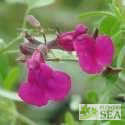
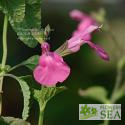
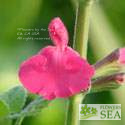
(Rosie O'Grady Mountain Sage) Honeybees and hummingbirds love the large, bright pink flowers of Salvia microphylla 'Rosie O'Grady', a drought-resistant sage. Dense and fragrant, it's large, glossy green leaves are veined and have finely serrated edges. This is a lush choice for dry gardens.
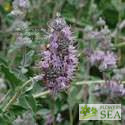
(Bee's Bliss Sage) If you are looking for a California native sage to use as a groundcover, Bee's Bliss is a fine choice. Low-growing, widespreading and colorful, it is ideal for choking weeds.
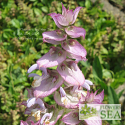
(Clary or Clear Eye Sage or Eyebright) Pink-purple bracts and violet-purple flowers form a pastel cloud over the large, rumpled leaves of Clary Sage in summer. It is a towering beauty growing up to 5 feet tall. Sacred to some due to age-old use in herbal remedies, it is heavenly to look at.
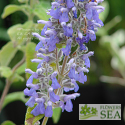
(Grape Scented Sage) With the grape scent of its pale lavender blossoms and its long history of medicinal use, it is no surprise that this sage is so widely distributed.
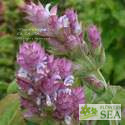
(Italian Clary Sage) Clary Sages are well known for their use in folk remedies, aromatherapy and cosmetics. Glowing purple bracts frame the spectacular white blooms of this cultivar on 5-foot-tall spikes. It is a delight for honeybees, hummingbirds and butterflies.
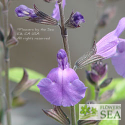
(Azure Hybrid Sage) Despite its name, the flowers of this tiny hybrid aren't really blue. They are a light purple. Due to its size, long bloom time, heat tolerance and drought resistance, Salvia x 'Mesa Azure' is a fine groundcover for areas where summers are hot and dry.
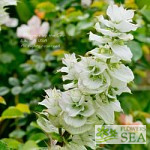
(Vatican White Clary Sage) Clary Sages are well known for their use in folk remedies, aromatherapy and cosmetics. Large white bracts frame the spectacular white blooms of this cultivar on 5-foot-tall spikes. It is a delight for honeybees and butterflies.
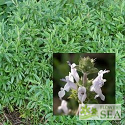
(Black Sage or Honey Sage) One of the most common and fragrant native shrubs in Central California's Coast Ranges, Black Sage is ideal for dry gardens. Admirably adaptable, it tolerates soils ranging from the most marginal to ones that are loamy and provide excellent drainage. It is a survivor.
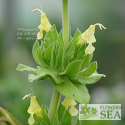
(Yellow Hummingbird Sage or Yellow Pitcher Sage) The Santa Barbara Botanic Garden introduced this rare yellow variety of fragrant Hummingbird Sage. Similar to other varieties of this species, Avis Keedy is alluring to butterflies, honeybees and hummingbirds.
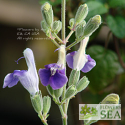
(Candelabra Spanish Sage) Tall, well-branched spikes display large two-tone blue flowers above a compact shrubby mass of attractive, furry white leaves. When in bloom, this drought-resistant native of Spain will awe every visitor to your garden.
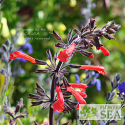
(Venezuelan Red Sage) Purple stems and calyxes so dark that they almost look black contrast dramatically with the deep red-orange flowers of this South American beauty. This tall, spectacular sage has been in cultivation for decades but is still rare in gardens. We'd like to see that change.
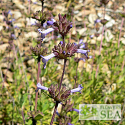
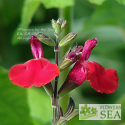
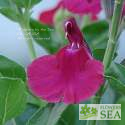
(Elk Pomegranate Autumn Sage) We're proud to say that this is an FBTS cultivar. It is one of the finest dark flowered, compact Autumn Sage varieties we have seen. Its extraordinarily large, raspberry blossoms bloom from spring into fall.
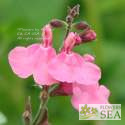
(Scorching Pink Mountain Sage) Compact and small, this Mountain Sage is another fine groundcover for Southern California, the Southwest and Texas. Similar to Salvia microphylla 'Heatwave Glimmer', it not only survives but thrives in extreme heat.
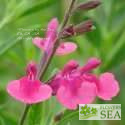
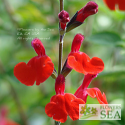
(Royal Bumble Mountain Sage) Almost black, the stems and calyxes of this UK hybrid form a pleasing contrast with its medium-size scarlet flowers and glossy green leaves. Bloom time is spring to fall. This Mountain Sage suckers freely and forms a dense clump.
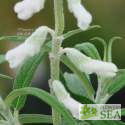
(White Mischief Mexican Bush Sage) Profuse white blossoms and true white velvety bracts make the flowers of this South African hybrid a lovely choice for a wedding. In our experience, many of the plants sold as White Mischief are not the real thing. This tough, compact, long blooming sage is.
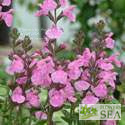
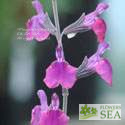
(Diane's Autumn Sage) Chip Schumacher of Hill Country Gardens in Texas selected this lovely Autumn Sage hybrid, which has handsome foliage and abundant two-tone dark purple flowers. This fine variety is often the first Salvia greggii to bloom in spring.
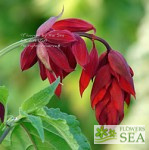
(Burgundy Scarlet Sage) Blood red to burgundy, the drooping blossoms of this sturdy, long flowering Salvia are the first that anyone comments on in a mixed planting. Use it singly as a dramatic garden accent or container plant; mass it for a stunning effect.
The following terms were added to your search to help improve the result. Click here to exclude these extra terms from the search.
- garden, gardener, gardens
Results for gardeners from the blog
| Portraits in Gardening |
| 1. Portraits in Gardening: Michael and Kathi Rock's Hummingbird Journey |
| A wedding gift led to Kathi Johnson Rock and Michael Rock's passion for hummingbirds. These Wisconsin birders offer tips and plant suggestions for hummingbird gardeners at FBTS. Although now known as Madison's "Hummingbird People," the Rocks aren't ornithologists or biologists. They are home gardeners and customers of Flowers by the Sea. This article includes a list of favorite hummingbird plants found in the Rocks' gardens. |
| Sage Experts |
| 2. Sage Experts: Richard & Bracey Tiede Nurture Salvias & Community |
| Love of gardening is partly about love of nurturance. Some gardeners nurture far more than their home landscapes; that's the case with Silicon Valley retirees Richard and Bracey Tiede. Through avid volunteerism in organizations such as the Master Gardeners of Santa Clara County, Western Horticultural Society and Pacific Horticulture Society, they are helping to popularize drought-tolerant Salvias and shape sustainable gardening practices in the West -- a part of the country constantly facing drought. |
| Hummingbirds in the Garden |
| 3. Guide to Fuchsia Cultivation & History |
| Like tiny dancers dressed in fancy skirts, Fuchsia flowers dangle from upright shrubs in long blooming hedges and from trailing branches in hanging baskets. Fuchsias are hummingbird favorites that come in many rosy colors. Read about them in the FBTS Guide to Fuchsia Cultivation & History . |
| 4. A Gardeners Guide to Hummingbird Sage |
| Among the hummers' favorites: Salvia spathacea, commonly known as Hummingbird Sage. As it name suggests, this California native produces the hummingbirds' flower of choice, blooming from late winter through summer -- and sometimes again in Fall -- with rose-pink to magenta blossoms. Available in six varieties, this robust perennial not only attracts hummers with its abundant nectar, it's easy to grow and enhances any landscape with its aromatic blooms and fragrant evergreen foliage. |
| 5. Bat-Faced Beauty: Gardeners & Hummingbirds Love Cuphea schumannii |
| Most bat faces only look beautiful to their mothers. However bat-faced Cuphea schumannii seems pretty as punch to hummingbirds in search of a sweet drink of nectar. If you take a close look at the ragged, open end of each flower, you'll see two, tiny, lavender petals standing straight up like bat or mouse ears. So, despite its common name, Orange Cigar Plant, this species is known as a bat-faced Cuphea. Aside from being excellent for attracting pollinators, Cupheas are becoming important agricultural crops that reduce pesticide use. |
| Container Gardening |
| 6. A Guide to Successful Potting Soils for Salvias |
| One of the decisions that Salvia gardeners face in spring is what kind of potting mix to use for outdoor container plants. Find answers in FBTS Farm & Online Nursery's guide to successful potting soils for Salvias. |
| Book Reviews |
| 7. Book Review: Waterwise Plants for Sustainable Gardens |
| "font-style: italic;"> Lauren Springer Ogden and Scott Ogden are garden designers and writers who split their time between Texas and Colorado, but their suggestions for low water, xeriscapic landscaping can benefit gardeners far from the American West, Southwest and Deep South. The authors agree with their Dutch contemporary, Piet Oudolf, that a naturalistic landscape design based on local climate -- including water limitations -- is the most sustainable choice. |
| 8. Book Review: Nature-Friendly Garden by Marlene A. Condon |
| Reading Marlene A. Condon's Nature-Friendly Garden is like observing a game of toppling dominoes. All the pieces are lined up standing on end in a complex, maze-like pattern. Flick one domino and the whole structure tumbles. Similarly, the author shows how simple choices we make in our gardens have consequences that can build or destroy wildlife habitat. |
| Quick Digs |
| 9. Quick Digs: Wintering Over Salvias Indoors |
| For some gardeners, bringing outdoor plants inside during winter is a practical matter. You want to save money. For others, plants are a bit like pets. You feel tender about your tender perennials and can't bear to think of a lovely sage dying from exposure to harsh weather. This fourth article in our Quick Digs series on preparation for winter in the Salvia garden suggests ways to overwinter sages indoors. |
| 10. A Community of Anise Scented Sages We Adore |
| You might expect the foliage of a plant called Anise-Scented Sage (Salvia guaranitica) to smell robustly like licorice, which shares the same fragrance as anise. Some gardeners detect a hint of licorice after crushing a leaf, but many say the foliage merely smells sweet. These popular sages are native to Brazil where indigenous peoples used their leaves as a medicine. Flowers by the Sea grows many varieties in a wide range of sizes and flower colors |
| 11. Battles in the Salvia Garden: Pretty Southern Pink Moth |
| Southern Pink Moth (Pyrausta inornatalis) is diminutive and pretty, but it’s a powerful pest in Salvia gardens. As the common name indicates, it is primarily found in the South. Yet it is flitting into gardens further north. Read more to learn how to identify and control this pest. |
| Book Reviews |
| 12. Book Review: Stop. . .and Smell the Mints |
| Randy Collins was surprised when he got hooked on horticulture following retirement. But after a move to South Carolina, he was even more surprised at how deer destroyed his gardens until he began growing lots of mint family ( Lamiaceae ) plants like Salvias. It inspired him to write Stop...and Smell the Mints . |
Common terms in this search: sacred white sage bees hummingbirds spiritual blessings all connected apiana elegant shrubby important herb indigenous californians deserves place insalvia gardens can meet its demands stiff almost fleshy leaves tight rosettes brilliant silvery green flower spikes soar above foliage hundreds small white-to-lavender flowers one most sources pollen nectar pollinators along southern california's coast mountains valleys also source native american smudge sticks