
Advanced Search
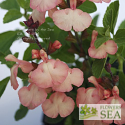
(Glow Peach Mountain Sage) Long blooming Salvia microphylla 'Heatwave Glow' produces prolific quantities of soft peach-to-apricot blossoms along with dense, mid-green foliage.
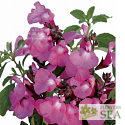
(Radiance Bright Pink Mountain Sage) Long blooming Salvia microphylla 'Heatwave Radiance' produces prolific quantities of hot pink blossoms along with dense, mid-green foliage.
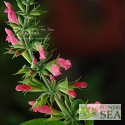
(Giant Karwinski's Sage) San Francisco arborist and gardener extraordinaire Ted Kipping developed this tower of creamy pinkalicious power that hummingbirds love. It's lush with bright green leaves that are large, pebbly and hairy on the underside.
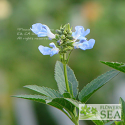
(Dwarf Bog Sage) Intense sky blue flowers with white beelines are set against mid-green foliage in this dwarf Bog Sage that is about half as tall and wide as its parent species when in bloom.
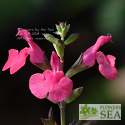
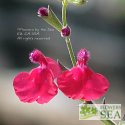
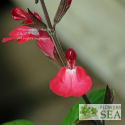
(Elk Bright Eyes Sage) Dark green and red calyxes support the raspberry-red flowers of Salvia x 'Elk Bright Eyes'. The pink throats of the blossoms are topped with white beelines, or eyes. This is a unique and eyecatching color.
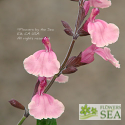
(Elk Peach Flambe Sage) Pale pink-to-peach edges surround the petals of Salvia x 'Elk Peach Flambe' like hints of petticoats. The deep maroon calyxes holding the flowers add drama to this small sage.
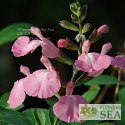
(Elk Pink Cloud Sage) Abounding with clusters of large, soft pink flowers on spreading branches, Salvia x 'Elk Pink Cloud' has a fluffy, cumulonimbus look when spilling over the edges of a hanging basket
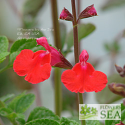
(Majestic Pink Sage) Very large richly colored hot pink blossoms and broad, glossy, intricately textured leaves are part of what makes Salvia x 'Majestic Pink' a standout. This is a complex hybrid involving several Salvia species from the ongoing breeding program at FBTS.
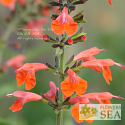
(Vermilion Tropical Sage) Tall and full of large, orange flowers, Salvia coccinea 'Vermilion' is a strain from the Louisiana gardens of hummingbird guru Nancy Newfield.
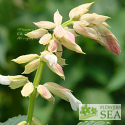
(Elk White Scarlet Sage) The first tall white Salvia splendens variety, this new introduction from Flowers by the Sea is vigorous and free flowering all season long.
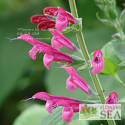
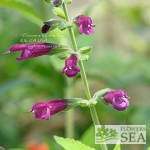
(Envy Hybrid Sage) A natural hybrid found in Peru and Bolivia, the parentage of this special variety is at this point unknown. The uniquely colored flowers are abundant all season long, and the hummingbirds love it.
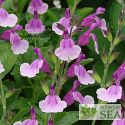
(Elk Chantily Lace Jame Sage) What color are the flowers of this FBTS introduction? Lavender? Periwinkle? Taffy? Yes to all for this hard to describe but easy to love plant.
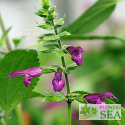
(Elk Magenta Hybrid Sage) Combining the best characteristics of both parents, this robust, large leafed hybrid has deep magenta and white flowers that delight hummingbirds.
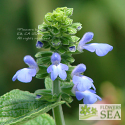
(Elk Blue Hard Leaf Sage) Soft baby blue & white flowers in abundance coupled with strong growth make this an ideal new variety for hummingbird gardeners. the specific epitaph, durifolia, means hard leaf. We don't find the leaf exactly hard but it is lovely and durable.
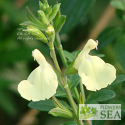
(Elk Lemon Sorbet Jame Sage) Unlike any other we have ever seen, this pale yellow flower seems at times to have a green tint. The foliege is typical of the Salvia microphylla parent - mid sized, round and textured. It is very different in flower and foliege from our popular variety 'Elk Lemon Lite'.
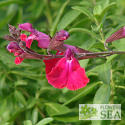
(Elk Crimson King Jame Sage) Sometimes words fail us when trying to describe a unique new color. Definitely red, but with a clear blue overlay and a blue eye. Featuring masses of flowers that delight pollinators, this FBTS introduction is new for 2017.
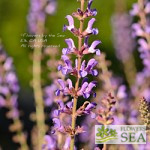
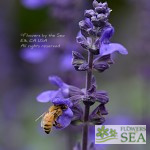
(Big Blue Sage) This new seed-grown strain can best be described as a much improved Indigo Spires Sage. It has deep blue-green, corrugated leaves and lots of deep blue flower spikes that bloom from summer till the end of the growing season.
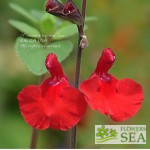
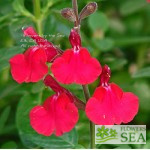
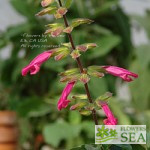
(Fashion Cherry Sage) Pendulous cherry-red blossoms and dark bracts make Salvia Fashion Cherry™ an eyecatcher. Although it looks like an Australian Wish Sage, it’s a cross between North and South American species.
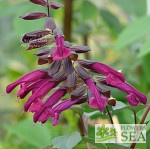
(Fashion Burgundy Sage) Pendulous deep burgundy blossoms and dark bracts attract the eye to Salvia Fashion Burgundy™. Although similar looking to an Australian Wish Sages, it is more compact than the Wishes or the Skyscraper series.
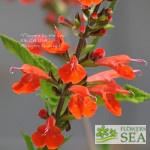
(Elk Vermilion Tropical Sage) Tall and full of large, orange flowers, Salvia coccinea 'Vermilion' is a clonal variety developed by FBTS.
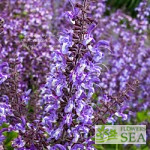
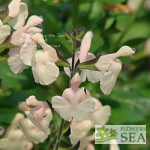
(Elk Morning Sun Jame Sage) Kelly green and black calyxes support the long blooming, creamy white and pale pink flowers of Salvia x ‘Elk Morning Sun’. A waterwise sage, it likes average watering but resists drought.
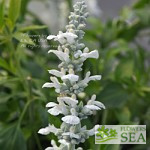
(White Flame Sage) Like bright white candle flames, the short vigorously upright flower spikes of petite Salvia x ‘White Flame’ light up flowerbeds.
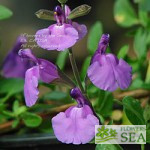
(Elk Grape Ape Jame Sage) Bountiful flowers that are larger than normal for Jame Sage cover Salvia x ‘Elk Grape Ape’ in a cloud of purple that is sort of amethyst to pinot gris in color.
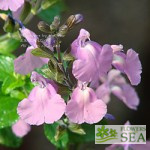
(Elk Smokey Grape Jame Sage) We think the dusky lavender flowers of Salvia x ‘Elk Smokey Grape’ look like the dusty, pale reddish-blue of Malbec grapes. This is a floriferous beauty.
The following terms were added to your search to help improve the result. Click here to exclude these extra terms from the search.
- choice
Results for choices from the blog
| Cultivating Color |
| 1. Pantone Pageant: Emerald Designer Salvias |
| Emerald and other cool shades of green are among the hot colors for 2013, according to Pantone, a design-industry leader. Flowers by the Sea doesn't generally think of greens or of any colors in nature as being in or out. However, we think it is fun and fresh to consider garden design from a different perspective. Emerald is Pantone's top color for the year. This article about emerald-colored Salvias begins a pageant of sorts down the runway of our blog, showing how the Pantone color matching system can be used to shape landscaping decisions. |
| Xeric Choices |
| 2. Praise for Top 10 Lesser-Known Drought-Resistant Salvias |
| Eco-vigilantes. That's what some newspapers call smartphone users who post photos and videos tagged droughtshaming on Twitter and other social media documenting careless water use by celebrities, everyday homeowners and businesses, especially in Southern California. |
| Quick Digs |
| 3. Quick Digs: Treating Salvias as Bedding Plants |
| As autumn days become shorter, so does time for protecting all your tender perennial sages (Salvia spp.) that nature designed for warmer winter conditions. This is the fifth and final article in our Quick Digs series on preparation for winter in the Salvia garden. This post acknowledges that sometimes it's better to replant favorites as annuals in spring. |
| 4. Salvia greggii: Discovering a Riot of Color |
| It would be inaccurate to refer to the woody perennial Autumn Sage, or Salvia greggii, as coming in a rainbow of colors, because there is no true blue in the bunch. However, S. greggii cultivars form a riot of lipstick-intense reds, pinks, corals, apricots, oranges, lavenders and purples. Whites, pale yellows and bicolors also are members of the vivid species discovered in the dry, rocky landscapes of Texas and Northern Mexico by 19th century frontiersman, doctor, trader, writer and amateur botanist Josiah Gregg . |
| 5. 6 Salvias for Shade |
| Most gardeners associate plants in the genus Salvia with full sun, rocky soil, drought and semi-arid native lands. Although a number of sages fit this picture, far more appreciate loamy, fertile garden soil. Some require lots of water. Also, a large number of sages thrive in partial shade, and some tolerate full shade. Here are six of the many shade lovers that Flowers by the Sea grows. |
| 6. A Community of Anise Scented Sages We Adore |
| You might expect the foliage of a plant called Anise-Scented Sage (Salvia guaranitica) to smell robustly like licorice, which shares the same fragrance as anise. Some gardeners detect a hint of licorice after crushing a leaf, but many say the foliage merely smells sweet. These popular sages are native to Brazil where indigenous peoples used their leaves as a medicine. Flowers by the Sea grows many varieties in a wide range of sizes and flower colors |
| Container Gardening |
| 7. A Guide to Successful Potting Soils for Salvias |
| One of the decisions that Salvia gardeners face in spring is what kind of potting mix to use for outdoor container plants. Find answers in FBTS Farm & Online Nursery's guide to successful potting soils for Salvias. |
| Cultivating Color |
| 8. Add Pale Dreamy Sages to Your List of Moon Garden Plants |
| Moon gardens contain plants with pale flowers -- especially whites -- and silvery or variegated foliage that shine in moonlight. Some gardeners plant them to glow from afar when peering into the dark through a window. Others design these gardens for nighttime rambles. A number of white-flowered sages would be excellent additions to the dreamy design of a moon garden. |
| Ask Mr. Sage |
| 9. Ask Mr. Sage: How FBTS Chooses New Salvias |
| Some Salvia collectors want to obtain a broad range of sages including all the new introductions on the market. But Flowers by the Sea can't and doesn't want to grow all the new cultivars available, partly because there is a growing abundance of Salvia introductions. Instead, FBTS focuses on selecting the most superior new plants even when introducing its own hybrids in its series of Rainbow Jame Sages. Ask Mr. Sage is a regular feature based on calls and emails received by FBTS. |
| 10. August in the Salvia Garden |
| August is a time when many sages grow rapidly and feed a frenzy of pollinators in need of rich nectar and pollen. It's hot, so you have to be careful not to let plants or yourself wilt. Here are some tips for tasks from watering to planning when tending your garden this month. |
| 11. Blazing Red Sages for Sun and Partial Shade |
| Warm colors tend to take center stage in a landscape as well as brightening the shade. Yet warm colors generally aren't associated with shady sage (Salvia) gardens, because there are far more shade-tolerant sages in the blue to purple range. So we decided to poke around our catalog and pull together some hot choices that thrive in partial shade. To make landscaping even easier, you may want to limit your choice of plants to one color. Massing is dramatic. |
| Book Reviews |
| 12. Book Review: Stop. . .and Smell the Mints |
| Randy Collins was surprised when he got hooked on horticulture following retirement. But after a move to South Carolina, he was even more surprised at how deer destroyed his gardens until he began growing lots of mint family ( Lamiaceae ) plants like Salvias. It inspired him to write Stop...and Smell the Mints . |
Common terms in this search: glow peach mountain sage long blooming microphylla heatwave produces prolific quantities soft peach-to-apricot blossoms along dense mid-green foliage tough plant cross southwestern texas native autumn greggii flowers sea grows ten varieties which melbourne-based growers australia team howard bentley steve eggleton hybridized hot dry conditions throughout their nation similar parent species salvias adaptable cooler coastal regions they grow particularly well mediterranean