
Advanced Search
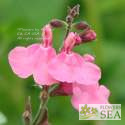
(Scorching Pink Mountain Sage) Compact and small, this Mountain Sage is another fine groundcover for Southern California, the Southwest and Texas. Similar to Salvia microphylla 'Heatwave Glimmer', it not only survives but thrives in extreme heat.
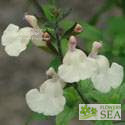
(Glimmering White Mountain Sage) Heatwave Glimmer isn't a mirage. It is a Salvia microphylla that tolerates extremely hot climates as well as cooler regions. It doesn't just survive; it thrives in the heat of Southern California, the Southwest and Texas.
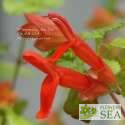
(Orange Mountain Sage) This is the reddest of the Salvia regla species and the most floriferous. Side by side with the other varieties, this one is a bit taller and has darker flowers.
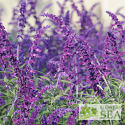
(Midnight Mexican Bush Sage) The typical Mexican Bush Sage has purple flowers surrounded by furry white bracts. This clone from the San Francisco Peninsula has deep purple flowers, calyxes and stems. It is a good groundcover due to a mounding habit, smaller size and generous amounts of flowers.
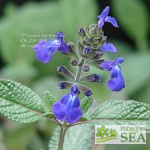
(Elk Blue Little Sage) if it were up to us, we would never have named this plant Little Sage. Although it is dainty, it is also one of the most fascinating species we grow. We particularly love its pebbly, oval leaves that are a shiny purple/green on top and a furry white below.
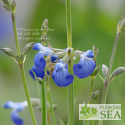
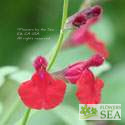
(Cherry Red Mountain Sage) This isn't just another red sage. Brilliant cherry-red flowers with dark purple bracts and cold weather tolerance to USDA Zone 6 make this a valuable landscaping plant.
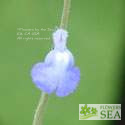
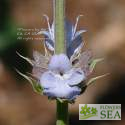
(Starlight Sage) Add sparkle to your dry garden with the pale pastel flowers of this hybrid of two Southern California native plants often seen growing together in the wild — Black Sage (Salvia mellifera) and White Sage (Salvia apiana). Salvia x 'Starlight' is a shrub that blooms early and long, attracting honeybees but not deer.
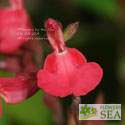
(Furman's Red Autumn Sage) Selected by noted Texas plantsman W.A. Furman in the 1970s, this hardy Texas native is beautiful and tough withstanding heat, drought and freezing winters. Its flowers, which bloom spring through fall, are a rich, saturated red bordering on magenta.
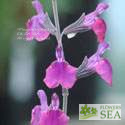
(Diane's Autumn Sage) Chip Schumacher of Hill Country Gardens in Texas selected this lovely Autumn Sage hybrid, which has handsome foliage and abundant two-tone dark purple flowers. This fine variety is often the first Salvia greggii to bloom in spring.
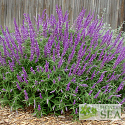
(Santa Barbara Mexican Bush Sage) This compact Mexican Bush Sage was found in the Santa Barbara garden of Kathiann Brown. It is, without a doubt, the finest short Mexican Bush Sage -- hardy, tough and long blooming. Add drought tolerance and dark, rich purple flowers to its list of merits.
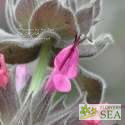
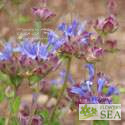
(Celestial Blue Sage) Fast growing and adaptable, this sage is a chance hybrid between Cleveland Sage (Salvia clevelandii) -- also called California Blue Sage -- and California Rose Sage (Salvia pachyphylla). It may also be related to California Purple Sage (Salvia leucophylla).
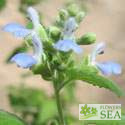
(Mejorana) In Spanish, Mejorana means ‘marjoram.” Similar to oregano-type Marjoram – another Mint family member -- this sage is used to flavor meat dishes. Our cultivar, which is native to Texas and Mexico, has lovely bluish-purple flowers that bloom summer to fall amid fragrant, fine, furry green foliage.
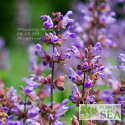
(Wand Sage) Whorls of deep violet blossoms are cupped by dark bracts on the flower spikes of this mid-height herbaceous sage from Turkey. Its foliage is thick, corrugated and fragrant. This plant is lovely and hardy, so it is surprising that it wasn’t introduced to commercial cultivation until 2007.
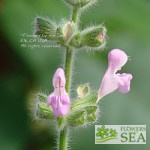
(Turkish Cliff Sage) Spring into early summer, Turkish Cliff Sage produces erect, branching flower spikes 24 to 36 inches long that rise from basal foliage. They’re covered with whorls of pale pink blossoms with delicate white markings.
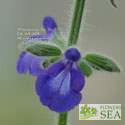
(Double Saw Tooth Sage) Vivid deep violet flowers bloom from summer into fall and contrast prettily with the bright green, rumply foliage of this tall sage from southeastern Mexico. Belgian botanist and orchid lover Jean Jules Linden was the first to record its discovery in 1838, according to records on file at Britain’s Royal Botanic Gardens, Kew.
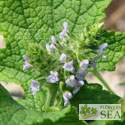
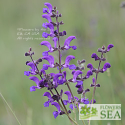
(Siberian Sage) Deep violet flowers surrounded by burgundy bracts form a handsome contrast with the pebbly, mint green foliage of this drought-resistant sage. It comes from the Central Asian steppe, which is similar in climate and geography to America’s high plains.
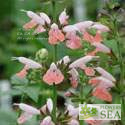
(Brenthurst Tropical Sage)Tropical Sage is popular as an annual throughout America and as a perennial in warm zones. It is particularly beloved in the Deep South where it withstands heat, wind, heavy rains and excessive humidity to bloom prolifically season after season. Brenthurst is a coral-flowered cultivar with dramatic, dark bracts and bright green, heart-shaped leaves.
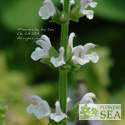
(Iranian Sage) Mixed in with short perennials that bloom over a wide range of seasons, Salvia staminea makes an attractive contribution to short borders during its summer bloom time. Our strain has dark bracts surrounding pastel white-to-blue-to-lavender flowers. The dark green, branching foliage has oblong to oval-shaped leaves.

(Russell's Mexican Sage) Expect rapid, tall growth from this Salvia Mexicana . In the ground, Russell’s Mexican Sage can reach up to 10 feet tall and 5 feet wide, providing an effective screen of dark green, heart-shaped foliage. By late autumn it’s bursting with flowers.
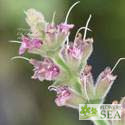
(Eig's Sage)Bicolor ruby and pale pink flowers bloom winter to spring on this small sage that is native to Northern Israel. Salvia eigii is at home in the silty, gravelly loam of low fallow fields near rivers. So it does best in rich soil aerated with plenty of humus.
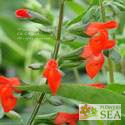
(Eyelash Sage) All Salvia blepharophylla varieties are native to Mexico, but this one was hybridized in Germany by plant breeder Christiaan Unger. Hairs on the edge of the sageâs dark green leaves give it the appearance of having eyelashes. It is a compact, slightly mounding Salvia that spreads gradually by underground stolons.
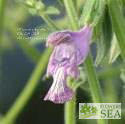
(san ye shu wei cao) So what do all those Pinyin words mean in this sage’s common name? We’ll give you an answer to the best of our ability in a minute. Meanwhile, we need to note that this medicinal Asian sage has handsome foliage and deep violet flowers.
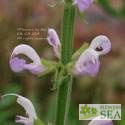
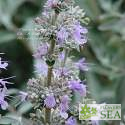
(Gayle Nielson Hybrid Sage) Whorl-like clusters of violet-blue flowers on slender stems as well as its height and width indicate that Gayle Nielson Hybrid Sage is related to some form of Salvia clevelandii.
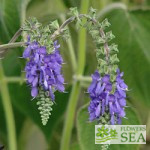
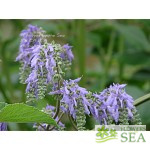
(Nodding Sage) "Dancing in the air" is how garden writer Joseph Tychonievich describes the tall, graceful flower spikes of Nodding Sage, which can tower up to 5 feet tall over the plant's 18-inch-tall foliage during the summer flowering season.
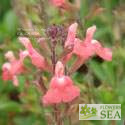
(Salmon Autumn Sage) Creamy salmon-colored flowers with white throats make this elegant Autumn Sage perfect for a pastel garden or as a cooling color in a mixed sage border. Bloom time is spring into fall for this petite Salvia greggii native to the American Southwest and Mexico.
The following terms were added to your search to help improve the result. Click here to exclude these extra terms from the search.
- tolerant
Results for drought-tolerant from the blog
| Xeric Choices |
| 1. Xeric Choices: Xeriscape Basics & Ancient Ideas |
| To create a successful xeriscape garden, planning and design are essential. Planning helps you make better choices, which saves time, money and effort as well as water. A little bit of wisdom from ancient Native American practices doesn’t hurt either. While soil improvement is always helpful, it should be moderate for xeric Salvias, such as Autumn Sage and Mealy Cup Sage. Finally, pruning and thinning, strategic groupings of plants for frugal watering and mulching for protection against severe heat or winter chill all were key to ancient Southwestern agriculture as well as modern xeriscaping. |
| 2. Xeric Choices: Salvias in the Waterwise Garden |
| Lush but not lushes - that's one way you might sum up the majority of Salvias. Despite their long bloom times and bushy foliage, Salvias don't generally belly up to the water hose. Overall, they are perfect for xeriscape gardening -- the art of creating great beauty in the garden while conserving water. |
| Container Gardening |
| 3. Container Gardening Basics: Selecting and Arranging Pots |
| Assembling a new planter with fresh potting soil and young plants is a feel-good activity similar to moving into a new home. Each pot and property is full of promise. Placing a single plant or a grouping in the right size of pot is like selecting a starter home for it that will encourage healthy growth. The type of material a pot is made from also affects development. Flowers by the Sea Online Salvia Nursery explains how to choose correct pot sizes as well as pot styles, sizes, colors and arrangements. Don't miss The Flowerpot Men music video! |
| Getting Started with Salvias |
| 4. Getting Started: How Much Water Salvias Need |
| Salvias may need little or lots of water depending on species and local growing conditions. Many are drought resistant, getting by on less than an inch a week. Learn about the many kinds of Salvias, also called sages, at Flowers by the Sea. We're an online, mail-order nursery specializing in sages. |
| 5. Getting Started: Salvias for Zone 9 |
| California's small, Mohave Desert city of Barstow averages about 5 inches of rain annually. Across the continent, Pensacola, Florida, has more than double Barstow's population and more than 12 times its amount of rainfall. Yet both cities are part of the U.S. Department of Agriculture's Plant Hardiness Zone 9 where you can plant perennials and shrubs that survive winter lows ranging from 20 to 30 degrees F. Flowers by the Sea takes readers on a triple coast road trip of Zone 9 and suggests plantings for varied growing conditions along the way. |
| 6. Getting Started: What Are Salvias? |
| Salvias are a broad range of true sages in the mint family that grow worldwide. They include shrubs, perennials, annuals and subshrubs, which share both shrub and perennial characteristics. Flowers by the Sea, an online, mail-order Salvia nursery sells hundreds of Salvias. |
Common terms in this search: scorching pink mountain sage compact small another fine groundcover southern california southwest texas similar microphylla 'heatwave glimmer' not only survives but thrives extreme heat hot flowers contrast prettily sage's well-branched dense green foliage leaves heavily veined aromatic feet tall wide also just right container edging pathway looks lovely short shrub border ideal dry native gardens species semi-arid lands american mexico